
As I posted here a few days ago, it’s possible that unusual-looking (and probably longer) Voynichese words or phrases are actually unusual plaintext words (perhaps proper names) that needed to remain unabbreviated in the ciphertext, because they were so much less predictable than the rest of the words.
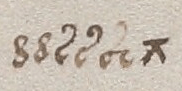
So: who has previously gone looking for unusual plaintext words? The indefatigable Byron Deveson helpfully pointed to a long 2025 comment chain on Voynich Ninja started by Rafal [Prinke], which ultimately harked back to a list compiled by Jorge Stolfi many years ago. (Which was probably the list I was thinking of in the first place.) Rene Z’s favourite ‘bad’ Voynichese word is certainly quite a stinker:
Stolfi’s list yields such words to play with as:
- chesokchoteody [f68r1, outer ring, near the bottom]
- oepchksheey [f93r, top line, but looks like half of a Neal key]
- qoekeeykeody [f105r, which I’d note is possibly the original first page of Q20A]
- soefchocphy [f102r2, right edge, but right on the fold, very hard to read]
- ykcheolchcthy [f68v3, first word of second line]
- shdykairalam [f106v, last word of a line]
- shetcheodchs [f43v, first word of a line]
and so forth. Mauro’s post in the thread suggested other annoyingly interesting words:
- cpholteedycfhoepaiin [where is this?]
- chkaidararal [f115v, near the end of the top line of the penultimate paragraph]
- shoefcheeykechy [f104v, near the start of the top line of the penultimate paragraph]
- psheykedaleey [f41r, first word, so initial ‘p’ is probably spurious]
- opalkechckhy [f50r, bottom line, might possibly be part of a floating ‘title’]
All of this was very helpful, because it made me grasp that what I’m looking for isn’t just non-model-friendly words, but longer words that kind of ‘muck up’ the normal (I suspect abbreviated) system we have all got so used to looking at over the years.
Mark Knowles wondered in this thread whether such unusual Voynichese words might well be enciphering real words, while all the other (more ‘conventional’, rule-bound) Voynichese words are just filler: but this seems unnecessarily pessimistic to me.
As an aside, I’m very receptive to BlueToes101’s suggestion of “olaiior oloro eeeoly” at the bottom of f23v as being an interesting block. Given that this has more half-spaces than spaces, I would agree – from the positioning – that it could easily be a signature / attribution. Though with my Voynichese modelling hat on, I might speculate whether this should have read “ol ainor olory cheoly” (i.e. copyist’s fatigue):

I half-remember two other suspicious word blocks I found years ago, one in a long (fake star?) paragraph in Q20 and the other somewhere in Q19. But searching Cipher Mysteries hasn’t helped me find them: I’ll look another day when it’s not quite so stiflingly hot here.
The key issue here is that I think I need to look at each of these curious long words in context. Some of them may just be two or more words rolled into each other: others are certainly not so easy to explain away.
A small failed experiment, but at least you can try 😉
🔐 Enter ciphertext to decrypt: chesokchoteody
🔓 Decrypted text: CEWNVVREGEKJOU
Decryption Table:
——————————————————————————————
i | Cipher | cᵢ | Plain | pᵢ | cᵢ₋₁ | Computation
——————————————————————————————
1 | C | 3 | C | 3 | 0 | (3 – 0) mod 26 = 3
2 | H | 8 | E | 5 | 3 | (8 – 3) mod 26 = 5
3 | E | 5 | W | 23 | 8 | (5 – 8) mod 26 = 23
4 | S | 19 | N | 14 | 5 | (19 – 5) mod 26 = 14
5 | O | 15 | V | 22 | 19 | (15 – 19) mod 26 = 22
6 | K | 11 | V | 22 | 15 | (11 – 15) mod 26 = 22
7 | C | 3 | R | 18 | 11 | (3 – 11) mod 26 = 18
8 | H | 8 | E | 5 | 3 | (8 – 3) mod 26 = 5
9 | O | 15 | G | 7 | 8 | (15 – 8) mod 26 = 7
10 | T | 20 | E | 5 | 15 | (20 – 15) mod 26 = 5
11 | E | 5 | K | 11 | 20 | (5 – 20) mod 26 = 11
12 | O | 15 | J | 10 | 5 | (15 – 5) mod 26 = 10
13 | D | 4 | O | 15 | 15 | (4 – 15) mod 26 = 15
14 | Y | 25 | U | 21 | 4 | (25 – 4) mod 26 = 21
——————————————————————————————
Of course, you would have to swap the most frequent letters in Voynichese for the most frequent letters in Latin (frequency analysis):
Voynichese: O E H Y A C D I K L R S T N Q P M F G X B V Z
Latin: I E A U T S R N O M C L P D B Q G V F H X Y Z
In a correct analysis only 23 letters are used ( mod 23 ).
However, the result is still not even remotely readable.
Input: chesokchoteody
Output: SEYDPPBEVENNDL
So what, nothing ventured, nothing gained 🙂
“Rene Z’s favourite ‘bad’ Voynichese word is certainly quite a stinker:” What page is that example on? I can’t find it.
RE: List of “weird” vords
ReneZ > 06-03-2025, 02:06 AM
Here’s a Voyager pointer to my ‘favourite’ word. (‘Most aweful’ probably better describes it).
https://www.jasondavies.com/voynich/#Ros2/0.208/0.407/5.00
I am inclined to the view that the rare words are the key to Voynichese. I am particularly interested in rare words that are labels, preferably isolated labels where there can be no claim that their text is connected to or interacts with other text. If I had compiled a list of such words then I would probably conduct standard statistical analysis of those words, starting with glyph frequency to see if they were enciphered with simple substitution. However if the form of cipher is more complicated given the smaller number of rare words decipherment may be harder.
I can’t help but reach the conclusion that many words in the Voynich manuscript are null or filler words with no meaning, as looking at labels in particular points me towards this conclusion.
My guess is that Torsten Timm’s hypothesis is broadly-speaking correct except that I think that some of the words have a real meaning even if many of the words are meaningless gibberish. I don’t know if this notion is “pessimistic” or “realistic”, but it is the one that makes most sense to me. I don’t have a clear figure as to what percentage I think are meaningful and what are meaningless. I have guessed that maybe 20% of the text of the Voynich is real and so 80% is null or filler, but that is just a guess. If this is correct it means one needs to identify as many words as one can that one believes are meaningful, so as to have as large a dataset of meaningful words as possible, which is would make it easier to decipher the real words depending on how complicated the real word cipher is.
I suppose what I ought to do is to compile a list of rare words in labels. I should probably refer to pre-existing lists of rare words and check which of those are labels, so as to arrive at a list that I am happy with. The difficulty comes if there is a continuum from rare words to other words which makes it hard go distinguish between the two categories. In the case of some longer words which begin with standard characters I wonder if part of the word is null, but the shortened word is real.
I have been studying the words on the rosettes folio towards making a list of words that I think look interesting and therefore “real” as opposed to filler words. I think that if some words are null then there would need to be a clear way of identifying those words as being null for both the person writing and reading the manuscript such a when the second letter is a gallows character. I wonder if in the case of some long words the prefix is null, but the rest of the word is not. So, for example the “o” + gallows character is the null. In European languages sometimes the word ending can be predictable, but it is strange for the word start to be so predictable.
1). All these “abnormal” Voynichese words are compounds, and believe me or not, Rene Z’s favourite ‘bad’ word is pronounced as ‘tata_śaśa_ḍaṅka’.
It’s no wonder that Zandbergen likes the word so much, because the last component sounds similar to the German word ‘danke’ (=thanks), although it has a completely different meaning.
2). Mark, I feel sorry for you. You’re looking for a black cat in a dark room where there is no black cat and never was one. Nick, it is your fault! Look what you’ve done with your documentary.
I forgot its name, it’s where you’re in Italy discussing with locals why people encrypt their manuscripts. Now Mark Knowles is following in your footsteps and sending you his crypto reports. 🙂
Rene’s favourite word is indeed interesting. “88SS???.
I am currently explaining how the system is structured.
‘88SS???’ Even if the ending is not entirely clear, something can still be gleaned from it.
According to the dictionary, it means to protect or guard.
According to Google, it means guardian.
Since the ending is not entirely clear, it could also mean protector according to the dictionary.
Based on where it appears (in the passage), a guardian or protector is plausible.