“And you’re 100% sure this won’t be traced back to me?”, the sweaty man asked a little nervously. “I mean, my wife Mandyleen thought I shouldn’t meet you, but tonight’s her Krav Maga club night. Yeah, if you came at her with a knife, you’d get a broken wrist [he snapped his fingers proudly] like that.”

I laughed. “I’ll just pretend it’s fiction. We never really met, did we? And especially not just around the corner from SAPOL? Of course not! That would be far too… fantastical.”

Previously I’d had to endure forty minutes of relentless Ashes sledging from this Les Patterson-styled forensic sararyman, until I finally ‘admitted’ that, yes, the 2025 Aussie bowlers had left me as sad as Joe Root’s mum. And then after that, he’d told me about how he always wanted a son called Hurtle, but had ended up with twins (Hayley and Dayley) at medical school, and that they had creepy-looking doppelganger Japanese boyfriends, both called Ken. He’d shown me the WhatsApps. Which was nice.

To be honest, I had more than a fleeting suspicion that my nervous insider had downed a couple in the arvo before we met up. But I didn’t mind, because the drunker he got, the more it felt as though he was preparing to spill his filthy guts. The floodgates were trembling: I signalled for two more schooners.

“And I expect you want to know all about the Somerton Man? Now, what a shitshow and a half that was.”

The floodgates had opened.

= = = = = = = = = = = =

“Me, I like West Terrace, I’ve got a couple of great-aunts resting eternally there. But the whole exhumation thing? I didn’t care for it, it seemed like a giant barbie for a tiny prawn. But once that Professor guy got politicians on-side, they all wanted a bit of our cold case DNA magic.”

“So, did you do the familial DNA for the Suzanne Poll cold case? And for the North Adelaide rapist?”

“My team did”, he crowed. “Clever buggers, I love ’em all. But…” – he looked down at his empty glass – “that was before ‘Summy M’ came along, and wrecked the show. Wrecked my bloody show.”

I passed him his next schooner of Coopers Pale. “So, what happened? I mean, the exhumation was in May 2021, that seems a long time ago.”

“It was! Everyone else in the office thought it would be a stroll in the park: swab ‘im, stick it in the machines, bonza job, off to the Power at the weekend. I wasn’t so confident, but even I was surprised when nothing – and I mean nothing – went to plan. We’d have had more luck sequencing a Fritz Bung.”

“So what was the problem?”

He took a healthy glug, nearly draining the oddly small glass, and sat back with a wry smile. “It took me a while – probably longer than it should have – to figure it all out, but I reckon you might know already.”

“Nope, no idea.”

He looked across the table, narrowing his eyes. “So tell me: what’s the difference between an onion and a pickled onion?”

I again shook my head.

“One stings your eyes, the other stings your arse.” He laughed, then quickly looked uncomfortable. “Only in this case, the joke was on us. We were the arse. And jeez, it stung like hell.”

= = = = = = = = = = = =

“I’m sorry, I still don’t get it.”

“Look: what do you taste when you bite into a pickled onion?”

“Regret?”

He rolled his eyes. “I wasn’t asking for a punchline. You taste pickle – vinegar. And that not only masks pretty much all the funky sulfury onion-tasting stuff, it also denatures all the proteins. It’s a lot less of an onion after it’s been pickled.”

I frowned. “So, the formaldehyde SAPOL injected into the Somerton Man’s veins, that pickled him too?”

“Actually, formaldehyde fragments DNA, it cross‑links to it and it degrades it. What starts as DNA ends up as nasty, sticky goo. We all knew about this beforehand, but thought: yeah, yeah, we’ll find a way around it. But we never did. The poor bugger was worse than pickled. His closest DNA match was to a gherkin.”

“And that was basically your DNA report that took two years to do?”

“Yup”. He shook his head glumly. “So our bosses now think we’re a bunch of idiots.”

“But what about hair analysis? Nail analysis? Teeth enamel analysis? All that clever stuff you promised at the start?”

“Mate, this is South Australia, not M.I.T. The money was for DNA, and that’s where it went. In the end, we had a bit of cash left over for a forensic odontology report, but that was basically how it all panned out.”

“Hmmm”, I said. “Not heaps good”.

“Yeah”, he said. “Heaps not good at all. Another schooner? I could murder a pickled onion.”

For context, I’m trying to read the last chapter of Carl Webb’s (the Somerton Man) life, i.e. between 31st May 1947 (the last glimpse of him in the Melbourne small ads) and 1st December 1948 (when he was found dead on Somerton Beach, near Adelaide).

The high levels of lead in his system (found by spectroscopically analysing his hair) now makes me wonder whether he might have been working in or near Port Pirie (140 miles north of Adelaide), which back then had the biggest smelting company in the world: Broken Hill Associated Smelters, Pty. Ltd. There are lots of photos in the archives from 1918:

Much of the BHAS company archives has ended up in the University of Melbourne’s archives as shelfmark [1969.0006], comprising 247 linear shelf metres and 1710 individual units. Filltering the date range to 1/1/1948 to 31/12/1948 yields 242 units: so I decided to grind through those and see what I found.

What I found

The first thing to note is that this archival set appears to have been reorganised and culled a number of times over the years: and the final indexing appears incomplete (where are units 1080, 1093, 1095, 1100, 1102, etc?) or sometimes duplicated (there are closer to 200 unique units than 242). So it’s far from clear to me how much employee identification has managed to survive those purges.

Still, the units that seem most promising for a snapshot into BHAS employees in 1948 are:

  • Unit 1089 (staff / general)
  • Unit 1098 (engineering applications)
  • Unit 1114 (accident fund)
  • Unit 1112 (dental clinic)
  • Unit 1076 (overtime)
  • Unit 1087 (complaints)

The full list of 1948 employee-related Units

  • Unit 0848 Group 5 – company papers – welfare – employees: general; housing
  • Unit 0886 Port Pirie Plant – applications: clerks numbers 1-3. Previous control number 32
  • Unit 1075 Port Pirie Plant – employees general: 30.1.15 suggestion 6 March 1947-25 November 1952; 30.1.21 Citizens’ Military Force 8 December 1948-17 April 1953; 30.1.23 hostels general 20 September 1949-30 January 1953. Previous control number 217
  • Unit 1076 Port Pirie Plant – employees general: 30.1.4 applications tradesmen 17 January 1951-4 February 1953; 30.1.10 overtime 4 October 1946-10 February 1953; 30.1.14 refrigerator purchase scheme 6 February 1947-2 September 1953. Previous control number 216
  • Unit 1078 Port Pirie Plant – employees education: 30.2.1 general 23 July 1947-22 January 1953; 30.2.3 apprentices general 6 November 1946-26 June 1950; cadets applications 1948-30 January 1953. Previous control number 218
  • Unit 1079 Port Pirie Plant – employees education: 30.2.11 supervision/management training 1 June 1947-24 November 1950; 30.2.12 apprentices applications 1948-23 November 1950. Previous control number 221
  • Unit 1081 Port Pirie Plant – employees – staff trips: 30.5.29 Hopkins, John 1 January 1947-1 March 1950; 20.5.30 Ball, A.C. 1 January 1947-12 October 1948. Previous control number 242
  • Unit 1082 Port Pirie Plant: 30.2.16 staff training general 11 February 1947-11 November 1948; 30.2.18 employees – metallurgical cadets 1 January 1952-28 February 1953; 30.2.19 employees – metallurgical cadets scheme 1 June 1951-28 February 1953; report – J.G. McMaster, Diploma course at Port Pirie Technical School 11 October 1950. Previous control number 223.
  • Unit 1083 Port Pirie Plant – employees – safety first: 30.3.11 clothing 1 January 1947-16 February 1952; 30.3.12 equipment 1 January 1947-29 August 1952; 30.3.13 general 1 January 1947-1 December 1952. Previous control number 225
  • Unit 1084 Port Pirie Plant – employees – hygiene: 30.3.1 safety general 1 January 1947-28 November 1952; 30.3.2 diseases 1 January 1947-6 May 1952; 30.3.8 general 1 January 1947-18 August 1952. Previous control number 224
  • Unit 1085 Port Pirie Plant: 30.3.14 employees – safety first minutes of meeting. Previous control number 226
  • Unit 1086 Port Pirie Plant – employees – labour matters: 30.4.1 general 1 January 1947-4 October 1950; 30.4.15 complaints, reprimands 1 January 1947-14 October 1952; wharf labour 1 January 1947-8 November 1951. Previous control number 227
  • Unit 1087 Port Pirie Plant – employees: 30.4.18 labour matters labour force 27 August 1951-28 February 1953; 30.4.19 labour matters Wardang Island 1 January 1947-31 March 1950; 30.4.30 industrial metal trades award 1 January 1947-30 June 1953. Previous control number 229
  • Unit 1089 Port Pirie Plant: 30.5.1 employees – staff general. Previous control number 231
  • Unit 1090 Port Pirie Plant: 30.4.23 employees – labour matters basic wage rate. Previous control number 230
  • Unit 1091 Port Pirie Plant – employees: 30.5.3 staff housing Risdon Park 10 July 1951-18 June 1952; 30.5.6 Staff Club 1 January 1947-28 February 1952. Previous control number 233
  • Unit 1092 Port Pirie Plant: 30.5.3 employees – welfare housing Balmoral Estate. Previous control number 232
  • Unit 1094 Port Pirie Plant: 30.5.7 employees – staff – staff trips general. Previous control number 234
  • Unit 1096 Port Pirie Plant – employees – staff trips: 30.5.9 F. Whitworth 1 January 1947-31 December 1947; 30.5.10 Frank Greene 19 July 1937-4 October 1952. Previous control number 236
  • Unit 1097 Port Pirie Plant – employees – staff applications: 30.5.12 accounting and secretarial 4 August 1948-4 July 1951; 30.5.13 stenographic 1 January 1947-28 February 1952. Previous control number 237
  • Unit 1098 Port Pirie Plant – employees – staff applications: 30.5.14 technical 14 January 1949-4 January 1951; 30.5.15 engineering 1 January 1947-18 April 1952. Previous control number 238
  • Unit 1099 Port Pirie Plant – employees – staff applications: 30.5.16 draughtsmen 5 January 1949-31 May 1950; 30.5.17 filing officer 1 January 1947-7 July 1947. Previous control number 239
  • Unit 1101 Port Pirie Plant – employees – staff: 30.5.27 appointments – construction shift superintendents 1 January 1947-30 December 1947; 30.5.28 executive trainee 5 January 1945-22 October 1952. Previous control number 241
  • Unit 1103 Port Pirie Plant – employees – staff: 30.5.33 Young R.G.; 30.5.35 Messrs. Murie and Haney. Previous control number 244
  • Unit 1104 Port Pirie Plant – employees – staff: 30.5.31 appointments personnel assistant; 30.5.32 trips R.J. Hopkins and D.R. Blaskett. Previous control number 243
  • Unit 1105 Port Pirie Plant – employees: 30.5.39 staff Ms. Norris (correspondence); 30.5.42 staff trips – Messrs. McDonald and Butcher. Previous control number 246
  • Unit 1106 Port Pirie Plant – employees: 30.5.36 staff appointments assistant works metallurgist; 30.5.37 staff housing. Previous control number 245
  • Unit 1109 Port Pirie Plant – employees – welfare: 30.6.1 general; 30.6.6 cooperative council general; 30.6.7 cooperative store general. Previous control number 250
  • Unit 1110 Port Pirie Plant – employees – staff trips: 30.5.48 Mr. Haney and March; 30.5.49 Mr. White and Whitworth. Previous control number 249
  • Unit 1112 Port Pirie Plant – employees – welfare: 30.6.8 dental clinic general 1 January 1947-28 February 1953; 30.6.9 Port Pirie Cooperative Community Society 13 March 1945-7 June 1950. Previous control number 251
  • Unit 1113 Port Pirie Plant – employees – welfare: 30.5.11 eyesight conservation; 30.6.12 housing – assistance general; 30.6.14 cooperative council accounts. Previous control number 254
  • Unit 1114 Port Pirie Plant: 30.6.10 – employees – welfare – accident fund general. Previous control number 253

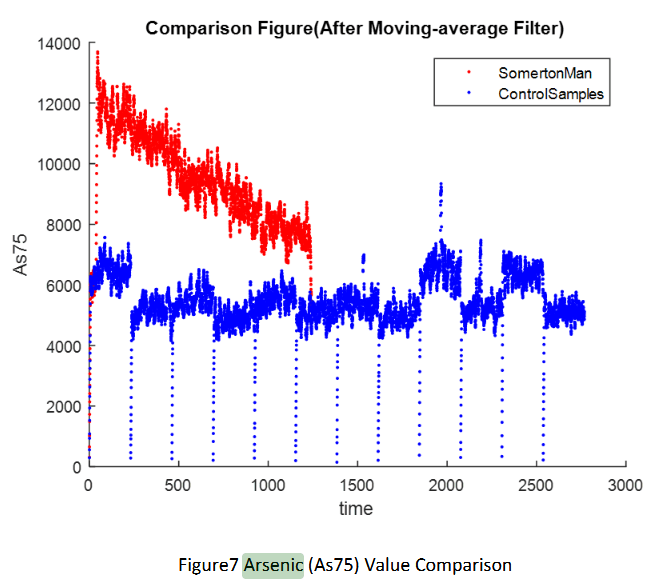
Every fule kno that plucky professor Derek Abbott somehow (let’s not dwell on the details) got hold of a hair embedded in a plaster cast made of the Somerton Man, and then got his students to laser-zap it, revealing a spectroscopic timeline for the last fortnight or so of his life. The most headline-grabbing graph was for lead (which looked as though he had suffered a lead poisoning event some two weeks before his death. But the arsenic graph may also have an interesting tale to tell…

Arsenic and Old Lace

The Somerton Man’s arsenic graph appears on p.20 of Professor Abbott’s students’ “Final Report“:

Even though arsenic has long been known as a poison (it was used to kill people in Roman times, and also by the Borgias, charmers that they were), it was also revived by Thomas Fowler in 1786 as part of his treatment (“cure” would be too strong a word) for syphilis, in the form of Fowler’s Solution (1% potassium arsenite [KAsO2] in water). This solution then fell out of favour, before being revived in 1931 by Forkner and Scott at Boston City Hospital for the treatment of chronic myeloid leukemia [CML] (see Jolliffe (1993), p.288). Until bulsuphan was introduced in 1953, Jolliffe says, Fowler’s Solution was (in combination with radiotherapy) the standard treatment for CML.

But look back at the above graph (which is time-reversed): the level of arsenic is linearly rising. Either the Somerton Man was being poisoned (remember that his death wasn’t found to be arsenic-related) or he was being treated with an arsenic-based medicine, which was slowly accumulating in his blood stream.

Splenomegaly

At his death, the Somerton Man was found to have an enlarged spleen (AKA “he was suffering from splenomegaly”). Circa 1948, the first sign of chronic myeloid leukemia was an enlarged spleen.

So I strongly suspect that, not long before his death, the Somerton Man had seen a doctor, who had had noted his enlarged spleen, (mis-)diagnosed CML, and started him on a course of Fowler’s Solution. Now, I’m not saying that was the actual cause of his enlarged spleen, just that a doctor thought it was the cause. Given his lead graph, I think it’s actually far more likely that this was enlarged due to lead poisoning, but the doctor got it wrong. Given the systematic medical abuse of workers by mining and smelting companies detailed in Richard Gillespie’s (1990) article (which I discussed previously), I can’t help but suspect that this was not a provincial doctor making a mistake, but a sophisticated “conservative” company doctor passing the corporate buck by diagnosing anything – anything at all – but lead poisoning.

Moving the lead incident back two more weeks

Also: given the linear (time-reversed) rise in the arsenic graph, I believe we can also extrapolate that whole time series backwards. This would predict that the Somerton Man saw a doctor about 1-2 weeks before the hair data starts, i.e. some three or four (possibly even five) weeks before his actual death. So I also suspect that the spectroscopic time series captured in his (single) hair would, had the hair been longer, have yielded a much higher lead peak some four weeks before his death.

However, I’d flag that it’s also possible that there might have not actually been an accident: the drop in lead levels might simply be because he had been forced to give up his shitty job at the smelters because of his enlarged (and misdiagnosed) spleen. His raised lead blood levels might simply have been because he had been working in the baghouse at the smelters for some time.

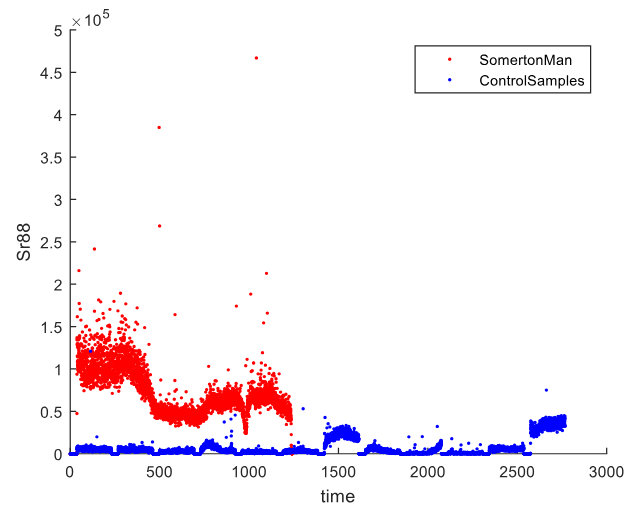
Raised Strontium levels

The Somerton Man’s strontium levels also raised in the last four or five days of his life, which I suspect may well point to a change in his environment.

Received wisdom circa 1948 was that if you worked with lead, you should drink plenty of milk. I believe that this is actually true, but only if you drink milk before you are exposed to lead, not after (which wasn’t really appreciated back in 1948). So I’m wondering if perhaps the Somerton Man carried on drinking milk, but this rise in strontium might be from a change in milk supplier? (As I understand it, strontium is a congener of calcium, but please feel free to slap my schoolboy chemistry down.) There must surely be GIS maps showing strontium concentration / bioavailability etc, but that’s a task for another day.

Regardless, I wonder whether the upward lurch in strontium was triggered by a change in dairy: so for example, if he had been in Pirie Hospital, but then moved somewhere else in the last few days of his life.

Following on from my last post, I’ve been digging further into Broken Hill miners (such as BHP) and Port Pirie smelting (BHAS, basically). Expect a lot of spoil and a small amount of shock and ore.

BHP at Port Pirie and Whyalla

I found this article on Trove from 28th August 1948 (from the BHP AGM the previous day) that I think sheds light on what was going on in Port Pirie and the port at Whyalla (just across the gulf) at the time. The section I found most interesting was this:

In co-operation with the Department of Immigration, we are endeavouring to recruit skilled tradesmen in the United Kingdom. This additional labour will be employed at Whyalla in the shipyard and on home building, and at Port Kembla on plant construction.

Suitable accommodation near to the place of employment is essential in attracting additional employees. Under normal conditions, the building of new homes might reasonably have been expected to have kept pace with the needs of a growing population, but because of the intervention of the war and existing conditions, the acute shortage of accommodation still prevails.

To assist in meeting the situation, hostels are being established at Whyalla, Port Kembla, and Newcastle to house the men who will be recruited from within the Commonwealth and from overseas for employment in our works at those centres. We are co-operating with the Federal and respective State Governments on these projects.

This fits neatly with the situations vacant listed in the Adelaide Advertiser for November 1948 that I listed previously.

History of BHP

I also found a history of mining at Broken Hill that said that BHP had stopped mining there in 1939:

In 1939 BHP ceased all mining operations at Broken Hill. The company planned to concentrate on iron and steel manufacturing at Newcastle and Whyalla. The same year the Sulphide Corporation closed the Central Mine. For the remaining companies on the lode, wartime metal prices again financed development. Much of the central lode remained silent, but in 1943 Broken Hill South took over BHP’s Blocks 10-13 and in 1945 re-opened the Kintore shaft. The old South company now owned the centre of the lode, and the Zinc Corporation was the new South.

Hence I think I need to get a better source of information for what the actual situation was in 1948. In fact, it turns out that there’s a book written in 1948 discussing BHP: “Australia’s iron & steel industry : The Broken Hill Proprietary Co. Ltd“. However, this seems just about as rare as hen’s teeth (there’s a copy in the NLA and another in the SLQ). I’d get a copy by Copies Direct but I have no idea what’s actually in it.

“Accounting for Lead Poisoning, the Medical Politics of Occupational Health”

I’ve now received a copy of Richard Gillespie’s fascinating 1990 article on lead poisoning in Port Pirie (thanks Jo!!!!), and – my goodness! – it paints a pretty bleak picture. Lead poisoning itself wasn’t a recognised condition until 1917, by which time the smelting workforce in Port Pirie had been comprehensively poisoned. Any payments before then for (what we would now think of as) lead poisoning were framed as ‘charitable assistance’ by the company, without accepting any actual responsibility. Workers were also terrorized into thinking that reporting any illness would get them instantly laid off, rather than actually helped: unsurprisingly, reporting rates were extremely low.

It was only in the early 1920s that workers were given solid assurances that they could report health issues without being kicked out: but then BHAS moved on to corrupting the medical evaluation process, with in-house doctors (only the most “conservative” were chosen, by which they meant “pro-company” and “anti-worker”) disallowing most claims via one blatant ruse or another.

There was then a Royal Commission: but this process too was quickly controlled by the companies, and the fundamental imbalance favouring the mining companies’ profits over workers’ health remained in place. All that really changed was the “sophisticat[ion]” (p.316) of the managers’ arguments, which by the end were no more than a crafty casserole of victim blaming and outright lying. Basically, the central conceit was to distinguish “between lead absorption and lead poisoning” (p.330), which in my opinion is just a rhetorical device for somehow blaming people for ‘allowing themselves to be poisoned’ (how?).

And before you write all this off as ancient history, the same specious arguments devised by BHAS were eagerly recycled by the gas companies in America in the 1920s to somehow justify why they should be allowed to add lead tetraethyl to petrol. So BHAS didn’t just give its workers lead poisoning, it helped the gasoline giants expose all of us to environmental lead for the century since. Eat lead, suckers.

Anyway, 1925/1926 is essentially where Gillespie’s account stops, though it is easy to see that with (metaphorically) toxic management running a (literally) toxic industry, nothing much was likely to change quickly. So I think we can easily see exactly how much support someone with dangerously high levels of lead exposure would get in 1948 from the Port Pirie managers at BHAS. Which is basically none.

Levels of lead exposure

Gillespie also mentions (p.322) typical levels of worker lead exposure (via inhalation) in the roasting plant, that were released a year after the Royal Commission:

  • 2.2 mg of lead at the top of the A section
  • 3.6 mg at the top of the mixing bin
  • 19.8 mg at the discharge end of the secondary rolls
  • 52.8 mg above the conveyors.

This should be compared to Chapman’s estimation that 1—2 mg of lead per day could cause lead poisoning, and that a hygiene standard should be set at 0.2 mg to ensure that no lead poisoning would occur.

Note that after improvements made to the conveyors (from tray to belt) in the couple of years following, “lead levels fell from 37 mg to 1.44 mg”. (p.326) But one of the worst (as far as lead exposure goes) places in the plant was “the baghouse“. Gillespie notes that “workers periodically had to enter the dusty chambers to clean and recondition the bags; cases of lead poisoning continued to occur, and this became one of
the jobs reserved for foreign workers.
” (Gillespie’s footnote 51 says: see [Frank A. Green, The Port Pirie Smelters (Melbourne, 1977)], p.110).

[Yes, I’d happily order the copy of Green’s book that’s on sale in Germany, but 40 euros for shipping to the UK? Really? What has gone wrong with bookselling recently?]

All in all, I can’t help but wonder whether what we would now consider catastrophically high levels of lead might simply have been the expected level for someone – a migrant worker, or perhaps even Carl Webb? – working in BHAS’ baghouse in November 1948.

When writing up my Trove search notes for “instrument maker”, it struck me that I should hunt for lead-related jobs in the Adelaide Advertiser’s Situations Vacant listings for the first part of November 1948. Researchers have typically assumed that Carl Webb was living far away from Adelaide, but what if he had been working in Port Pirie when he suffered his lead poisoning event some two weeks before his death?

In 1948, Port Pirie was one of the largest lead smelting areas in the world, and where lead mined in Broken Hill was typically taken to for smelting. And remember that there’s a suspected (vague) connection between Carl Webb’s death and the motorbike stolen from Broken Hill by Freddie Pruszinski.

Mining companies linked to Port Pirie

The main lead-related company in Port Pirie was Broken Hill Associated Smelters (BHAS): this did smelting and refining, for lead, silver, zinc etc. It was co-owned by these Broken Hill mining companies:

  • The Broken Hill Proprietary Co. Ltd. (BHP)
    • The biggest mining company in Broken Hill, and a major shareholder in BHAS
  • Broken Hill South Ltd.
    • Operated the South mine in Broken Hill
  • North Broken Hill Ltd.
    • Operated the North mine in Broken Hill
  • The Zinc Corporation Ltd. & New Broken Hill Consolidated Ltd.
    • Mined lead-zinc concentrates from the Central mines at Broken Hill.

Note also that the Electrolytic Zinc Company of Australia (EZ Co) also sent material to BHAS for refining. Elephant-memoried Cipher Mysteries readers may recall posts here (from 2014 to 2015) relating to EZ Co topics, such as the Risdon roaster, a job advert from 6th November 1948, and another post on industrial difficulties at Risdon.

With all that in mind, let’s dive into the ‘Tiser’s November 1948 sits vac pages…

Situations Vacant – BHP

  • Fri 05 Nov 1948
    • EXPER. machineman for Rapid Bay works; house available, approx. March. B.H.P, 28 Franklin st.
  • Thu 11 Nov 1948
    • CARPENTERS, single men. for Yampi Sound, W-A. Full particulars from B.H.P. 28 Franklin st.
  • Sat 13 Nov 1948
    • APPLICATIONS invited from young men. age group 17-25 years of age. for positions as commercial trainees at our Whyalla works. applicants must hold Intermediate and preferably Leaving certificate, and if selected be prepared to follow the company’s staff training scheme to secure diplomas of Accountancy and Secretarial Institute. Single accommodation provided and after probationary period those selected will be admitted to the company’s provident fund. Further particulars obtainable from the B.H.P. Co. Ltd.. 28 Franklin st.
  • Sat 20 Nov 1948
    • UNSKILLED labor to assist shipyard tradesmen. Apply by letter or on job to Registrar. B.H.P. Co.. Whyalla
  • Sat 20 Nov 1948
    • DOMESTIC help at supt’s. residence at Whyalla, accom. provided. Write to Registrar, B.H.P. Co, Whyalla.

Situations Vacant – everything else

  • Sat 06 Nov 1948 (BHAS)
    • ASSISTANT fuel technologist, salary £450-£550: bonus £182. Apply Broken Hill Assoc. Smelters, Port Pirie

OK, it’s not a lot but it’s not nothing

The two most obviously applicable job openings were (1) the “unskilled labour to assist shipyard tradesmen” for BHP, and (2) the “assistant fuel technologist” for BHAS.

BHP’s (now BHP Billiton) historical archives still exist, so perhaps these could be checked. Similarly, BHAS has 249 linear shelf metres of archives at the University of Melbourne.

Finally: Shipyard Accidents in November 1948

I also found these news story during my searches:

  • Fri 12 Nov 1948 (Whyalla News)
    • PATTERN MAKER BADLY INJURED – May Lose an Eye
    • Mr. Percy Combes, a patternmaker employed in the joiners shop at the shipyard, may lose an eye as the result of an accident which occurred on Monday afternoon. A pattern which Mr. Combes was turning in a lathe broke into two pieces, one of which struck him a violent blow on the face. Dr. Zimmett took Mr. Combes to Adelaide yesterday by plane for treatment by an eye specialist. Mr. Combes is a most careful and methodical tradesman and had never been involved in an accident at Whyalla. He belongs to Whyalla Bowling Club and is extremely popular with members.
  • Fri 19 Nov 1948 (Whyalla News)
    • Dr. Zimmet has returned to Whyalla after accompanying Mr. P. Combes to the city. Mr. Combes lost an eye in an accident at the Shipyard.
  • Fri 26 Nov 1948 (Port Pirie Recorder)
    • Waterside Worker Injured
    • Mr. H. Oxlade, a local waterside worker, had bones in a hand broken when jammed by bars of lead at Smelters Wharf yesterday. He was engaged in loading operations at the steamer Corio at the time of the accident.

BHAS also had an Accident and Sickness fund in the 1910s and 1920s, though it’s not clear to me whether it was still active in 1948. Occupational lead poisoning at Port Pirie has also been picked up by Richard Gillespie in his (1990) article “Accounting for Lead Poisoning: The Medical Politics of Occupational Health” on JSTOR (though that’s not available for free online reading, boo).

Plenty to think about!

For me, searching small ads in Trove is like perfidiously picking people’s past pockets: so much of their life is embedded in their ads, by which I mean not just their property but their hopes and their dreams too. Back in 2022, I looked at Carl Webb’s small ads, the last of which seems to have appeared on 31st May 1947 (“TOOLS. Hand, Engineer’s, Carpenter’s chance. Before 11. Flat 2, 63 Bromby st, South Yarra“).

According to the divorce paperwork, Dorothy Jean had not seen Carl since September 1946, and she believed that he had left the Bromby Street flat at some time during April 1947. She thought he had been working for a machine shop in Prahran [Red Point Tool Co.], a job which he had left by the time of the 1951 divorce paperwork (according to her solicitor).

Hence, I’ve been searching 1947-1948 Australian newspapers in Trove for the rest of his small ad footprint. Of course, I’m not expecting anything as straightforward as “hey, it’s me, ya boi Carl Webb, here I am in Riverina“: but maybe we can – with a bit of keyword cunning – find something there.

I’ve used the following as his general profile (please feel free to disagree with any or indeed all of it):

  • Webb was an electrical engineer, an electrician, and an instrument maker (which was highly skilled)
  • Webb was far from well off, and was trying to make a living while staying well off his wife’s radar
  • I also believe that Webb felt somewhat cheated by Fate, i.e. how come he was smarter than the average bear but never got a lucky break?

To my mind, this really ought to make him just the kind of person who would try to hustle his way through that part of his life via the small ads.

“Instrument maker with ability and experience”

I started by searching for small ads where an instrument maker was looking for a job. I also started with the Adelaide Advertiser, because we know that he was in Adelaide at least twice. I immediately found two pairs of ads:

  • Fri 17 Jan 1947 and Sat 18 Jan 1947
    • INSTRUMENT maker with ability and experience desires position, research or scientific work preferred. V358. Advertiser.
  • Wed 26 Feb 1947 and Sat 1 Mar 1947
    • INSTRUMENT-MAKER OF ABILITY AND EXPERIENCE DESIRES POSITION INVOLVING RESEARCH OR OTHER HIGH CLASS WORK. FOR FURTHER INFORMATION APPLY P275. ADVERTISER

However, cross-referencing the two box numbers (V358 and P275) yielded one other small ad, wedged tightly between the second pair:

  • Fri 28 Feb 1947
    • EX-SERVICEMAN, two years experience N.T. would like opportunity returning N.T. Driving, attending disposals sales, or other capacity. P275. Advertiser

If this was true, it surely wasn’t Carl Webb: but might it have been a lie? I did find one similar ad in Melbourne:

  • Sat 17 May 1947
    • INSTRUMENTS.
    • EX-R.A.A.F. INSTRUMENT MAKER SEEKS EMPLOYMENT where he can apply his knowledge and experience in Instrument Making and Repairs, Including Cameras.
    • N.R.A., O.P.O. BOX 770G.

Cross-referencing “770G” yielded these two small ads from a month later, so perhaps this particular Melbourne instrument maker found the job he wanted, but in Sydney:

  • Sat 21 Jun 1947
    • EXCHANGE Melbourne-Sydney. Modern 2 bedroom House, all convs, Camberwell, for similar, 3 bedrooms, Sydney. Rental only. Write Transfer. G.P.O. BOX 770G. Melb.
  • Sat 28 Jun 1947
    • EXCHANGE. – Melbourne – Sydnev. – Attractive Modem Home. Camberwell, in exchange similar, Sydney, rental basis, owner’s consent. Transfer. G.P.O. Box 770G. Melb.

It seems that Trove led me to someone in an almost identical situation (same skills, same time, same place), albeit on the other side of the Yarra. Was he Carl Webb? Probably not. But a good try, nonetheless.

Some not so good matches

Here’s the next instrument maker I found, this time in Sydney:

  • Wed 5 Nov 1947
    • INSTRUMENT MAKER will do Contract Work or any Repairs Auto Aero Ship etc No 7501 Herald

This lead went nowhere, alas. So here’s the next one:

  • Sat 6 Mar 1948
    • ENGINEER seeks position, 6 years’ experience production, control, and planning metal pressings and assemblies, holder of engineering diploma and competent tool and instrument maker. B247. Argus.

Nope. And the next (in the Queensland Courier-Mail):

  • Thu 3 Jun 1948
    • SCIENTIFIC instrument maker, 17 years’ exper., including study U.S.A., returned serviceman, requires posn. respon. Apply CT94, C-Mail.

Still nope. And the next:

  • Wed 21 Jul 1948
    • Engineer and Instrument Maker requires work for small well-equipped workshop. Machining (turning and drilling) and fitting of small precision parts; also quantities of small component parts. 84385. Age.

The reference doesn’t appear to link to any other ads, so nope once again (probably).

Doesn’t sound like our man. Next!

  • Mon 6 Sep 1948
    • OPTICAL Instrument Maker, returned soldier, requires perm. position, several yrs.’ exper. on all types optical & service instruments. Excel. refs. G599 Argus.

Nope. And we’re done (finally).

Final thoughts

Note that I was only able to do this because “instrument maker” was a fairly reasonable search term: “electrical engineer” yields far too many. So I’m not sure what to grind through next.

The one thing I did think was interesting was that I don’t recall anyone trawling Trove for lead-industry-related job openings in the month prior to the Somerton Man’s death, and the lead signature in his hair still strikes me as a bit of a clue that has never really given us anything beyond idle speculation. Maybe that’s something to aim for next.

What I infer from Prosper Thomson’s 1947 small ads:

  • Thomson sold his second-hand car business around May 1947
  • Thomson had a property in Belair that he sold around July 1947
  • Thomson bought 90a Moseley st (just) before 18 October 1947
  • Also: I see no sign that Thomson stopped renting 7 Main St, Henley Beach

The obvious question here is: who owned the 1939-built property in Alta-Mira crescent, Belair before Prosper Thomson?

This leads me to the most interesting pair of Adelaidean small ads of all, and they weren’t even placed by Thomson:

[25 Aug 1948] ELECT. eng, 50, many years’ exp., foreman, manager, contracts, maintenance, diploma “A” grade, Vic. licence, ex. refs. 7 Main st, Henley.

[27 Aug 1948] ELECT. eng., 50, many years’ exp., foreman, manager, contracts, maintenance, diploma “A” grade, Vic. licence, ex. refs. 7 Main st.. Henley.

Just so you know, according to 1947 (and 1948, and 1949) Sands and McDougall, 7 Main St Henley Beach was owned by “Miss R. Ward”.

Who was this Victoria-licensed electrical engineer living in 7 Main St, Henley Beach? Might he turn out to be the person who connects Prosper Thomson with Carl Webb? Over to you!

I’ve found two things that might possibly be connected. Firstly, this advert from 27 Jan 1948:

ELECTRICIAN seeks situation with accommodation for self and wife. Victorian licence and references. K267. Advertiser.

Secondly, there was an electrician called J. Girven living a few doors away (at 16 Main St, Henley Beach), who had previously (on 4 Jan 1947) placed this ad:

ELECTRICAL wireman wanted. Apply Girven, 16 Main st, Henley Beach. L8638.

Perhaps J. Girven had seen the 27 Jan 1948 ad, and had hired the Victorian electrician?

Now, it may be a bit of a stretch, but the K267 box was also used for an ad on 12 Oct 1948:

STRAYED, tan and white Pekinese pup from 1 Leicester av., Kilburn, Monday, 11th: good reward. K267. Advertiser.

And the same address (1 Leicester av., Kilburn) also came up exactly one other time in 10 Jan 1952:

DOHERTY.—On January 1 (suddenly), James “Len” Doherty, of 1 Leicester av., Kilburn, loved husband of Ivy, and loving father of Kathleen (Mrs. H. Armstrong), Maureen (Mrs. W. Badenoch), Agnes (Mrs. B. Baldock), Brian and Pat. Aged 52 years. Requiescat in pace.

Might this Victorian electrician have been James “Len” Doherty?

I enjoyed Pete Bowes’ most recent “bloodhound” post, but I was pretty sure I’d seen many, many more ads placed by Prosper McTaggart Thomson than he listed there. So I thought I’d have a go at compiling my own list. So… here are all the small ads I found for 1947 (including a single one from 1946).

Note that I assume we can tie all these addresses:

  • 200 Hindley St
  • 7 Main St, Henley Beach
  • “Robinvale”, Altamira Crescent, Belair
  • 90a Moseley St, Glenelg

…and all the various P.O. Boxes to Prosper Thomson. Do you agree?

Dec 1946

[18 Dec] HOUSE, will purchase for cash to £ 1,500, prefer hills district, vacant possession, can trade 1939 Ford V 8 sedan, as new, if reg., NSPR £310 Apply P. M. Thomson, G.P.O., Adelaide.

Jan 1947

[4 Jan] WANTED car, tourer, sedan. or rdst., reasonable order. £50 to £200, by ex-serviceman for business: consider buckboard. Full particulars as condition and price. Will inspect 50 mile radius Adelaide. Thomson, 7 Main st.. Henley Beach, after 1 pm, or Sunday.

[8 Jan] MODERN house, suit couple. Adelaide or hills, will exchange 1939 Ford V8 sedan. as new. NSPR £306. with extras, if required. Thomson, 7 Main st. Henley Bch.

[22 Jan] CAMERA Hertie F.4.5 lens, 5 speed shutter, takes 16 pictures on 127 film, small compact job, carrying case, films, exchange for crystal water set and fruit set. Thomson, 7 Main st., Henley Beach.

[22 Jan] UTILITY Bedford coupe front. 10 h p., 1939. NSPR £210, appearance as new, exchange for 8 to 14 h.p. car. 1938 or later. Thomson. 7 Main st.. Henley Beach.

[25 Jan] WANTED 10 to 14 h.p. car or utility, urgent, pay your price, cash, or take over terms. Home week-end, or inspect anywhere. Thomson. 7 Main st., Henley Beach.

[27 Jan] WANTED 10 to 14 h.p. car or utility, urgent, pay your price, cash or take over terms. Home week-end or inspect anywhere. Thomson, 7 Main St., Henley Beach.

Feb 1947

[1 Feb] MORRIS 10-h.p. 1940 saloon, series M, similar, as now being sold as 1947 models, for £635, previously owned by Melbourne doctor, exceptionally well kept. Just driven overland by me, averaged 38 m.p.gal., performed perfectly, NSPR £288 Exchange for larger sedan and cash diff. Thomson, 7 Main st., Henley Beach.

[12 Feb] WANTED urgently, car, suit city traveller, 8 to 14 h.p. preferred, consider larger car, utility, pay good price. Clinic Distributors. Box 1009J. G.P.O., Adelaide.

[12 Feb] CHEV. wanted. 1941 sedan, consider 1940. or similar car for taxi, pay your price for good job. Thomson. 7 Main st Henley Beach. Inspect anywhere.

[12 Feb] CAMERA. Foth 120, folding, f4.5, double anastigmat lens, 5 speed shutter, extra good, little used. £12/10/- cash. Thomson, 7 Main st, Henley

[15 Feb] WANTED, 1928 to 1932 American sedan, tourer or roadster, pay good price. Thomson, 7 Main st., Henley Beach, week-end.

[15 Feb] MANTEL 5-valve Mickey Mouse, good interstate performance, perfect order, modern plastic cabinet, cost £19/19/-. accept £14 cash. Thomson. 7 Main st, Henley.

[19 Feb] WANTED, 1928 to 1932 sedan tourer or roadster, good order, pay cash or take over terms. Thomson, 200 Hindley St.. Adelaide. 10 a.m. to 3 p.m.

[22 Feb] CAMERA, Kodak, folding. No. 2A, double lens, as new; sell or exchange for auto. .22 rifle. Thomson. 7 Main st, Henley Beach.

Mar 1947

[1 Mar] MORRIS 10 h.p. saloon. Series M. 1940. same cars now selling as 1947 models for £635. This car has Just been rebored, crankshaft ground, all bearings renewed, brakes relined. king pins replaced, and is definitely equal to new car and represents rare opportunity to acquire most popular sedan . Doing approx. 40 m.p. gal of petrol. We require large sedan or coupe, like Chev., Dodge or similar, suitable country traveller, on exchange basis. NSPR of Morris £298. genuine NSPR deal. See Mr. Thomson. Clinic Distributors. 200 Hindley st, business hours.

[1 Mar] WANTED, house or flat, furn, or unfurn., in hills or Blackwood d’st., business people. Thomson. Box 1009J. G.P.O., Adelaide.

[5 Mar] DODGE 1923 single seater, very good order mechanically, tyres as new, reg. 6 months.,NSPR £110, accept £85, ready drive anywhere. Thomson. 200 Hindley street.

[6 Mar] MORRIS 10 h.p. sedan. 1941, NSPR £309. Just rebored, overhauled, extent. £65. now as new. exchange for 8 to 14 h-p. utility or large car, suitable country traveller. Clinic Distributors. 200 Hindley St.

[8 Mar] WANTED, American tourer, rdstr, or sedan. Whippet. Rugby. Chev, similar. Consider utility. Pay cash. Inspect anywhere. Clinic Distributors, 200 Hindley

[8 Mar] ELECTRIC copper or washing machine. Inspect anywhere, pay cash. Thomson. Box 1009J, G.P.O.

[8 Mar] WANTED, car, any make or model, buckboard would do. £50 to £175 cash. Urgent, by discharged A.I.F. man. Thomson, Box 1009J, G.P.O.

[12 Mar] RIFLE. .22. auto, or repeater, pay cash or exchange Healing cycle, as new. Thomson, 200 Hindley st.

[13 Mar] RIFLE. .22 repeater or auto, in good order. Will inspect. Thomson. Box 1009J. G.P.O.

[14 Mar] GENT’S Healing cycle, cond. as new, tyres new, Eadie coaster new, price £18/18/-, accept £9/10/-. Thomson, 200 Hindley St.

[15 Mar] PARTNER for used car business, active or silent, good returns assured. £500 to £1,000, money under own control. I have city premises and 10 years experience in motor trade, stocks assured. Thomson. Box 1009J, G.P.O.

[15 Mar] RIFLE. .22 repeater or auto. In good order. Will inspect. Thomson. Box 1009J. G.P.O.

[19 Mar] MORRIS 10 h.p. saloon. 1941. extra good mechanically. NSPR £311, exchange tourer or utility. 1936. 8 to 14 b.p. Clinic Distributors 200 Hindley st.

[22 Mar] WANTED Morris 8/40 or similar, or utility, to 10 h.p.: pay your price, cash Thomson, ‘Robinvale,’ Altamira Crescent Belair. near Methodist Church.

[22 Mar] MAN to clean block and gardening. Thomson, Alta Mira Crescent, Belair, 2 doors from Methodist Church.

[26 Mar] WANTED urgently, tourer or roadster, by ex-serviceman, commencing business, utility will do, cash £75 to £150. Will inspect. McTaggart, Box 1009J. G.P.O.

[26 Mar] WANTED. Morris. Standard. Vaux, 8 to 14 h.p, car or prefer utility. Thomson. Alta Mira crescent. Belair. Inspect anywhere.

[29 Mar] WANTED urgently by ex-serviceman about commence business, car or buckboard, £50 to £150. Will call, pay cash. McTaggart, Box 953H. G.P.O. Adelaide.

[29 Mar] WANTED Bedford utility or similar make 8 10 14 h.p, 1937 to 1940; cash to £300. Thomson. Alta Mira cres, Belair. 2 doors from Methodist Church or letter to P.O. Belair.

[29 Mar] RIFLE, automatic. .22. as new; Healing gent’s cycle, unmarked, cost £16/10 accept £16 the lot. Thomson. Alta Mira crescent. Belair. 2 doors from Methodist Church.

Apr 1947

[5 Apr] WANTED, car or buckboard, cash, £50 to£200. Thomson, Alta Mira cres., Belair

[5 Apr] WOMAN for washing, cleaning, no children. Mrs Thomson, Robinvale, Alta Mira Cres., Belair

[5 Apr] STANDARD 10 h.p. 1938 tourer, new 3 tyres, hood, curtains, recently overhauled. NSPR £170. make clean swop for utility, 6 to 14 h.p. Thomson. Alta Mira crescent. Belair. 2 doors past Methodist Church.

[12 Apr] WANTED urgently by ex-serviceman, car, any make or model, reliable utility would do, cash, about £100 to £150. McTaggart. Box 953H. G.P.O., Adelaide.

[12 Apr] FORD A utility, factory built steel body, just reconditioned to extent of £65. new tyres. 6 wheel equip, NSPR £85. exchange outright or take car part payment. Thomson. Alta Mira cres, Belair. 2nd house from Methodist Church.

[19 Apr] WANTED car or buckboard, reas. order, any make suit traveller, cash £75 to £150. McTaggart. Box 953H. G.P.O.

[19 Apr] BEAN tourer, 14 h.p., 1928-30 series, sound mechanically, well shod, good hood, complete tools, instruct, book, rgd.; NSPR £179, accep: £135 cash. Thomson. Alta Mira Cres, Belair, 2nd house past Methodist Church. Sat. only.

[26 Apr] WANTED—Woman to do washing, cleaning, one day a week, no family. Mrs. Thomson, Alta Mira Crescent, Belair.

[26 Apr] MORRIS 8/40 utility, 1940, used privately. as new. NSPR £205. Exchange for car. 1938 or later on NSPR basis. Thomson. Alta Mira Crescent. Belair. 2nd house from Methodist Church.

[30 Apr] WANTED, building, suitable for garage business, city or suburbs. ex-AIF man, good references. Rent in advance. Thomson. Box 953H. G.P.O.

[30 Apr] WANTED urgently, any type or make car, going order, £75 to £150. Buckboard would do. I will inspect anywhere if give full details. Thomson. Box 953H, G.P.O., Adelaide.

May 1947

[7 May] GENTLEMAN, ex -2nd A.I.F., with 1940 Austin car. exper. traveller, collector, had own garage, business 5 years, good refs., any kind employment, perm, or casual, required urgent. Thomson, Box 953H, G.P.O.

[8 May] VACANT possession, all electric, jarrah 4 rooms, large louvred glass sleepout, modern kitchen and bathroom, large block, nicely laid out garden, definitely best position in Belair, 7 miles from G.P.O., 2 minutes Belair rly. Stn., built 1939. Require sedan car, 1938-46 model, suitable taxi, balance cash. Write Box 953H, G.P.O. for appoint.

[10 May] GENTLEMAN, ex-2nd A.I.F., with 1940 Austin car, exper. traveller, collector, had own garage, business 5 years, good refs, any kind employment, perm, or casual, required urgent. Thomson, Box 953H, G.P.O.

[17 May] VACANT pos., all-electric 5-roomed jarrah bungalow, condition as new, 2 minutes Belair rly. stn., 7 miles from city; car taken as part payment if desired. Write Box 953H. for appoint.

[24 May] WANTED urgently, car, any type, reasonable condition, utility would do, £75 to £150, inspect anywhere if full particulars given, spot cash. Thomson. Box 953H. G.P.O, Adelaide.

[28 May] WANTED desperately by ex-A.I.F. man, car, any type, for business, utility will do, can pay cash £75 to £200. Will inspect anywhere city or country, if full particulars given. Thomson. Box 953H, G.P.O., Adelaide.

[28 May] GENTLEMAN. ex-2nd A.I.F.. experienced traveller and collector, recently sold own business, have 1940 Austin car, seeks employment any kind, perm, or casual, good rels., sound financial position. Thomson. Box 953H. G.P.O., Adelaide

[31 May] WANTED, building, suit garage, workshop, city or subs.; pay ingoing or buy plant; urgent. Thomson. Box 953H. G.P.O., Adel.

[31 May] WANTED any make car. reasonable order, utility would do, cash to £150 or take over terms. Inspect anywhere. Full particulars to Thomson, Box 953H. G.P.O., Adelaide.

Jun 1947

[28 Jun] WANTED flat, or anything self-contained, will purchase contents if necessary or take short term basis, req. by 1/8/47 or sooner Thomson, Box 953H, G.P.O.

Jul 1947

[5 Jul] YOUNG man, ex-2nd A.I.F., experienced traveller, also experienced all sections of motor trade, recently disposed of garage business, own car, seeks position. Consider any type employment. Have good references. P. Thomson, Box 953H, G.P.O. Adelaide.

[22 Jul] FORD 10 h.p. sedan, 1937, new car appearance, 35 miles gallon, good tyres NSPR £155, exchange for car suitable taxi, adjust diff. cash. Thomson, Alta-Mira Cres., Belair, 2 doors from Methodist Church.

[26 Jul] FORD 10 h.p. Prefect, 1937-38 mid, 4-door sedan, camp seat, roomy luggage compartment, in new car condition. NSPR £155. exchange for car suitable taxi and pay cash diff. Thomson, “Robinvale,” Alta-Mira cres, Belair. 2 doors from Methodist Church.

Aug 1947

Sep 1947

Oct 1947

[18 Oct] WANTED 1946 or 1947 sedan, by ex-A.I.F. man for taxi, have permit, urgent. Thomson. 90a Moseley st. Glenelg. Phone X 3239.

Nov 1947

Dec 1947

Here’s a guest post by Cipher Mysteries commenter Pat, who has been hot on the trail of Dorothy Jean Robertson in Trove. There are, of course, many different Dorothy Robertsons out there, but Pat thinks these refer to the Dorothy Jean Robertson who married Carl Webb (the Somerton Man).

So… here we go!

Yet Another Treasure Trove

A while ago I posted some Trove links of a Dorothy Robertson student at Mildura Central school. What follows is the evidence that she is our Dorothy. (I have capitalised the important names)

17 AUGUST 1927 (SUNRAYISIA DAILY, MILDURA) – GIRL GUIDES

GIRL GUIDES
An enrolment of Brownies of the First Mildura Pack (Church of England) took place at St. Margaret’s Parish hall last, Saturday week, Rev. Canon Horner opening the proceedings with prayer. Miss McWilliams 1 District Commissioner performed the enrolment ceremony, and Miss Gcocissor. (Drov.11 Ov.-ii and the First Meri.eii! Brownies were present.
Mirs Jr.hr.s’.on (Brown Owll and Mirs . Currey ‘Tav.-uy Qv;lk wove emrcVie-tl before- tho children. Tho children linishfu with fairy rings and grand r.alutc. The following children were carolled: Esther Nichols, Doreen Sarah, Eetiv litimmertGn, Irene Ijciich. Doreen Leach, Morle Dowlin, Enid Norman, Wilntit Halpin. Joan Halpia. Vaida Woods, Trixie Robertson and DOROTHY ROBERTSON.

10 DEC 1932 (SUNRAYISIA DAILY, MILDURA) – MILDURA CENTRAL

During the year, swimming certificates were gained as follow:—Senior swimming: Irvine Corbould, Allan Eagle, John Magnusson. Junior swimming, boys: Graeme Baker, Max Baker, John Carson, Ronald Carter, Irvine Corbould, Alan Blackwood, Robert Davidson, Allan Eagle, Harry Heme, Roy Hunter, John Magnusson, Ray Magnusson, Joseph McGinty, Douglas Noyce, Charles Scarff, Robert Styles, Ronald Stephens, George Risbey, Max Wilson, Keith Wood, Rowland Woodhead. Girls: Ivy Fleming, Ilma Jones, Mary Malloch, Lorna Thomson, Thelma Thornton, DOROTHY ROBERTSON.

15 DEC 1934 (SUNRAYISIA DAILY, MILDURA) – MILDURA CENTRAL

Grade 8 have satisfactorily completed the year’s work. At the merit certificate examination they were very successful, gaining 13 merits out of a possible 14, and one pupil still pending in mental arithmetic.

The following pupils were successful: Girls: Heather Carter, Mavis Feuton, DOROTHY ROBERTSON, Sylvia Surgey, Gladys Thomson. Boys: Kenneth Adamson, Edward Heaner, Ronald Simmonds, Edward Surgey, Colin Williams, John Young, Keith Dunn, Robert Chamberlain. A penny concert in aid of Junior Red Cross will be held on Monday afternoon.

21 DEC 1934 (SUNRAYISIA DAILY, MILDURA) – CENTRAL SCHOOL YEAR ENDS

SWIMMING CERTIFICATES
At the conclusion of the penny concert Mrs. Segnit, president of the Mothers’ Club, presented to the boys and girls the Merit Certificates obtained at the recent examination, and also the certificates for Education Department tests in swimming efficiency. Merit certificates.—Girls: Mavis Fenton. Heather Carter, Sylvia Surgey, DOROTHY ROBERTSON, Gladys Thomson.

4 JAN 1939 (SUNRAYISIA DAILY, MILDURA) – SOCIAL JOTTINGS

Miss DOROTHY ROBERTSON, of Melbourne, is the guest of Mrs. F. Hall, of Orange Avenue.

[Mrs. F. Hall is Florence Olivia Hall (nee Stratford), sister of Alice Robertson (nee Stratford), both daughters of Louisa Wilhelmina Stratford (nee Reither). Florence Olivia’s husband Ernest Clarence Hall died in 1917, hence Mrs. F. Hall.]

31 MARCH 1936 – FAMILY NOTICES

Births, Marriages, and Deaths
IN MEMORIAM.
STRATFORD — In loving memory of our dear mother, Louisa W. Stratford, who passed away on March 31, 1935. Sadly missed.
—Inserted by her loving family.
STRATFORD — ln sad and loving memory of our darling grandma, who passed away on March 31, 1935. Dearly loved and sadly missed.
—Inserted by her loving grandchildren. Trix. Pat and Dig. Hall

[Trix (Floris Jean), Pat (Patricia Doreen) and Dig (Clarence Charles) were the children of Florence Olivia Hall (nee Stratford) and Ernest Clarence Hall]

12 OCTOBER 1938 (SUNRAYISIA DAILY, MILDURA) – ENGAGEMENT

Engagement
The engagement is announced of Patricia Doreen, youngest daughter of Mrs. F. O. Hall, of Orange Avenue, and the late Mr. E. C. Hall, of St. Arnaud, to John Squire, youngest son of Mr. S. Johnson and the late Mrs. Johnson, of Ballarat.

4 JANUARY 1939 (SUNRAYSIA DAILY, MILDURA) NEW YEAR’S EVE DANCES

SERGEANTS’ MESS DANCE

Miss D. ROBERTSON
(Melbourne), white georgette

22 MARCH 1939 (SUNRAYSIA DAILY, MILDURA) – WOMEN’S AIMS & INTERESTS

The St. Patrick’s dance at Casa Loma was very enjoyable. I met MISS ROBERTSON there, who looked striking with the Romany tan make-up. She may be interviewed at Ramsay’s chemist’s shop, and will put you on the right track for making the most of your personal appearance.

19 APRIL 1939 (SUNRAYSIA DAILY, MILDURA) – DOUBLE WEDDING

Johnson—Hall
There was a floral setting in St. Margaret’s Church of England for the marriage of Patricia Dawn, youngest daughter of Mrs. F. O. Hall, of Orange Avenue, and the late Mr. E. E. Hall, of St. Arnaud, to John Squire, youngest son of Mr. S. Johnson and the late Mrs. Johnson, of Raglan Street, Ballarat.
Canon Horner officiated, and Mrs. A. G. Horner, who presided at the organ, played the “Bridal March” as the bride entered the church with her brother, Mr. Clarence Hall, who gave her away. During the signing of the register, MRS. J. C. ROBERTSON, of Melbourne (aunt of the bride), sang “Mate o’ Mine.”
The gown of French crepe, embroidered in silver, worn by the bride, moulded her slim figure and merged into a semi-train. The draped bodice was caught on the shoulders with silver knots, the long sleeves forming points over the hands. Over a filmy cloud of tulle billowed her exquisitely embroidered veil, which was hold by a halo of orange blossoms. She wore white satin and silver shoes, and carried a bouquet of carnations, gladioli, azaleas, and fern, tied with satin ribbon.
The bridesmades. Miss Trixie Hall (sister of the bride) and Miss Jean Dixon, carried bouquets of charm dahlias and carnations, the toning being reproduced in their frocks in two shades of cyclamen and mauve chiffon, making a delightful foil to the bride’s toilette. Picture hats in the same tonings and silver kid shoes completed their ensembles.
The best man was Mr. Alex. Grant, of Melbourne, and the groomsman Mr. Alex. Johnson, of Ballarat (brother of the bridegroom).
At the reception at the Grand Hotel the bride’s mother received the guests in a smart frock of vintage wool georgette, with gold accessories, and hat en suite. She carried a bouquet of autumn-tinted dahlias and maidenhair fern. Canon Homer presided. The usual toasts were musically honored, and many telegrams read. The honeymoon was spent at Lorne, the bride travelling in an imported frock of teal blue woollen, with small toque of prune felt, and prune accessories. Mr. and Mrs. Johnson, who will make their home in Ballarat, were the recipients of many gifts.

{Mrs. J. C. Robertson, nee Alice Stratford)

https://trove.nla.gov.au/newspaper/article/268806209

https://trove.nla.gov.au/newspaper/article/268787718

13 APRIL 1940 (THE AGE, MELBOURNE) – ADVERTISING [this may or may not be her]

MISSING FRIENDS
MISS DOROTHY ROBERTSON, please call at 23 Union-st, Brunswick; Important news

15 MAY 1940 (SUNRAYISIA DAILY, MILDURA) – SOCIAL NOTES

Mrs. F. O. Hall, or Madden Avenue, left, this week for BALLARAT, where she will be the guest of Mr. and Mrs. J. Johnson.

8 DECEMBER 1920 (SUNRAYISIA DAILY, MILDURA) – BERRI IMPROVEMENTS

RAMSAY’S CHEMIST

Rumour says that the corner of Wilson Street and Vaughan Terrace will shortly be occupied by two handsome rows of shops. This block has lately changed hands.
Mr. A. M. RAMSAY, CHEMIST, will have possession of his double fronted shop in Vaughan Terrace by Christmas, and is considering extensions.

4 SEPTEMBER 1929 (SUNRAYISIA DAILY, MILDURA)

SAMPLE TINS OF PHOSPHATINE FOOD FREE TO MOTHERS
The following Chemists will be glad to hand you a sample tin of Phosphatine for your Baby:—MILDURA: A. J. Jenkins, H. P. Blackett, P. T. Stone W. It. Weir, A. RAMSEY, J. H. Smith. RED CLIFFS: J. M. Couve, E. J. Dean MERBEIN: G. H. Kendall, S. H. L. Harris. FAILlERES’ PHOSPHATINE Wholesale Agents: Joubert & Joubert Pty. Ltd., Melbourne

5 APRIL 1933 (SUNRAYISIA DAILY, MILDURA) – ADVERTISING

HOT Water Bags.—Moulded rubber, just arrived. Barnet Glass or Dunlop. Price 3/ each.—RAMSEY, CHEMIST, Eighth Street.

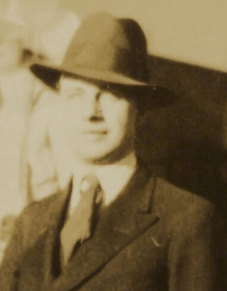
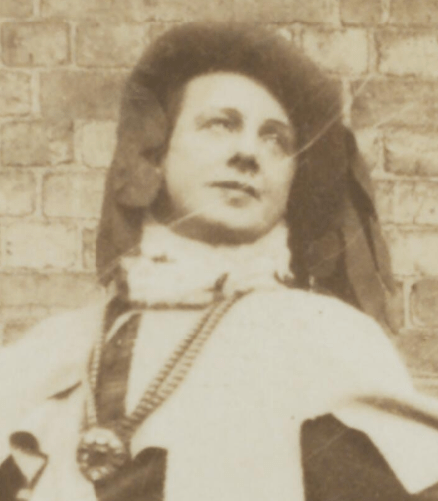
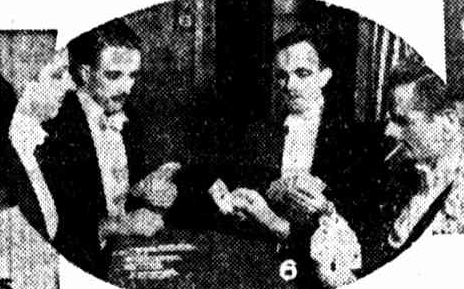
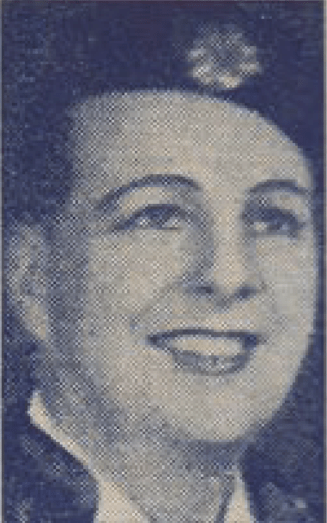
The last Cipher Mysteries post (from Jo) on Hickey Taylor only had a single scratchy picture of him playing bridge backstage. However, this lack of good images prompted CM commenters to dig up a whole sequence of pictures, which I thought would be good to put into a photo timeline.

Photo Timeline

1929 “Desert Song”, found by milongal:

1930 “Whoopee” (found by Jo):

“En tour Hickey […] outside Mark Foy’s, Sydney 5.30 A.M., [ca. 1930]” (found by Jo):

193x “St Joan” (found by Jo):

1937 Sydney Sun, playing bridge backstage with the cast of “The Merry Widow”:

1945 “Desert Song” (found by Thomas):

Back to the Family Photo…

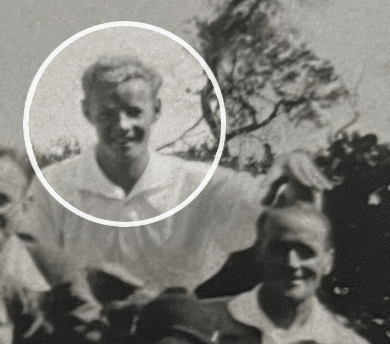
Going back to the whole family photo affair, was it really Hickey Taylor whom Charlie Webb (circled) was pranking? Personally, I don’t see it at all, but… what do you think?