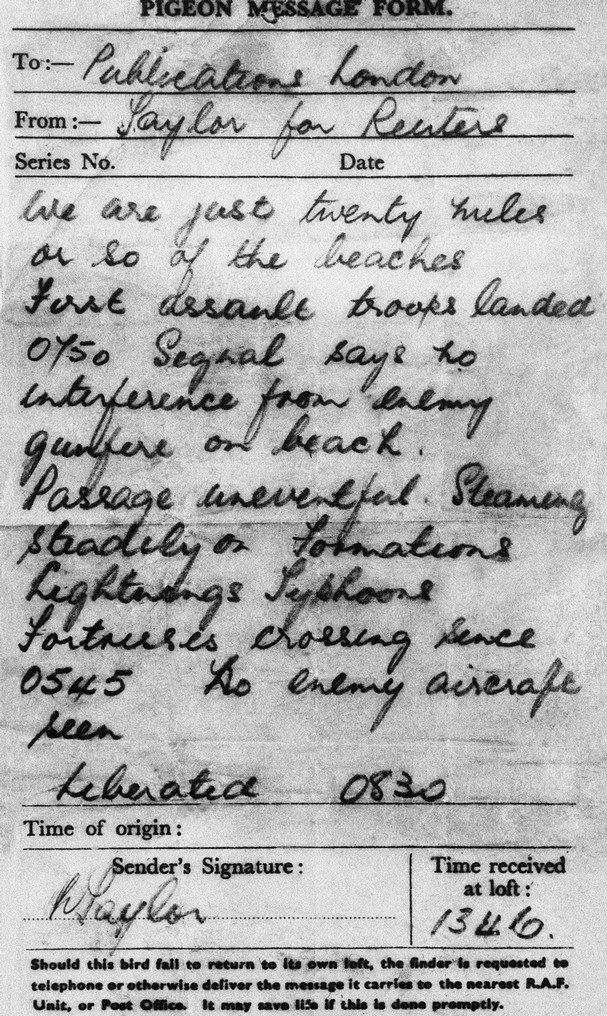
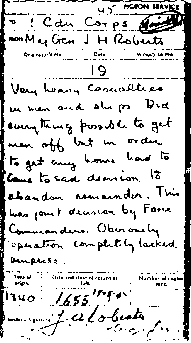
Today I received a nice little package of stuff from Holland, courtesy of Rob van Meel, who reprints old military manuals – mostly British, but a few American and German ones too. I get the impression these are mainly for people with an interest in reenactment / war games rather than historians and researchers per se, but given a healthy area of overlap there’s surely room for everyone at the table. 😉
Unsurprisingly, I was most interested in the various Slidex-related manuals Rob had, particularly an updated release of the Slidex manual dated 1st December 1944 (i.e. six months after D-Day). You see, Slidex originated as a system where operators used only a single letter for each of the twelve slots on the horizontal cursor: yet we have later examples where two letters went in each slot (and you could choose either one to signify that column).
If our pigeon cipher is a bigram cipher, then it is one that appears to use 24 letters in its horizontal cursor. So if it was enciphered using Slidex (which seems to be the code most widely used on D-Day), it would have to have used the two-letters-per-slot version. Hence the big question I wanted to try to answer was… when did the changeover from one-letter-per-slot to two-letters-per-slot Slidex happen?
However, going through the revised Slidex manual, it became abundantly clear to me that even in December 1944, the British Armed Forces were still using single-letter-per-slot Slidex, which would seem to rule out Slidex’s having been used in the pigeon cipher before 1945.
At the same time, the two pigeons were (according to their NURP references) born in 1937 and 1940: and the older of the two would have been right at the end of its carrying days in summer 1944, let alone in 1945. As a result, the Venn diagrammatic intersection of possibility (i.e. between the [old pigeon] circle and the [revised Slidex] circle) is shrinking all the time.
Right now, I don’t know what the answer to all this is: to my eyes, what we’re looking at seems a bit more like a bigram cipher than a machine cipher, but even that’s far from certain either way. All the ‘best’ cipher mysteries seem to take a somewhat sadistic pleasure in continuously oscillating either side of the shaky line between certain and uncertain, and this one is surely no exception.
Yet there were other low grade bigram ciphers in use during WW2: two in particular were an Air Support bigram cipher and a Royal Engineers syllabic cipher. These may well be the same two variants of the Syllabic Cipher introduced in 1942 as per Stu Rutter’s page, which I believe were known as BX 724 and BX 724/RE respectively.
I’ve already written to several army museums and archives asking if they have either of these, but so far without any luck. Any suggestions as to private collectors (or collections) who may have a copy of either? Unless you have a better idea, this would seem to be the next sensible thing to check, and the various National Archives files Stu & I checked didn’t seem to have any description of it at all.
In short: probably not Slidex, so remains a work in progress. 😉