I was reading about Hallermann–Streiff syndrome this morning, and was a little surprised by the huge gap between Aubry (who first discussed elements of it in 1893, though only partially and in the context of congenital alopecia) and Hallermann (1948) and Streiff (1950) (after both of whom the syndrome was named).

And so I went a-looking, to see what I could find. I searched Hathitrust for “congenital alopecia”, ordered the results by date, and was so amazed by the first result (and also by the fact that it wasn’t visible on the Internet) that I decided to turn it into a webpage.

So, here’s the link to my typed-up version of “Congenital Alopecia as an Expression of Atavism” by James Nevins Hyde, M.D. (1908).

Of course, 1908 was far too early for Hyde to have a modern-feeling ‘syndrome’ framework to place his observations inside. But, to be fair, I think he did as well as he could: the places where he reverts to atavism or to reversion to lower mammalian or amphibious types feel almost like dated science fiction to our modern syndrome-attuned ears.

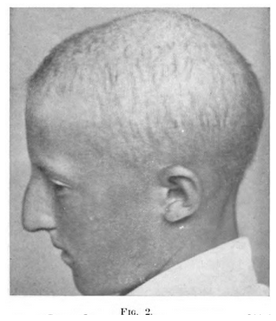
So maybe dismissing all physicians of that era would be somewhat unfair: Hyde did the best he could to capture, cross-reference and consider the condition, with clear and careful photographs that are useful even now. And maybe the websites discussing the history of HSS should mention Hyde’s contribution?
My search for scientific balloon history 1945-1949 has just taken a sharp turn to one side. I’ve managed to locate a folder in the Air Force Historical Research Agency at Maxwell AFB in Montgomery, Alabama that has (or, at least, in 1986 had) information about some super-early scientific balloon stuff that might possibly be what I’ve been chasing after for a while now.

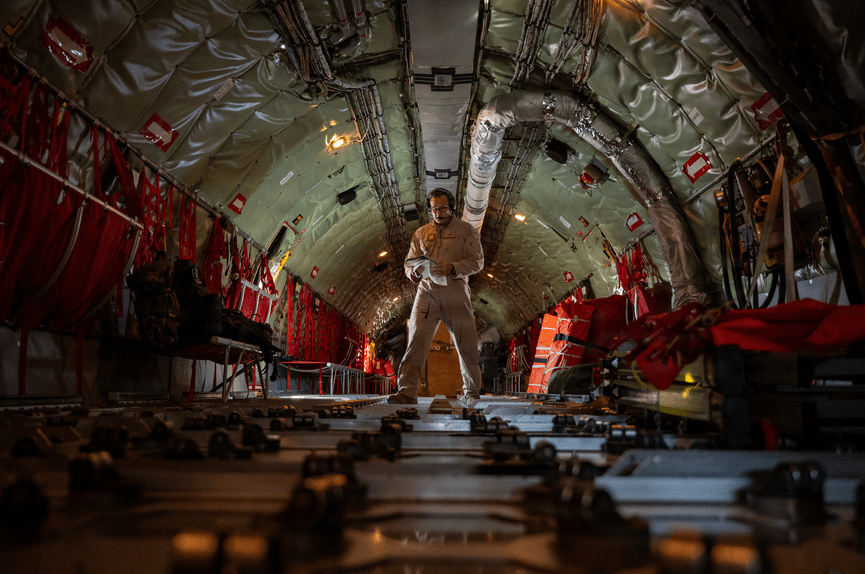
(Just so you know, this is the inside of a KC-135 Stratotanker at Maxwell AFB.)

But – Lawdy, Lawdy – finding an independent researcher in Alabama happy to go onto a military site isn’t proving easy at all. I know, it’s only a single folder, so it’s barely even a day gig, which isn’t much. But when you have nothing, even a small something can be a huge deal. It eez what it eez.

So… does anyone here happen to know someone who might fit the bill? Or have any suggestions as to how to find someone who might fit the bill? Thanks!

[*] Well, a bit of it, anyway.

Over the last weeks, my Cipher Mysteries inbox has been inundated with AI-generated theories. But – and with my apologies to the genuine cipher theories that also landed there, which I promise I will get back to – I’ve instead been focused on the Voynich Manuscript. Or, more specifically, on a single line of its text.

And I think I can read it.

The f17r marginalia

Back in 2006, I was hugely fortunate to be allowed by the Beinecke Rare Book & Manuscript Library’s curators to spend a few days working with the Voynich Manuscript. One of the highlights of that trip came when I borrowed their UV blacklamp to examine the tiny marginalia at the top of page f17r.

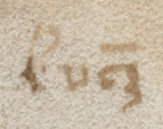
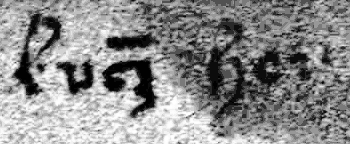
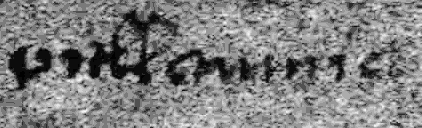
To my huge surprise back then, what the UV light made visible at the end of that line was some Voynichese text. Later on, another group did some multispectral scans of f17r, so here’s what they saw (“Voynich_17r_WBUVUVP_019_F”, auto-equalised in Gimp):

Why was all this important? Because it strongly suggested that there was some kind of direct link between (one of) the marginalia people and the curious Voynichese writing itself. (And also that the Voynichese letters on the final page (f116v) were probably not coincidental). For me, this all suggested that understanding the Voynich Manuscript’s marginalia might not only tell us something about a later owner of the manuscript, it might also tell us about its creator(s).

So the marginalia are a big deal to me. And if you’re interested in the Voynich Manuscript, they really should be a big deal to you too.

Theories about the f17r marginalia

So, what does it say, what does it say? Poundstone thought that the first word might refer to herbal writer Pierandrea Mattioli (1501-1577): Brumbaugh similarly thought it might refer to Mathias de l’Obel (1538-1616). But these both feel quite wrong, because the cursive gothic handwriting is typical of the (mid-)15th century, not of the 16th century.

Since then, there have been plenty of partial readings of the f17r marginalia, most of which seem – possibly emboldened by the apparent fragments of German writing on f116v – to be German-ish. But though such readings typically start promisingly, they quickly fall to pieces when you look more closely.

A special mention here to two good attempts:

For “The Curse of the Voynich” (2006), I had my own proposed reading (on pp. 24-25), but I’ll come back to that in a minute. Still, the important thing I noted was that the second letter of the first word appeared to have been emended: and so consequently the first word actually seemed to have originally been “meilhor“.

The mysterious third word

Also back in 2006, I wondered if the third word might be “lutz” (the Occitan word for “light”). Yet that (and almost all the other theories about how to read this word) failed to explain why there was a macron (overbar) over the end part of that word. In 14th-15th century texts, the macron was widely used as a way of inserting a missing ‘n’. So… why on earth was there a macron over this word?

Back in 2017, Helmut Winkler posted this on Voynich Ninja:

I think there are several more ways to read the “lucz”,  e.g. lucem or lucet, but in this contextI I would suggest  luc[ea]m her[bam], one of the Alchemical Herbs

Now fast forward to a July 2025 comment by Marco Ponzi, mentioning some text from Fribourg MS L.52 (f.8v): “oleum lucet, balsamum redolet” (and I have a ton to say about L.52 on another day):

Marco then noted:

For the third word in the Voynich f17r marginalia, assuming that the text is Latin (very doubtful) and that the initial [letter] is ‘L’, a possible reading could maybe be “lucent” (where the macron stands for the missing ‘n’) – “they shine”, third person plural.

You can’t fault Marco’s logic here: even though adding the macron would ‘nasalise’ lucet into lucent, it overall does not look like Latin. So… how can we resolve all this?

Reading f17r marginalia (finally)

The reason I’ve ground through all the above (giving credit to everyone who helped with all the steps along the way) is that the final reading didn’t just magically pop into my head. I started looking at this properly in 2005-2006, so it has taken nearly twenty years to get to (what I believe to be) the end line.

When writing Curse, my tentative reading of this marginalia was that this was Occitan, and that it began:

  • meilhor aller lutz [kou?]…

…which was close, but no cigar. With the benefit of all the above, I am now pretty sure that it is Occitan, and that it reads (using a Latin abbreviation style to render the Occitan “lucent”):

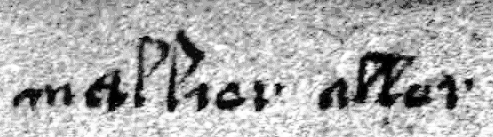
  • meilhor aller lucent ben balsamina [….]

Or, one multispectral block at a time:

meilhor aller

luc[ent] ben

balsamina

Balsamia / Balsamina

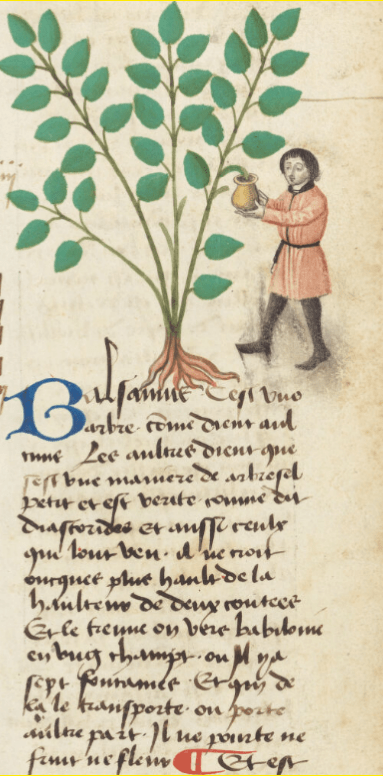
If you look at Wellcome MS.626 (Livres des simples médecines), you can easily find (because it’s arranged alphabetically) balsamia [balsam] on folio xxix:

To be precise, this is talking about the original (and mythical, almost unobtainium-like) balsam from the East, a plant known not to anyone by actual experience. So this is reporting – medieval herbal-style – on a plant without flowers yielding a kind of resin, and the artist is just guessing at what it might look like. It’s really not a literal drawing of a tree.

And yet a century later, Leonhart Fuchs in his 1542 Hist. Stirpium was using the word ‘balsamines’: “Duo Balsamines genera damus“, and the word balsamine was being used in French in 1545 to mean “balsam-like”. So even though this isn’t “balsamina” in its modern sense (e.g. impatiens balsamina), it is a word that is specifically being used to evoke balsam-like qualities.

And I think the word we’re seeing at the top of f17r is “balsamina”.

Occitan marginalia. Really? Really.

So, my argument here is that the marginalia at the top of Voynich manuacript page f17r is written in Occitan. And guess what? Back in 2006, I argued long and hard that the Voynich zodiac roundel month names (which also appear to be marginalia) were also in Occitan. So this should, in theory, be the least surprising marginalia language identification ever.

And yet I already hear every single Voynich Ninja commenter disagreeing. Pffft. It is what it is. It’s Occitan.

If the Voynich Manuscript was written by people who appear to have been writing natively in Occitan, the first thing we should now be doing is looking at every single Occitan herbal-related manuscript from the period, such as BNCF Manuscript Palatino 586. Roll with it for a change.

It’s a phenomenon that’s been growing recently: lots of Chinese addresses in the Cipher Mysteries weblogs, to the point that maybe even 20% of all visitors here are from China – from all over China. Maybe I’m missing something big? So please excuse me while I ask my Chinese visitors what they hope to see here…

各位來自中國的訪客大家好!我很高興見到你們這麼多人!請告訴我你為什麼來這裡?如果您想在這裡閱讀某個特定的謎團,請在此頁面上發表評論。謝謝你!

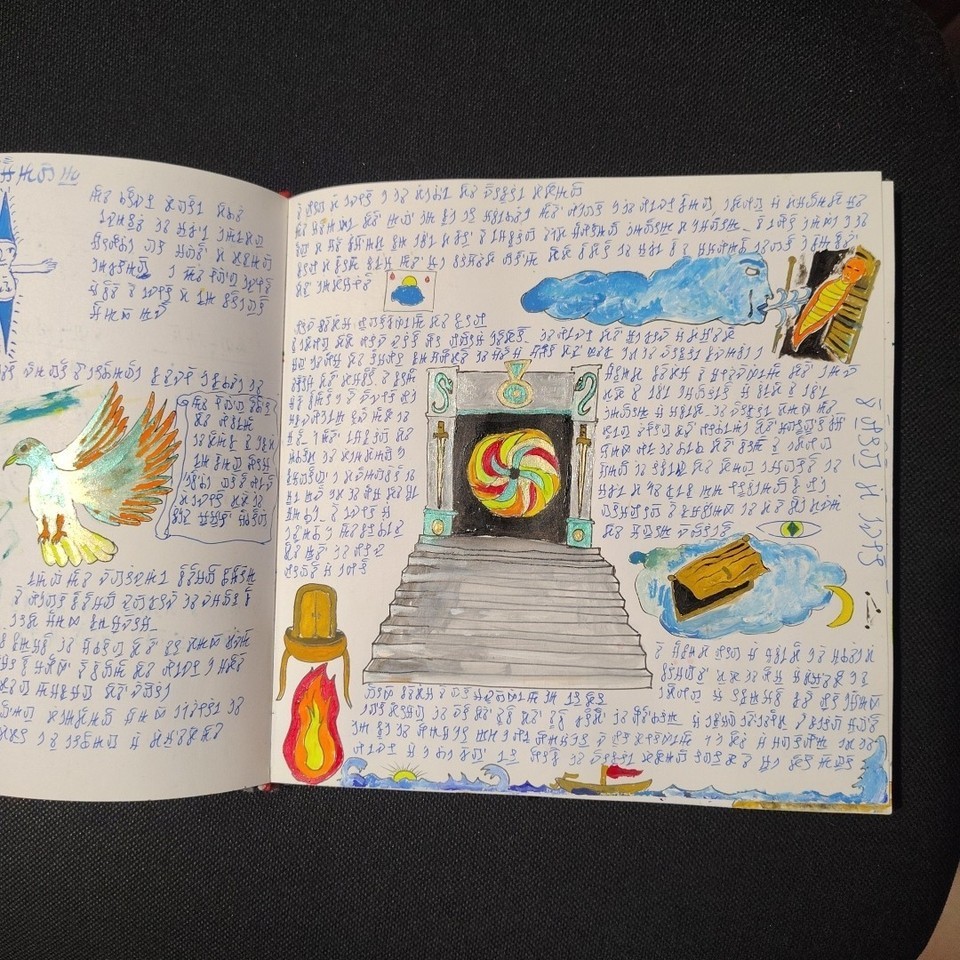
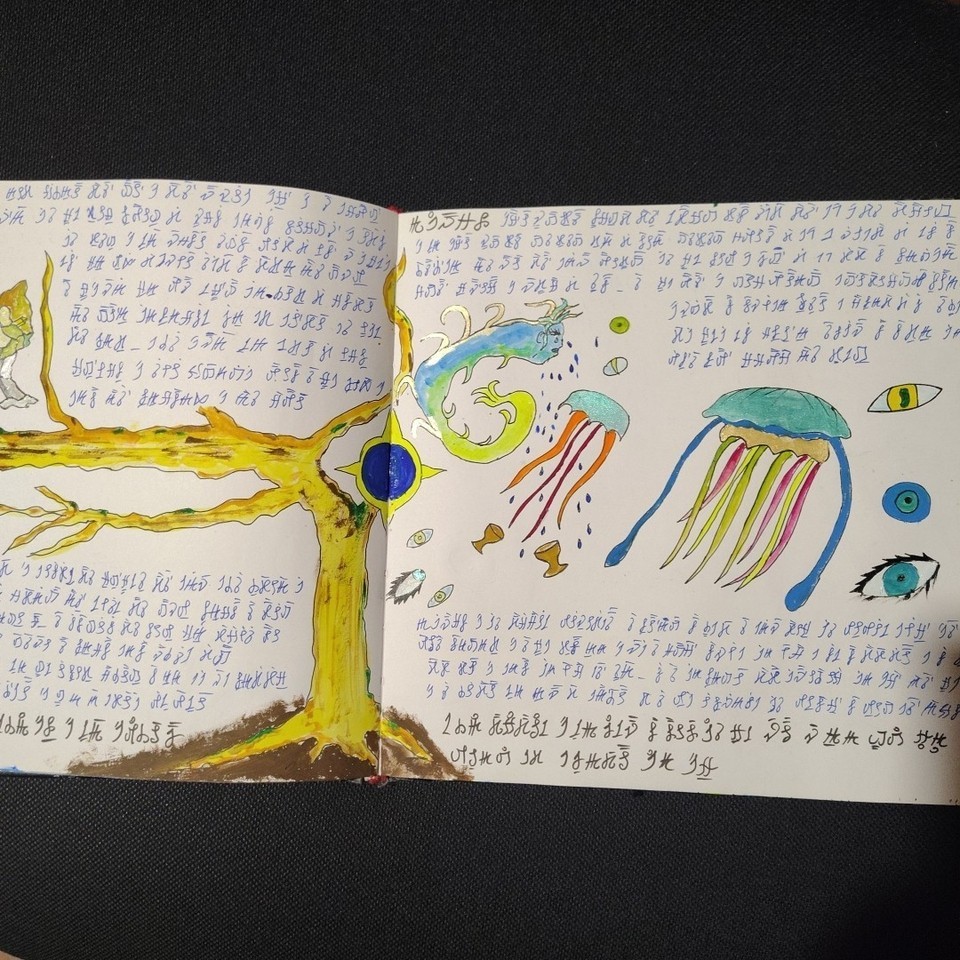
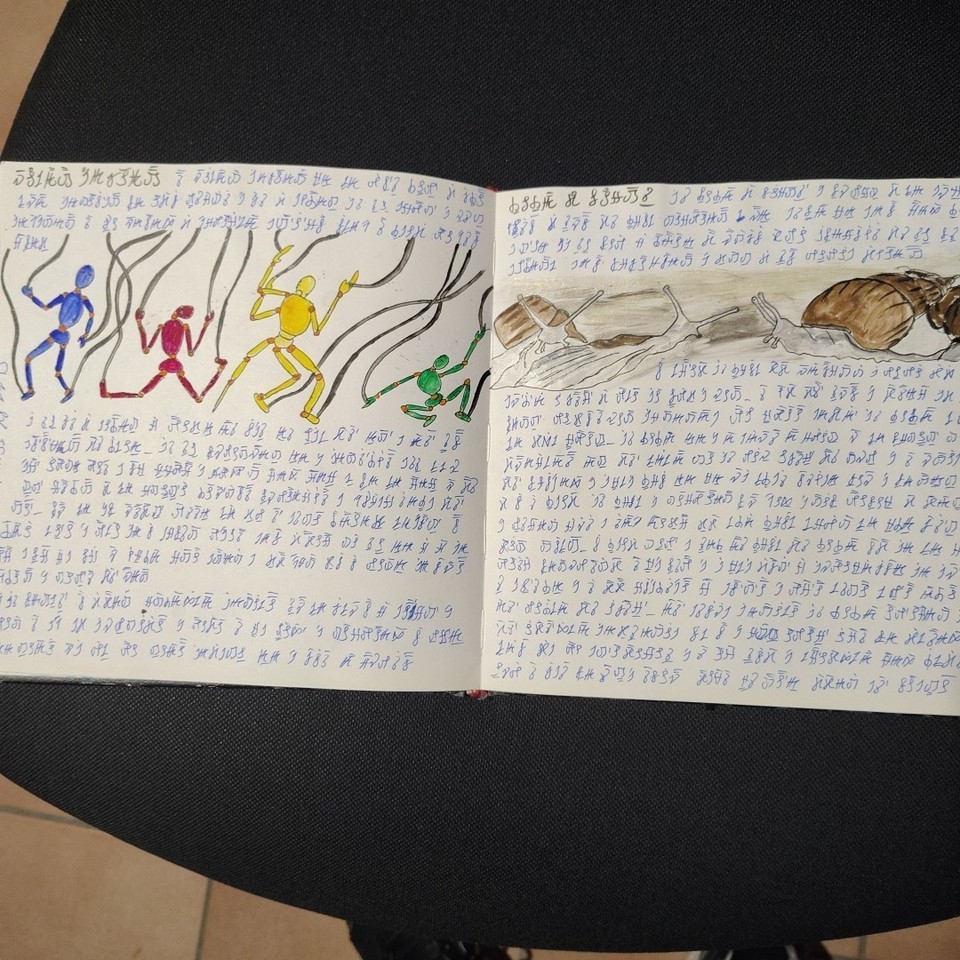
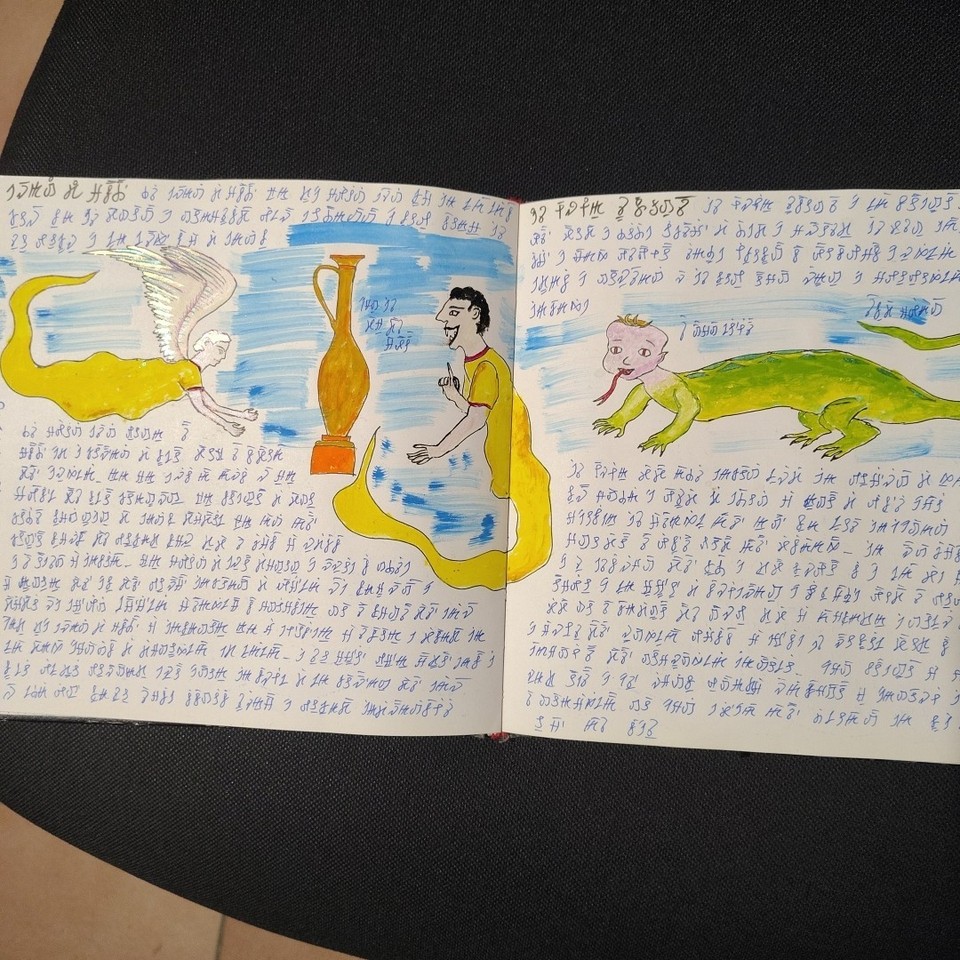
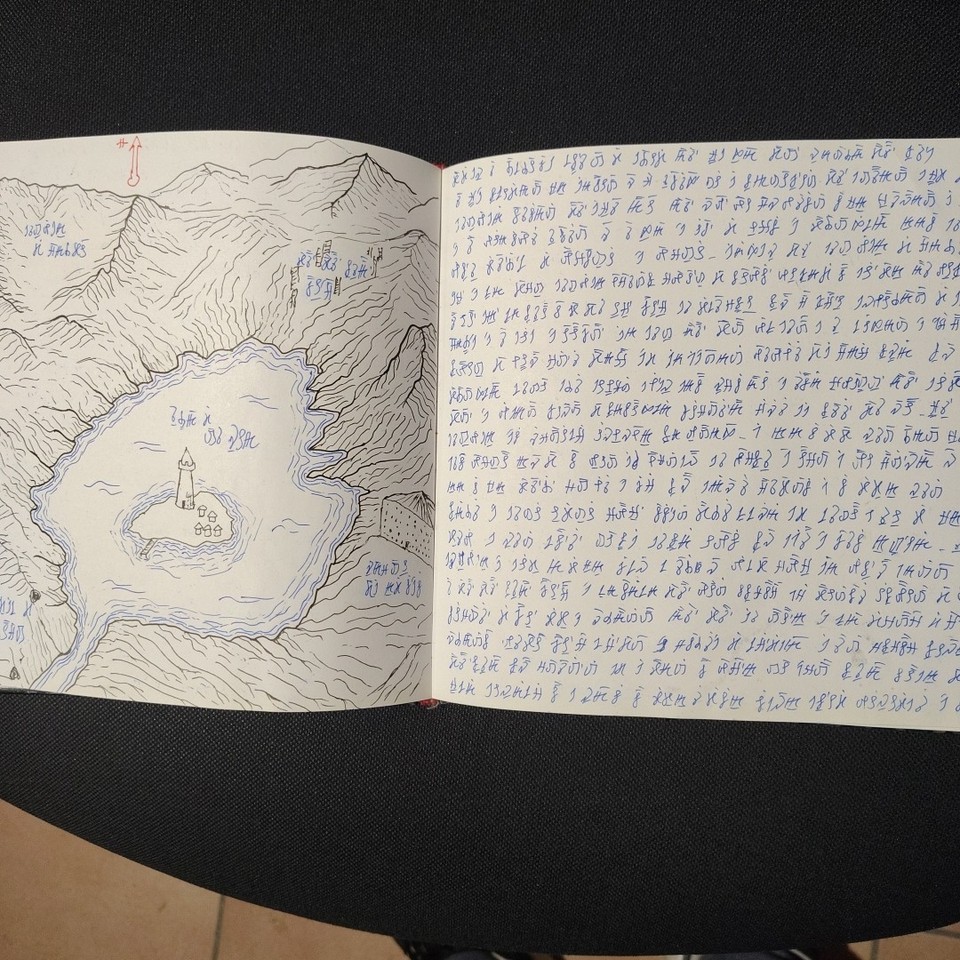
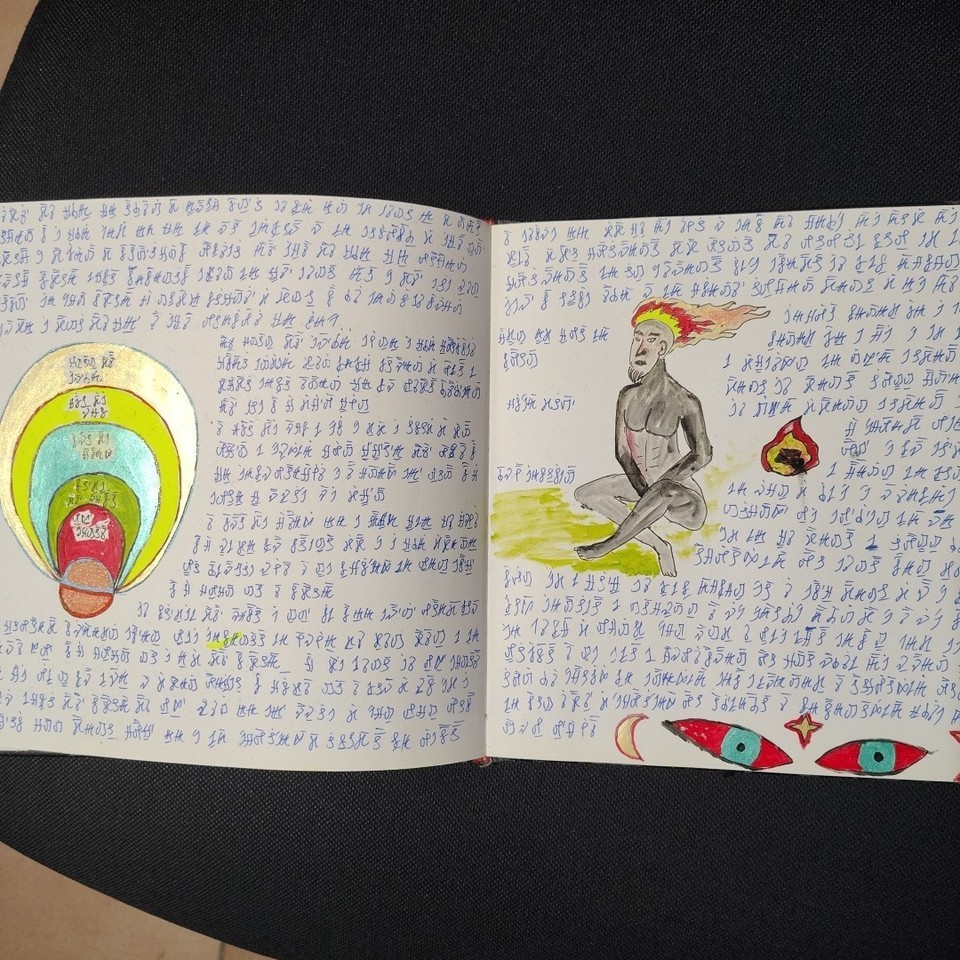
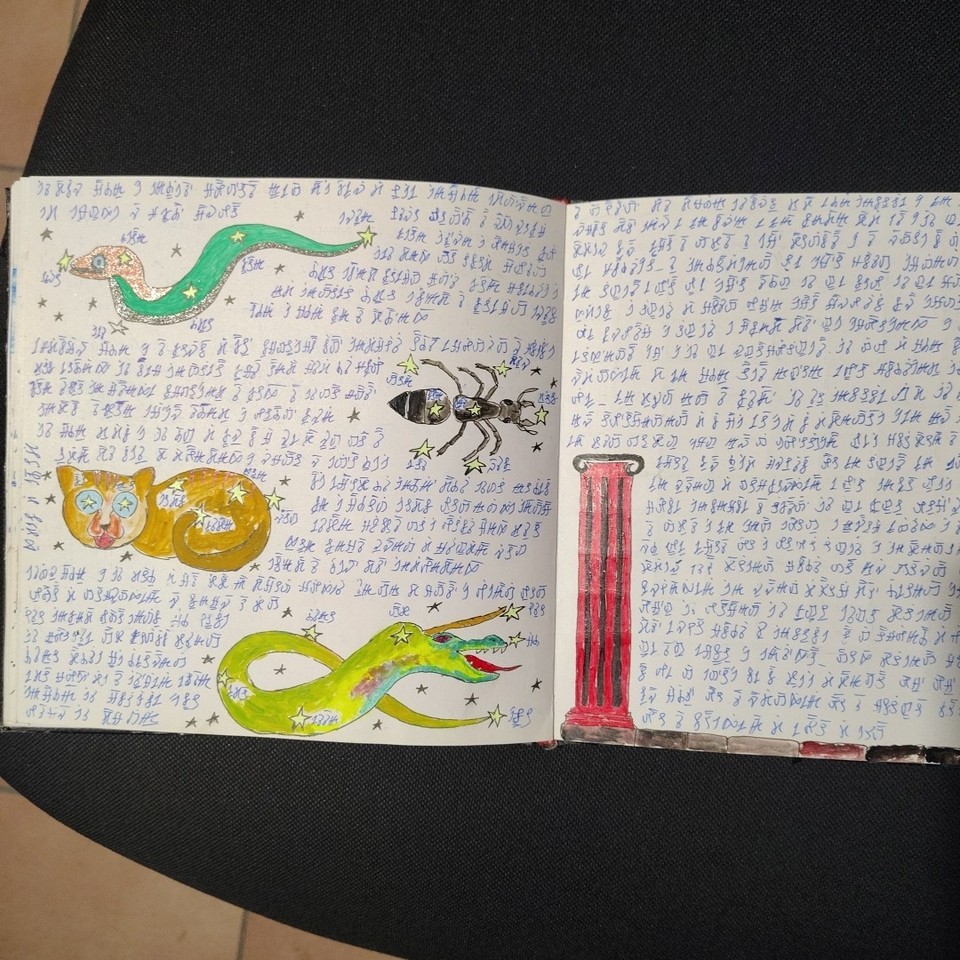
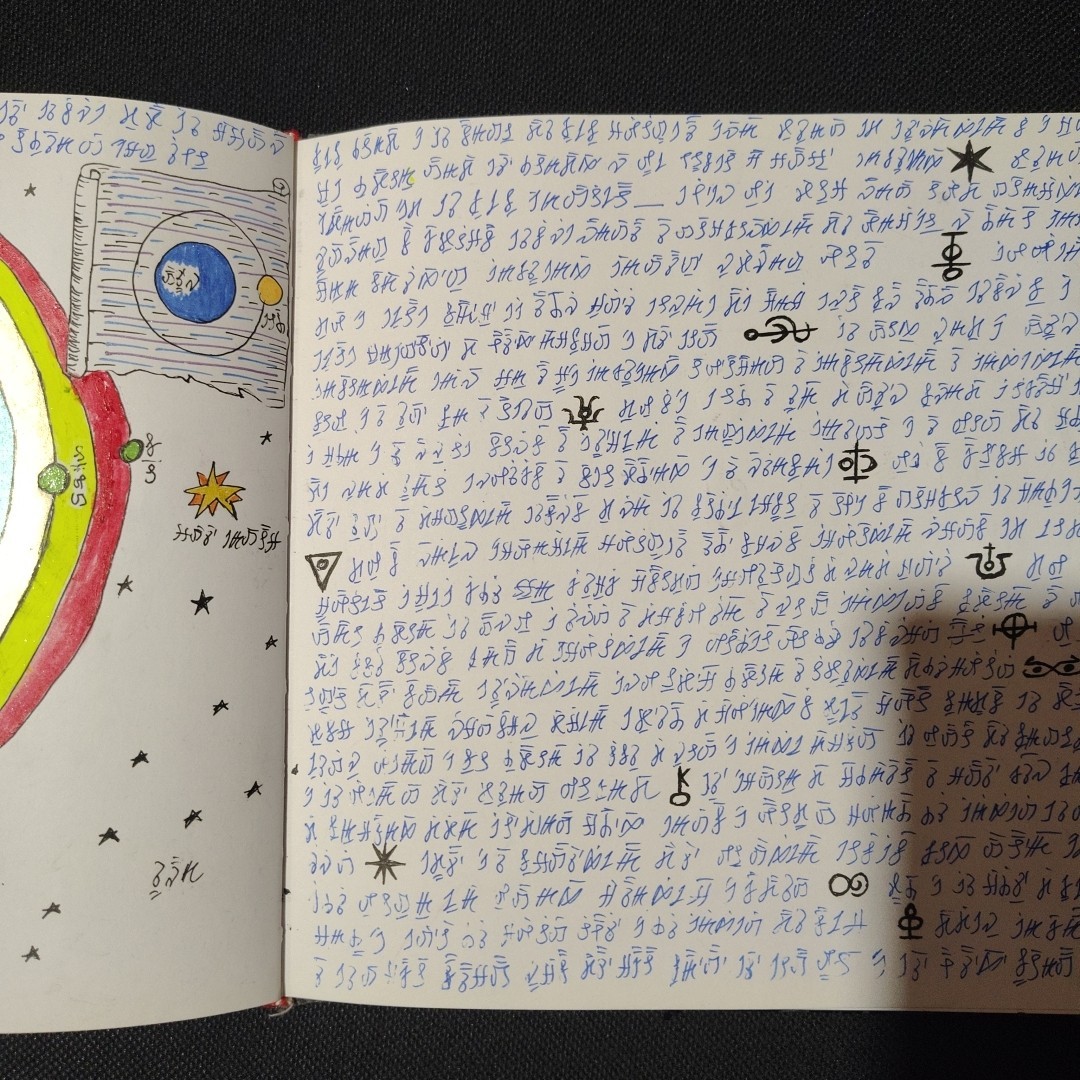
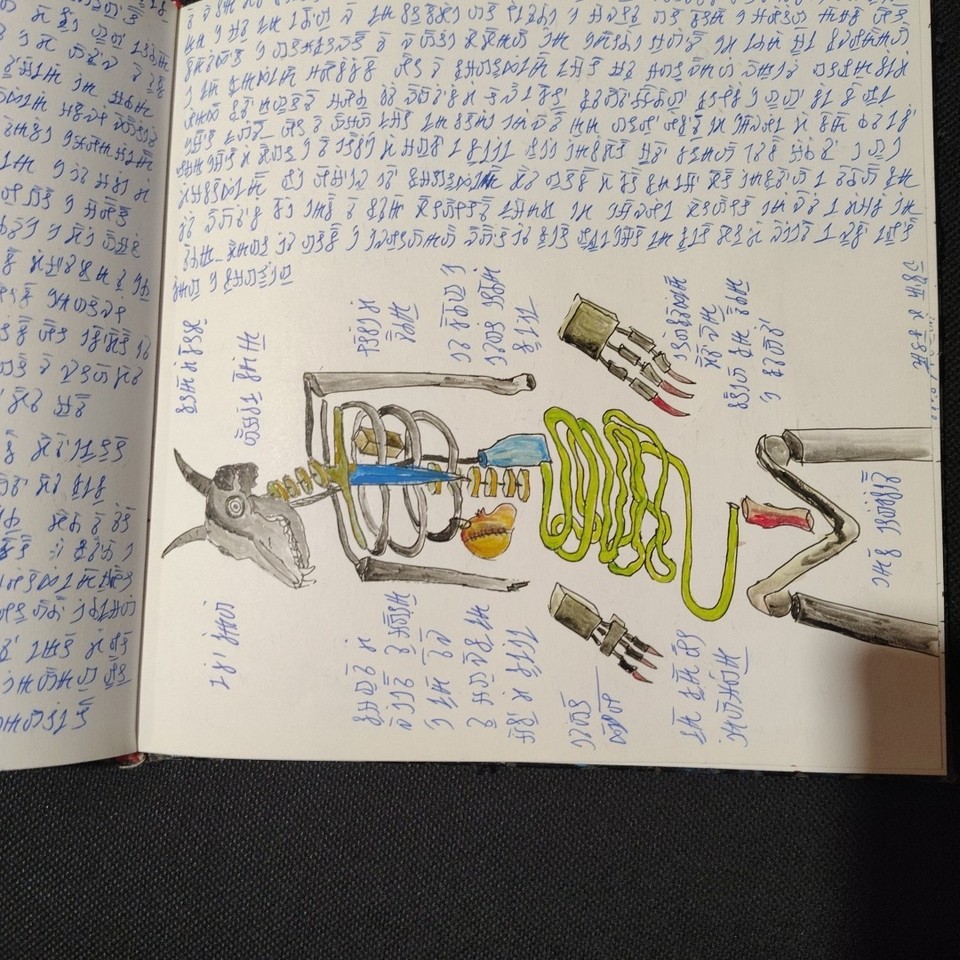
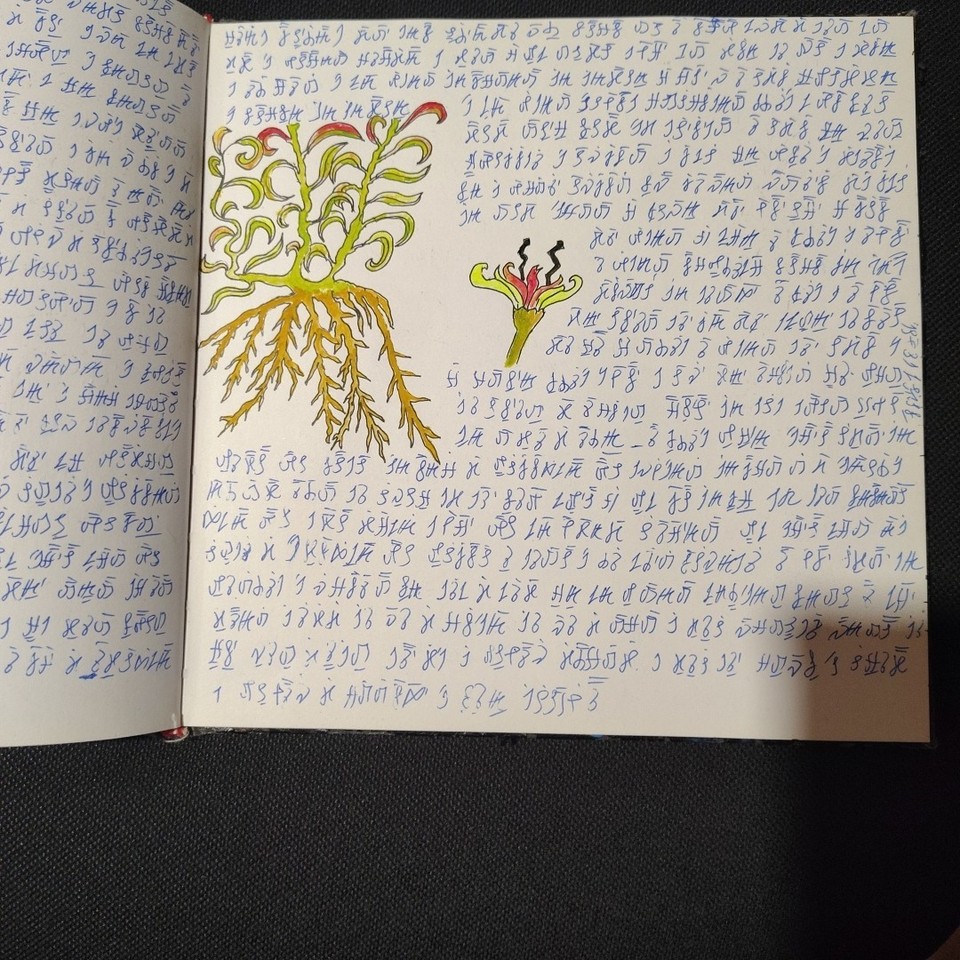
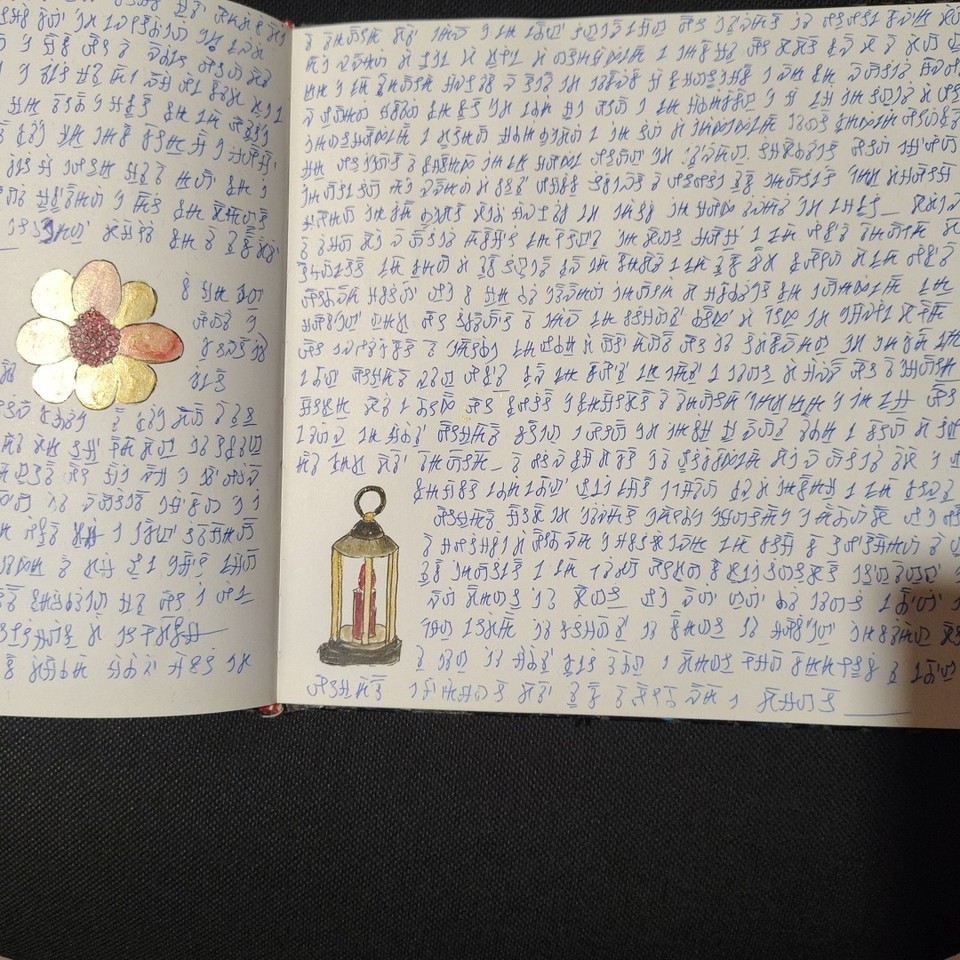
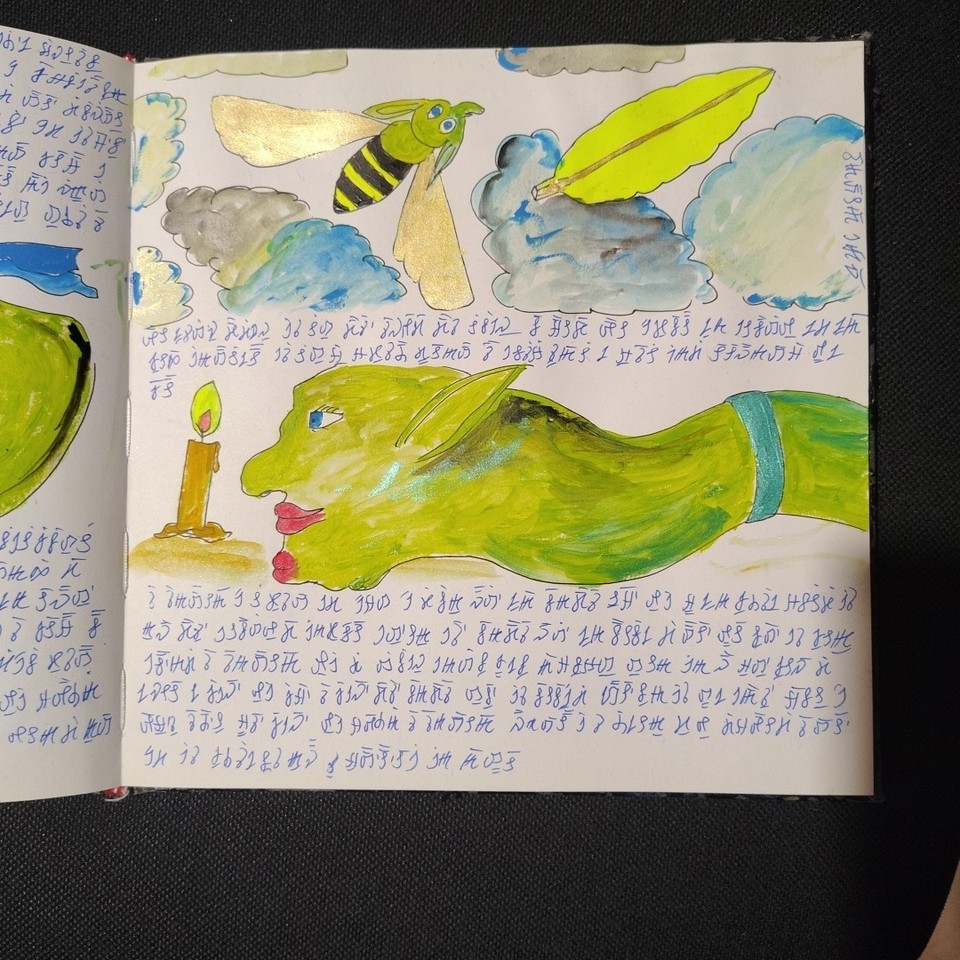
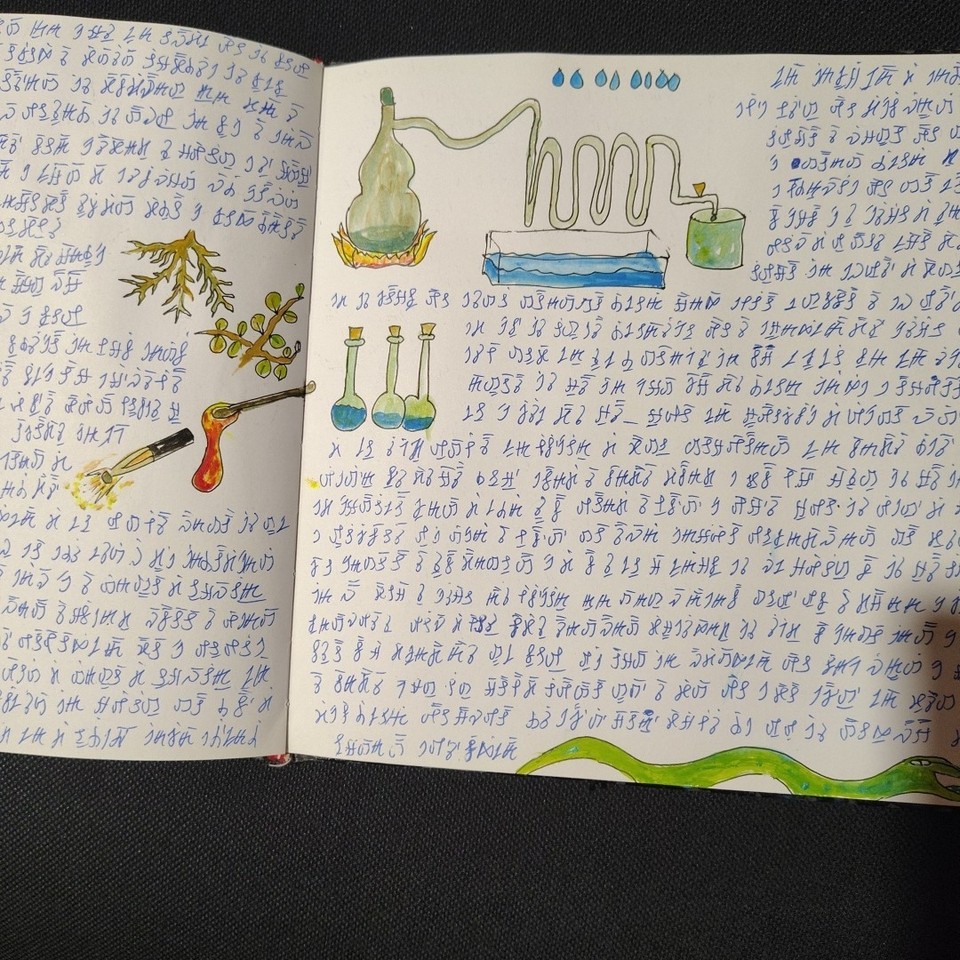
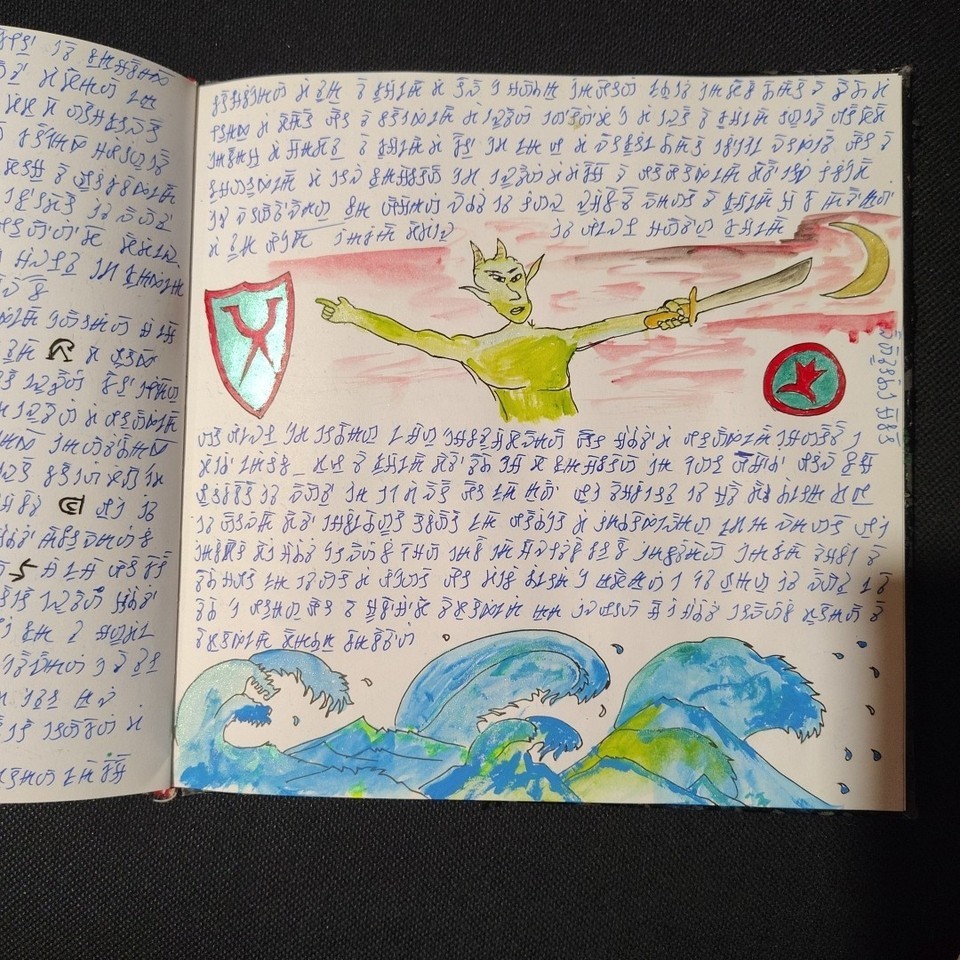
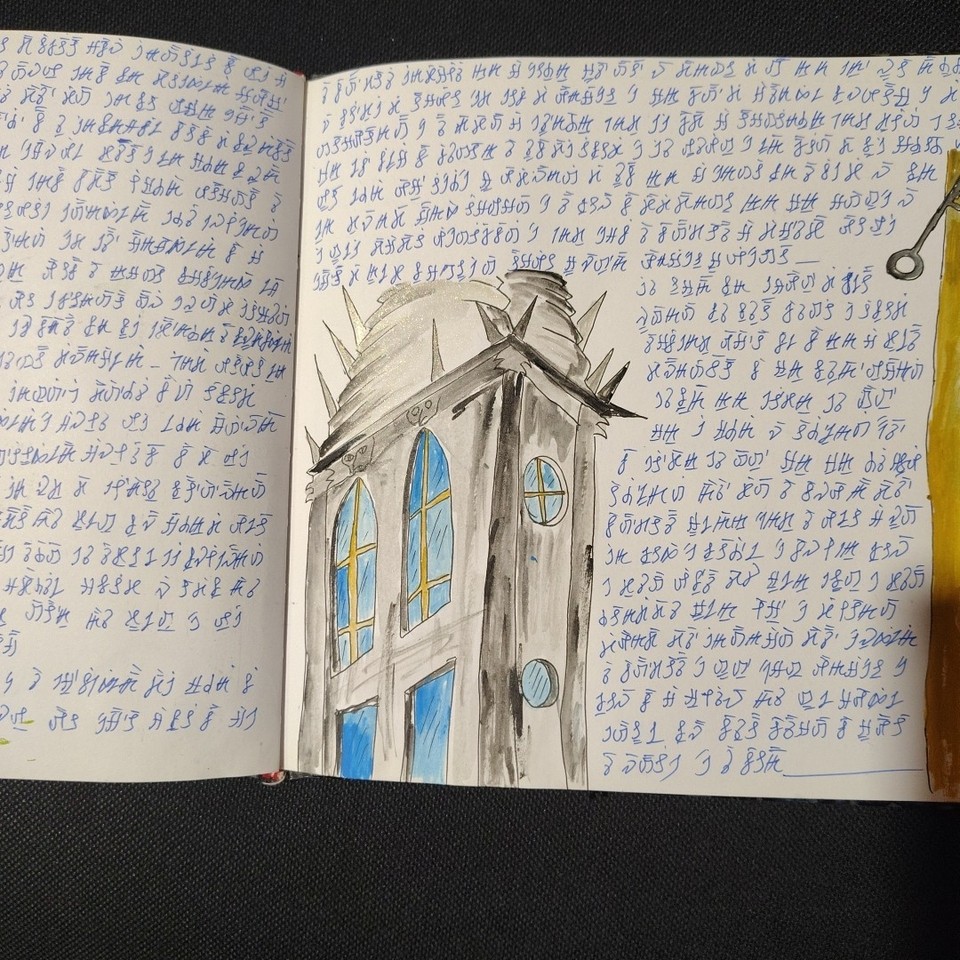
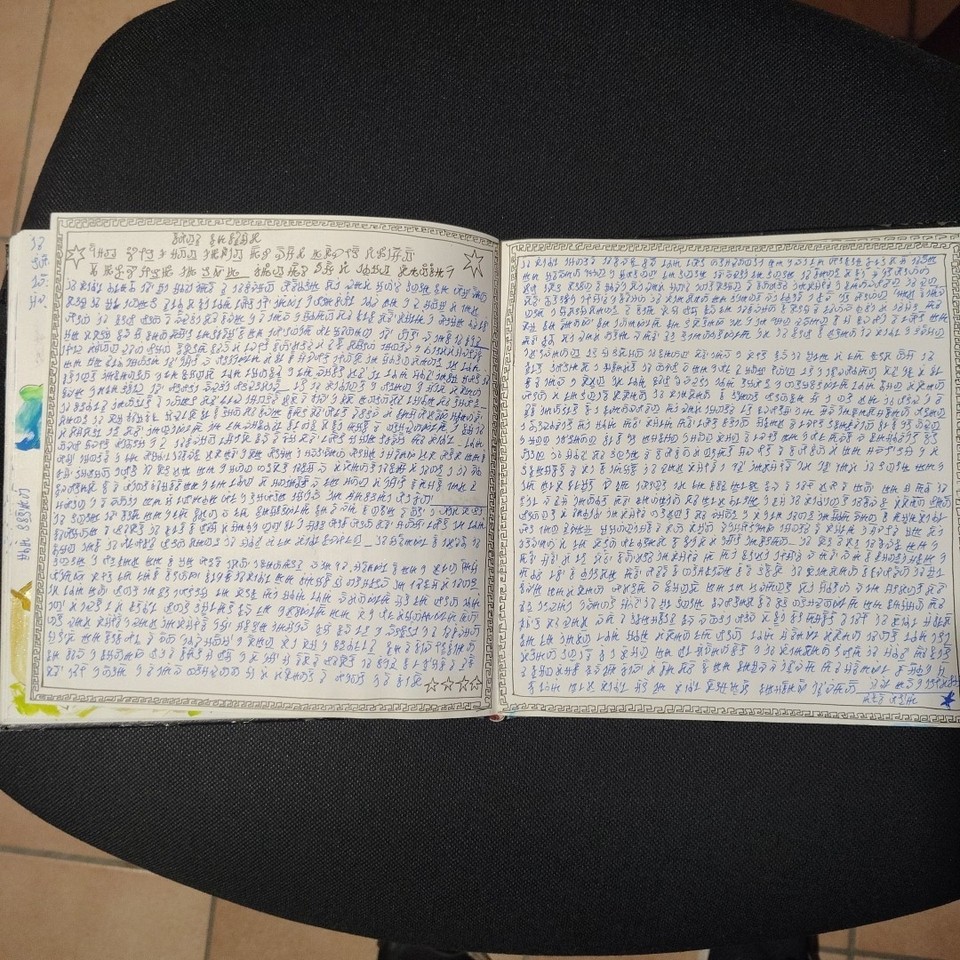
Here’s a fun modern-looking enciphered document for you, of the kind that Klaus Schmeh used to like so much. I found it via a post by Richard Brisson (www.ultrasecret.ca) on cryptocollectors: note that this “Manoscritto misterioso” sold for 250 Euros. Here’s how the eBay seller described it (translated from Italian):

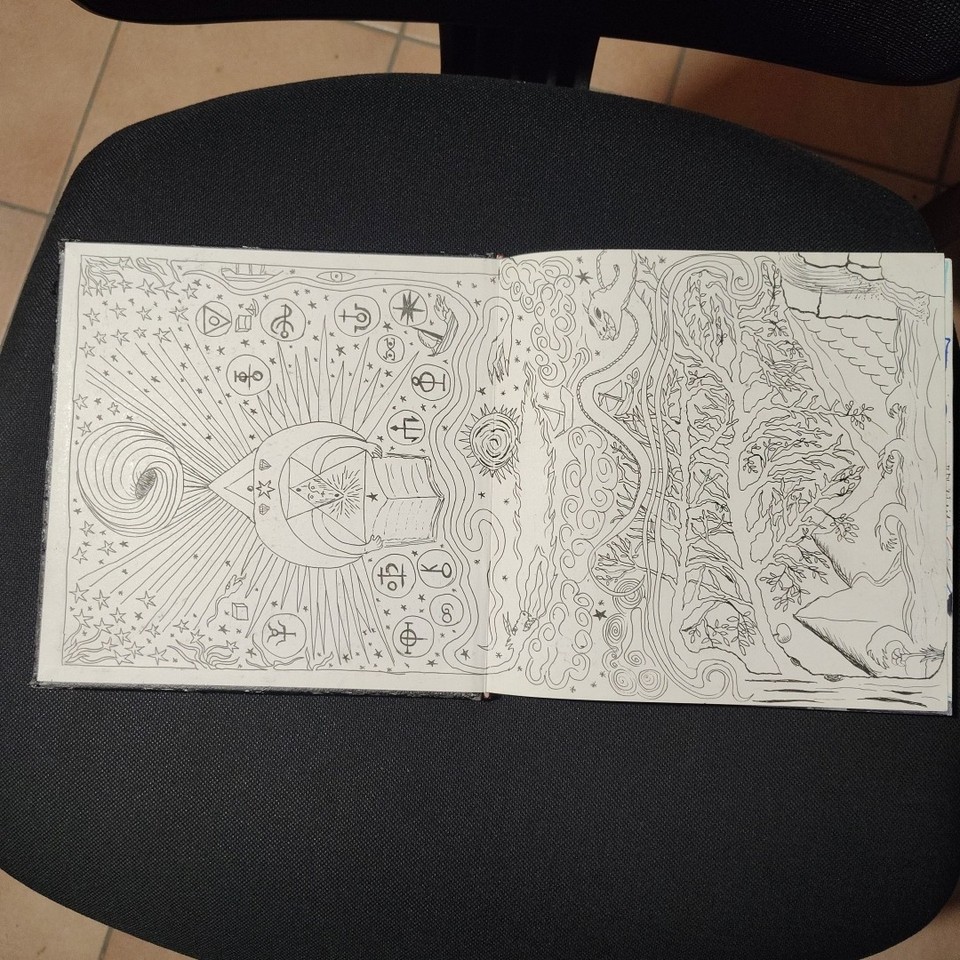
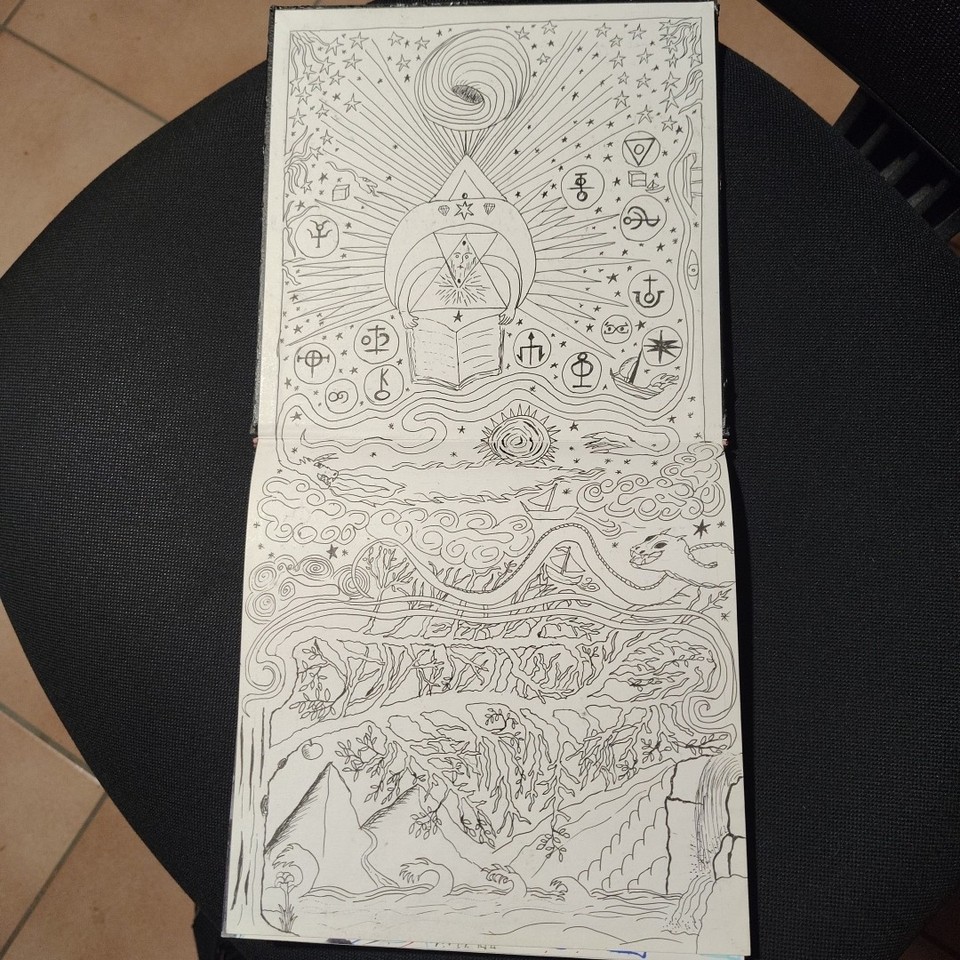
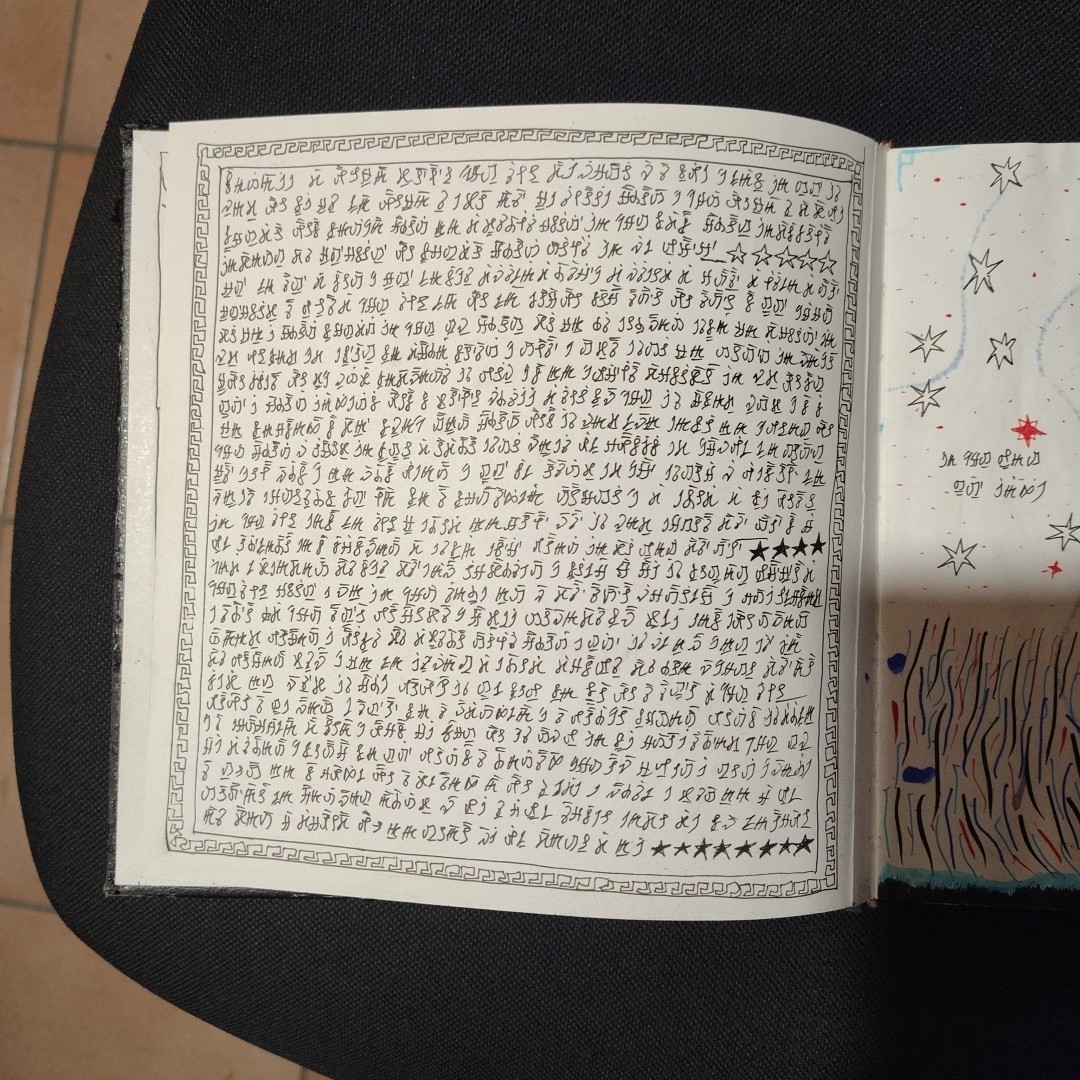
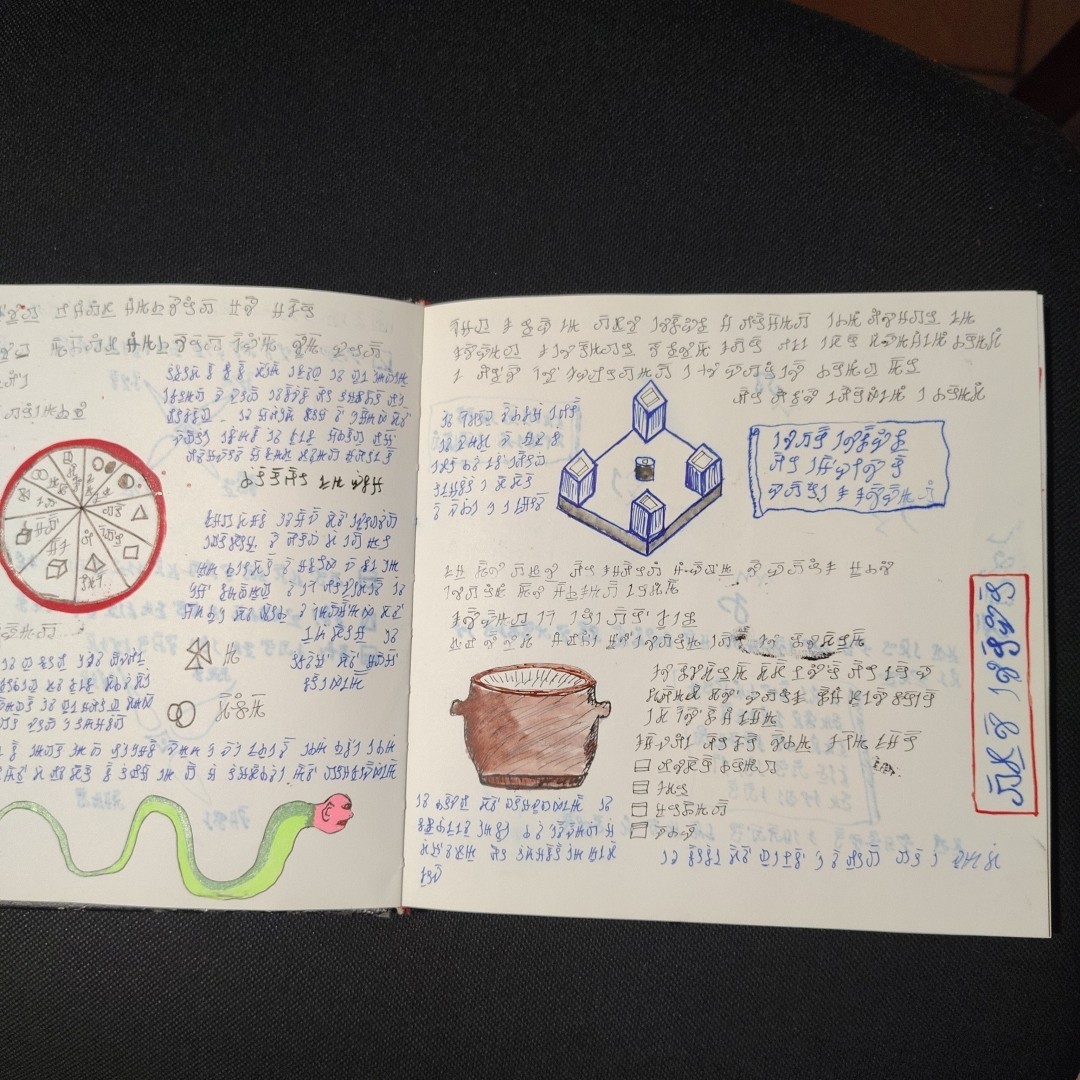
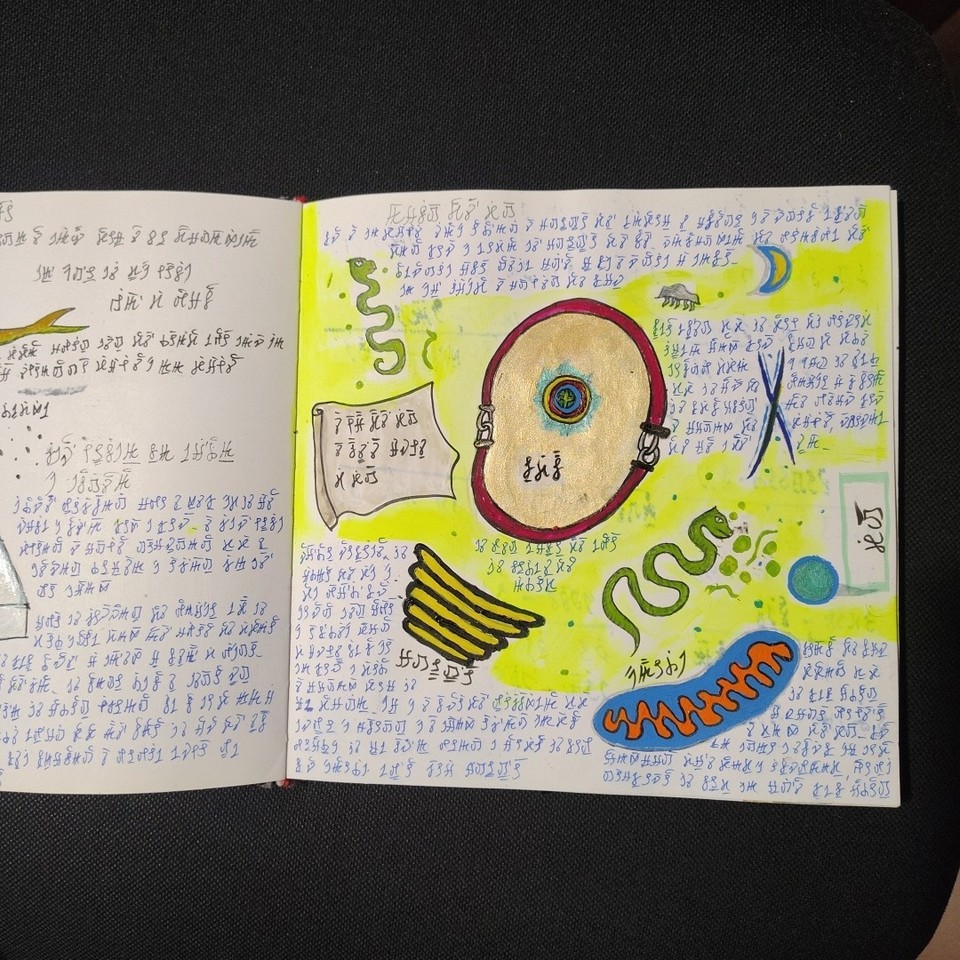
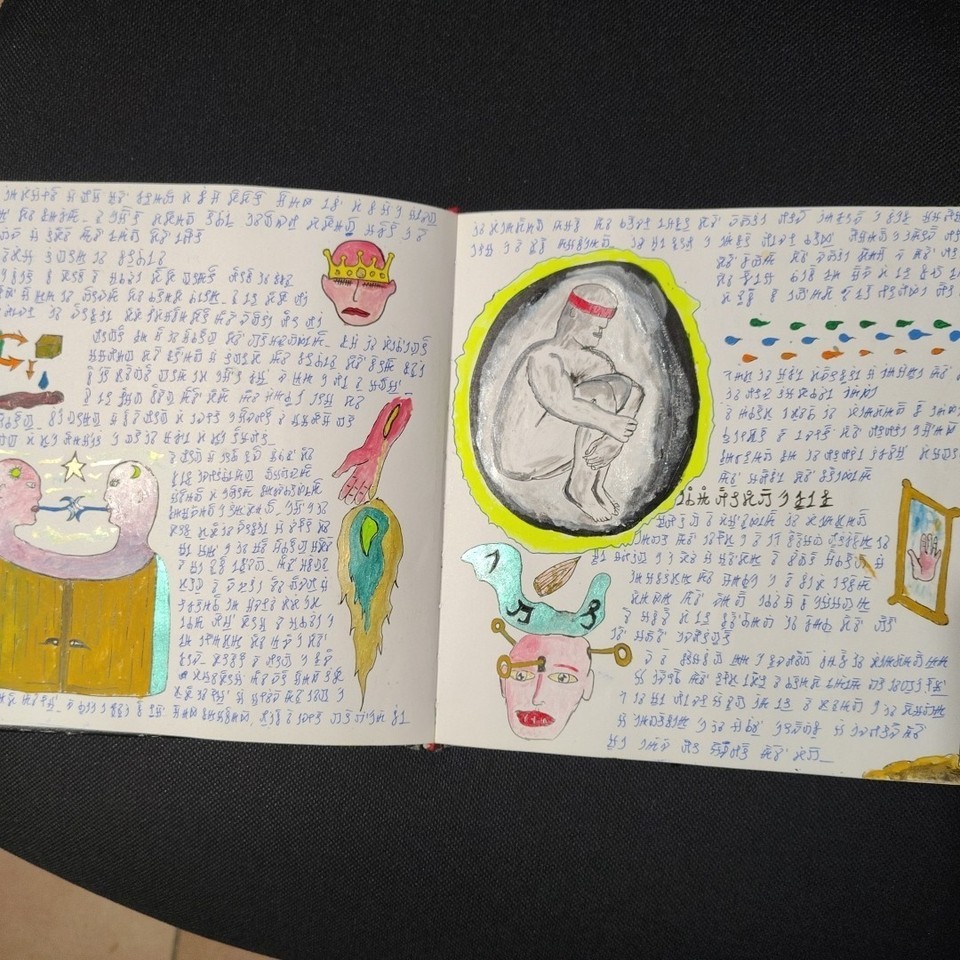
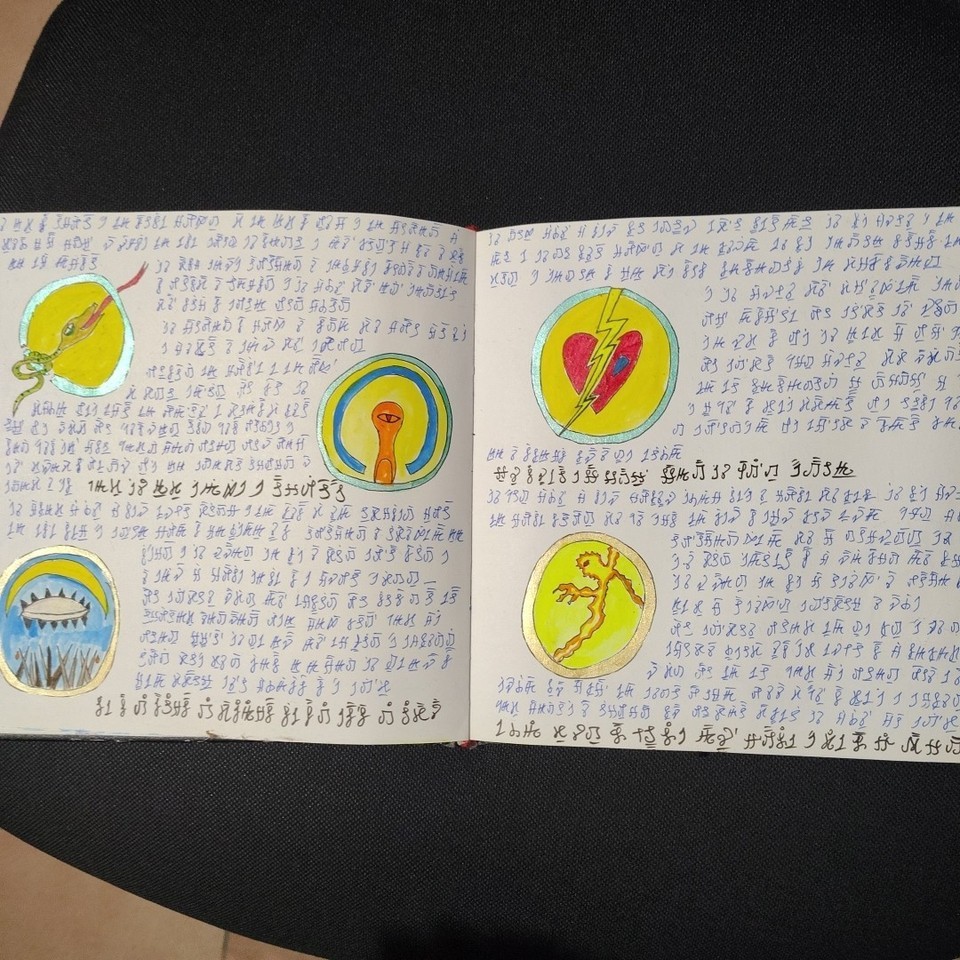
A manuscript book of unknown, non-ancient origin, written entirely in an indecipherable language composed of symbols, signs, and words. The pages feature colorful illustrations, diagrams, and visually striking figures.

The volume comprises 108 pages, 21×21 cm in size, traditionally bound. Each page is different, densely detailed, and rich with elements that seem to belong to an unknown language or culture. The work has an ancient and mysterious aura, difficult to place, and retains a special charm that invites exploration. Ideal for collectors, artists, scholars, or lovers of mystery, secret codes, and extraordinary manuscripts. A rare, fascinating, and one-of-a-kind object.

(Some photos show examples of the inside pages. Tracked shipping, careful packaging.)

Well, obviously there’s a bit of a Voynich influence going on (the castle is a bit of a giveaway), but – unless you know better? – it looks more like a fun art project (kind of a poor man’s Codex Seraphinianus) than some kind of Rosicrucian secret. More simulacrum than simulation, let’s say. So I’m guessing its cipher can’t actually be broken, but I could easily be wrong.

Here are the pictures the seller (and I suspect the item’s creator) uploaded. Enjoy!

Nick Redfern mentioned gonzo journalist’s John A. Keel’s story in Chapter 11 of his book “The Roswell UFO Conspiracy” (his 2017 follow-up to his “Body Snatchers in the Desert”), but it’s so good that I thought it worth looking more closely at. Keel’s story was itself a follow-up to a previous piece on Fu-Go balloons in Fate magazine in 1990. Redfern also discussed the article on his (old) blog here.

John A. Keel’s “Return of the Fu-Gos”

There’s a copy of Keel’s original 1993 Fate article online here, but it was also reprinted in “The Best of Roswell”, pp.109-116. The two paragraphs that Redfern and I are most interested in are on pages 110-111:

Three different, unrelated people wrote to tell me of almost identical experiences. Each saw a low-flying balloon somewhere in the U.S. in 1945 with a gondola containing a living creature. At a distance, all three thought they were seeing a “screaming monkey”. When the balloon came closer, they realised it was really a very small man wearing some kind of headgear, probably radio headphones. The poor fellow was clearly agitated. Two of the letter writers noted that he had a very angry expression, even a hatefilled one. He appeared to be an Oriental.

Soon after the balloon bounced away, disappearing over a hill or the horizon, one or more Jeeps filled with soldiers suddenly roared onto the scene, apparently in hot pursuit. Two of the witnesses said they heard shots a few minutes later. All three reported that the Jeep(s) came back and a military officer stopped and warned them sternly to forget what they had just seen. “Don’t even discuss this with you parents,” one was told.

It’s customary to write off Keel as writing a smoky mixture of fact and fiction that is hard (if not actually impossible) to separate out reliably. But I think there’s something about the way this particular story goes nowhere (while proving nothing) that’s both endearing and perhaps telling: so I’ve long wondered whether Keel’s story might in fact be true. Of course, Keel offered no names, no evidence, no references: so it’s just a curio that may or may not be true.

Back in 2022, I contacted Doug Skinner, who has access to Keel’s ‘archives’, about this. He replied:

“[M]y access to files is limited by what John chose to keep, and what his friends were able to save. I can give you detailed info on his radio scripts for the American Forces Network, for example…”

Doug also suggested I contact UFO researcher Antonio Huneeus, which I’ve just now tried to do (I wasn’t able to find Antonio when I looked in 2022). Hopefully I’ll get through and he’ll remember something (but it was a long time ago).

Don Piccard’s balloon licence flight

Pioneering balloonist Don Piccard (son of Jean and Jeannette Piccard) recounted the story of his flight in a Fu-Go balloon in some detail in the May 2001 edition of Smithsonian Magazine. Each Japanese Fu-Go balloon was (Piccard says) “[t]hirty feet in diameter, weighing 150 pounds, and with a volume of 19,000 cubic feet”.

Ross Coen says [in “Fu-Go: The Curious History of Japan’s Balloon Bomb Attack on America”] it was 10 metres in diameter and weighing 152 pounds : and that the 19,000 cubic feet volume “balloon had a lifting capacity of 1000 pounds at sea-level and approximately 300 pounds at altitude”. Though Piccard said that his Fu-Go balloon had originally landed in Flint, Michigan, Coen’s book mentions only one balloon reaching Michigan, and that was in Farmington (p. 159): “when a man found a single incendiary device, what [sic] he first believed to be a tin can, in his backyard garden. Fortunately for the Michigander, the bomb did not detonate when he picked it up with a shovel and tossed it aside.” On the table on Coen’s p. 236, we can see that that the Farmington Fu-Go was reported on 25th March 1945, and an “incendiary bomb” was recovered.

However, a 2017 news story by Ian Harvey recounted that Don Piccard’s balloon had actually landed in North Dorr, Michigan on 23rd February 1945, and had been seen (and then retrieved) by “Bob and Ken Fein (brothers) and their friend Larry “Buzz” Bailey [as they] were playing outside“. The balloon was then “sent to the Naval Technical Air Intelligence Center in Anacostia, District of Columbia“, and from there to NAS Lakehurst, where Don Piccard eventually took possession of it (“Not bad for an old, used, patched, $220 device”).

The only line that intrigued me from Piccard’s Smithsonian account was this: “I was cozy in my fur lined flight suit (also a captured Japanese war souvenir, worn in honor of the balloon’s own heritage).” I found a photo of him in this fur-lined flight suit (Don Piccard is on the left) in July 1997 Balloon Life, p.32:

Don Piccard in a fur-lined Japanese flight suit, next to three other men and the gondola he used for his Feb 1947 Fu-Go balloon flight.

I wonder where that fur-lined flight suit came from? I wasn’t able to dig up any details in any of Piccard’s interviews (maybe he didn’t know). But… maybe there’s an answer out there.

The historical plausibility of Keel’s story

On the one hand, Don Piccard successfully flew a Fu-Go balloon for more than two hours, so Keel’s suggested flight itself was – as long as you don’t try to go too high – entirely plausible. You certainly wouldn’t have needed a balloon bigger than the ones that were already being launched. And I can certainly imagine it being launched from one of the larger Japanese submarines.

It’s also true that from August 1944, Japanese pilots were being trained specifically for one-way kamikaze missions. (The first documented kamikaze mission was late October 1944.) So, a kamikaze manned balloon attack would fit the historical timeline from about October/November 1944 onwards.

On the other hand, there are many reasons why the story feels like a bit of a stretch:

  • Keel never named his witnesses (nor even which US state they were in)
  • There’s no mention in the Japanese archives of a sea-launched manned balloon
  • There’s no mention in the US archives of the incident
  • By 1945, Japanese ships and submarines weren’t going anywhere near America’s West Coast

The last – and admittedly very slim – whisper of plausibility remaining is that in late 1944, Japan launched a single large aircraft carrier submarine: Submarine I-13 was launched on 30th November 1943 and commissioned on 16th Dec 1944. This certainly had the range and the size to launch a manned kamikaze balloon attack off the coast of America, albeit in a very narrow historical window.

The cipher history angle

However, there’s also a cipher history angle that makes this (already shaky) timeline even less plausible. By mid-1944, American cryptanalysts had comprehensively broken the Japanese naval code JN-25, so that they essentially knew where every Japanese ship and submarine was, and where they were headed to next. And there’s not a sniff of any mission that came close to the West Coast in 1944 or 1945.

It’s true that there were some Japanese attacks on American mainland targets in late 1941 to 1942 (such as the 1942 attack on the Ellwood refinery near Santa Barbara, that caused minor damage). The closest incident was when a floatplane was launched from Japanese submarine I-25 off the coast of Oregon on 9th September 1942 and tried to start some forest fires (though it failed). But after 1942, American anti-submarine efforts caused Japan to focus their submarine attention elsewhere in the Pacific.

Even though there’s still a (faint) possibility that Keel’s claimed kamikaze balloon attack on the West Coast was done as a need-to-know rogue operation (Japan certainly had a few of those late in the war), I’d have to say that the probability this happened currently seems wafer-thin-if-not-actually-zero. But I’ll keep my ears open for any updates, ‘absence of evidence’ etc.


Even though the US Navy cancelled Jean Piccard’s stratospheric plastic balloon cluster-based Project Helios in the first half of 1947 (its first flight had been planned for the 21st June 1947, the summer solstice), that was far from the end of its influence on ballooning. I’ve already posted (back in 2022) about how its innovative cluster rings got absorbed into Project Mogul.

Otto Winzen, who had been part of Project Helios, also moved on. Many of the same military / scientific projects that had been trying to hitch a ride on Project Helios’ stratospheric balloons were looking for other ways up. Winzen, who had carried on working with polyethylene balloons and designing lightweight gondolas, proved well-placed to pick up follow-on contracts.

And so it should not be a surprise that many of the gondola design features that Tex Settle and Charles Burgess had tried to build in the early 1930s reappeared in Winzen’s next major gondola…

Project MANHIGH

There were three Project MANHIGH flights to the stratosphere, and all three used Winzen’s gondola:

  • Kittinger, June 1957
  • Simons, August 1957
  • McClure, October 1958

The original Settle/Burgess capsule was (described as being) 7ft long, but I always thought that would have been tight on space: any real stratospheric flight would need a CO2 scrubber, a heater, radio equipment etc etc. Here, you can see that the MANHIGH gondola is 8ft high (long) and with a diameter of 3ft (2.4m x 0.9m) which, while far from luxurious, was (just) enough to contain all the equipment needed.

As I understand it, the shell was made of 1/8th inch aluminium alloy, and was filled with pressurised oxygen (60%), nitrogen (20%), and helium (20%). Here’s a picture of it in the National Museum of the US Air Force at Wright-Patterson Air Force Base OH, looking every bit the unhappy Dalek prototype:

The famous story is that even though the first flight was due to last twelve hours, an oxygen leak caused Colonel Stapp and Otto Winzen to terminate the flight after only two hours, much to the displeasure of Captain Joseph W. Kittinger, Jr at 28,956m high, who gruffly replied “[so] [c]ome and get me” .

This was, of course, every bit as much a “Flying Coffin” as the Settle/Burgess gondola that had (kind of) preceded it. But it did the job, and inched the US that little bit closer to space.

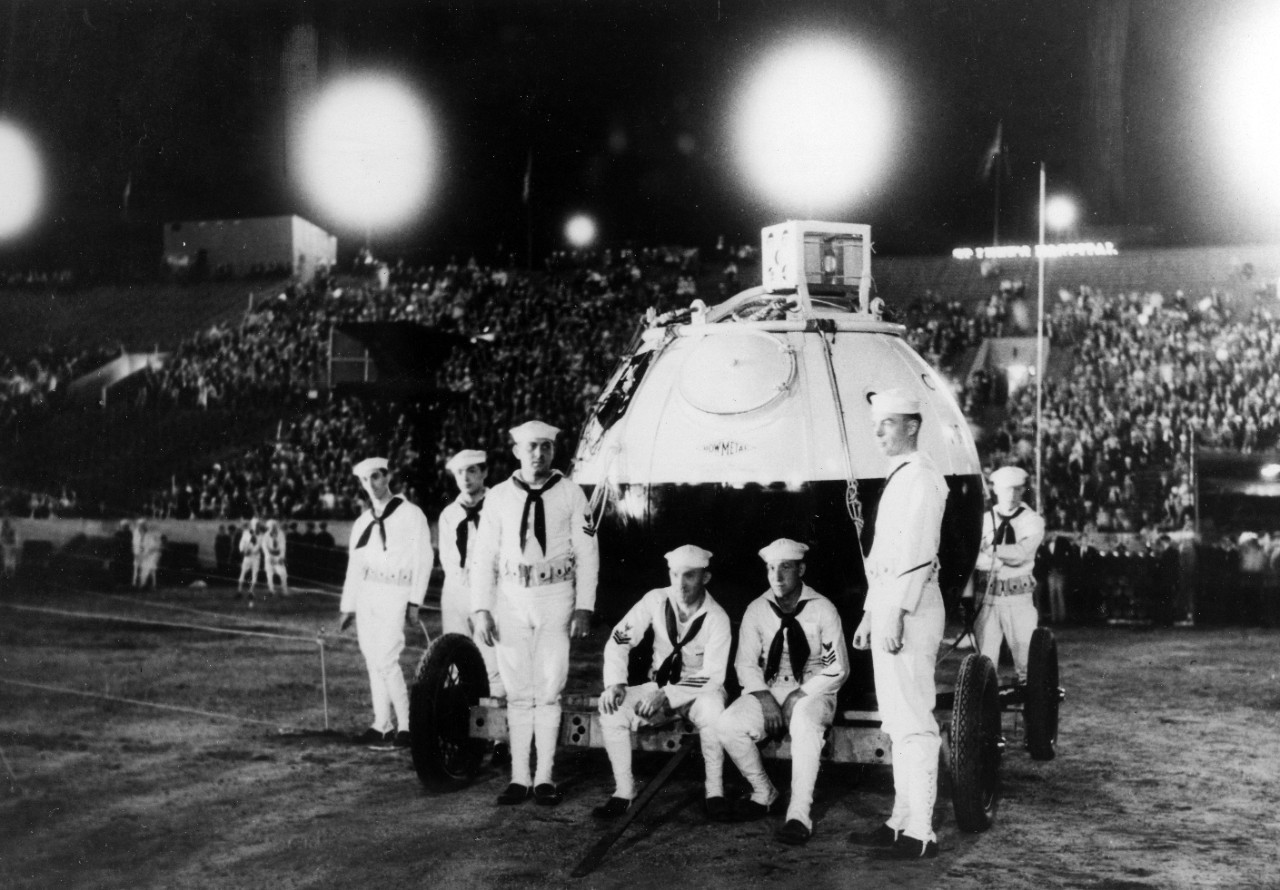
At 9:30am on 20th November 1933, US Navy Lt.-Cmdr. Thomas G. W. “Tex” Settle (assisted by US Army reservist Major Chester L. Fordney as his scientific observer) rose inexorably into the skies from Akron OH, in a pressurised gondola beneath a stratospheric balloon. Renowned balloonist Auguste Picard had been asked to pilot it, but had passed it to his twin brother Jean Picard, who in turn didn’t have a U.S. flying licence. Finally, after a load of political jockeying, Settle ended up at the helm. But to be fair, he was an astonishingly good balloonist. Here’s a picture of the gondola from Settle’s previous attempt in August 1933 (which had failed due to a faulty valve, yielding the headline “SETTLE UP! SETTLE DOWN!”)), protected by US Navy sailors:

As a side note, the world altitude record Settle set that day (18,665 meters) annoyed the heck out of Stalin, partly because the Russian balloon that had gone slightly higher earlier that year hadn’t been recognised by the FAI. One might argue, tongue only slightly in cheek, that this launched the Race for Space, and perhaps even the whole darn Cold War. Which is nice.

But Settle was an adventurer at heart, and wanted more – much more. So, even before setting the record he went to his friend Charles Burgess at BuAer (the Bureau of Aeronautics), and between them they cooked up an audacious plan to design a lighter, tighter gondola to go even closer to the edge of space…

The “Flying Coffin”

Well, it probably wasn’t called the “Flying Coffin” at first, but all traces of its original project name, number or reference seem to have disappeared. Perhaps assiduous searchers diving deep into the depths of Naval archive RG72 will be able to find more of a paper trail than I have managed so far (photos would be nice, but I haven’t found even one in the literature), but I won’t be holding my breath waiting.

Conceptually, the Flying Coffin’s design was simple (if not simples): a 7ft cylinder with rounded ends (so, more of a lozenge, really) made from the latest aluminium alloy, with just enough space inside it for an intrepid balloonist (Settle, undoubtedly) and a few lightweight scientific experiments to keep him company. My best guess is that the shell would have been 1/8″ thick, and so would have been half the weight of the Century of Progress (which was made of the magnesium alloy Dowmetal, and weighed 160kg). As a ballpark estimate, Settle flying solo in his Flying Coffin under the same Goodyear balloon could very possibly have gone 5km or more higher.

The design was easy: finding a project sponsor not so easy. But Settle had a plan for that too…

Admiral William A. Moffett

The late 1920s had been a time of intense inter-service rivalry between the US Army and the US Navy (the US Air Force was still part of the US Army back then), so Settle may well have pitched this as a record-breaking attempt (and to get one up on the Army). But Moffett – himself known as the “Air Admiral”, and the person who had founded BuAer in 1921 – was hugely into airships and balloons, and Settle knew him well. Honestly, I think Moffett would have wanted in, pretty much regardless.

And so Moffett approved Settle’s Burgess-designed gondola, and ordered it to be constructed at the Naval Aircraft Factory in the Philadelphia Navy Yard on League Island. Moffett was not only a master politician (he was a friend of Franklin D. Roosevelt) and Settle’s project’s sponsor but also its champion.

But then, on 4th April 1933, Moffett died when the USS Akron crashed into the Atlantic Ocean off New Jersey in thunderstorm, killing 73 of the 76 on board. This was the worst air accident for many years, and shook many people’s confidence in airships.

Not long after Moffett’s death (as with everything else to do with the Flying Coffin, details are scant), the project was halted: all the airship histories have to say is that the gondola was never fitted out, and so never made it into the stratosphere. The unfortunate death of its political champion coincided with budgetary backlashes against fanciful projects, all of which proved to be nails in Settle’s Flying Coffin.

What happened to it? My best guess is that, in its unfinished state, it ended up in the massive storage area in the (even more massive) Naval Air Station Lakehurst. Perhaps it will be visible in the corner of a historical photo somewhere, a speck almost too tiny to see against the scale of the airships docked there. I’ll keep looking…

Perhaps you well-informed people already knew, but recently I was surprised to discover that during WWII, these three luminary SF writers all worked at the Naval Aviation Experimental Station in Philadelphia. Because this overlaps some of the other history I’ve been working my way through of late, I thought I’d tell this story again (but from my own angle).

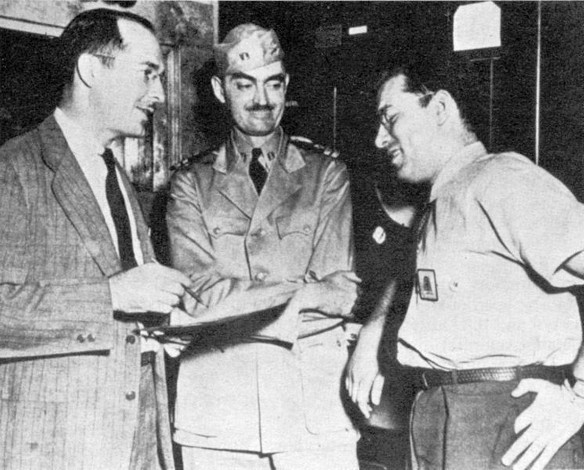
Robert Heinlein, L. Sprague de Camp and Isaac Asimov, 1944

(Image from Asimov’s 1979 autobiography “In Memory Less Green”)

“Astounding Science Fiction”

When the United States joined WWII in 1941, Robert Heinlein (who had previously served in the US Navy, but had been discharged in 1934 because of ill-health following tuberculosis) immediately asked to be re-enlisted. Though he was (eventually) turned down (because of poor eyesight), he was then asked (by Commander A. B. Scoles, his old classmate and fellow Naval Academy graduate) to write an article for Astounding magazine about the Aeronautical Materials Laboratory at the Naval Aircraft Factory in Philadelphia (that Scoles ran). When Scoles also asked if he would like to work there, Heinlein agreed. As an aside, one of his superior officers there was Virginia Doris Gerstenfeld, who Heinlein later married (after his second divorce in 1947).

While working as a civilian employee (his military clearance took a while to come through), he recommended they hire his fellow writer L. Sprague de Camp, who had a similar background in engineering. As with Heinlein, Sprague de Camp then encountered a delay before he could attend a suitable course at the Naval Training School at Dartmouth. Hence he also initially worked as a civilian engineer there before completing his course and gaining a commission as a full Lieutenant (much to his surprise, because he had only expected to become a Lt J-G).

Heinlein’s other personal personnel recommendation to the factory was Isaac Asimov, who had a Master’s in chemistry. Yet again, it took six weeks for Asimov to get clearance, his “first experience with government red tape”. This was his first time he had lived away from his family, and quickly discovered that he “wished to live soberly and reasonably – exactly as my parents had expected me to live. It was a dreadful disappointment.” Asimov subsequently thought of his time working there as a failure – that if he had been employed to do the same work during peacetime, he would have been fired. And so he returned to writing in 1943.

All the same, that’s how come the three (now very famous) SF writers all ended up working in the same Navy Yard during WWII – not exactly coincidental, but an interesting historical adjacency nonetheless.

What did they each work on?

This is actually the part I’m most interested in, because their memories of what they did there all help cast a bit of light on the innermost workings of the US Navy’s generally secretive R&D.

According to this page, Heinlein supervised a pressure chamber for testing the high-altitude suits (e.g. for stratospheric ballooning) that would later become space suits. In a 1986 foreword he wrote for Theodore Sturgeon’s novel “Godbody”, Heinlein heavy-handedly hinted at his top secret work there, including an (unnamed) radar project plus a brainstorming job on “antikamikaze measures” for “OpNav-23” (whatever that was). Though for balance, I should add that many of the Heinlein biographical sites I’ve looked at are more than a little skeptical that he actually did much top secret stuff at all.

Similarly, de Camp ran a separate engineering section, which “perform[ed] tests on parts, materials and accessories for naval aircraft; and when called upon, to do original design and development work.” Part of his worked involved running a “Cold Room” for low-temperature equipment tests. This is described in his 1996 autobiography “Time and Chance” (available for £1.99 on the Kindle). [Did you know de Camp’s first name was “Lyon”?] The contractor’s freon cooling circuit never worked, so in the end they used dry ice cubes to brute-force the Cold Room to -96F. De Camp also worked on “trim-tab controls, windshield de-icers, oxygen regulators, low-temperature protective equipment, hydraulic valves, corrosion controls, and piezoelectric materials“. Though I should add that he poured scorn on a story about ‘three pulp writers designing a space suit’ that appeared in print: “the nearest any of us got to space suits was when I saw a suit, designed by a private contractor, being tested by Larry Meakin, one of the civilian engineers, in the Altitude Chamber“. The last noteworthy thing de Camp did while at the Naval Air Experimental Station was “to put on an Exhibition Day, with flying demonstrations“, as a piece of general public outreach. However, his memoirs give no further details of what that involved.

Asimov’s memories in his 1979 autobiography “In Memory Yet Green appear in Chapter IV “The War and the Army – in That Order“. His work at the Philadelphia Navy Yard rarely took him out the chemistry laboratory: “its purpose […] was to maintain the quality and performance of hundreds of different materials used by the naval air forces“. His work “consisted largely of testing different products intended for use on naval aircraft – soaps, cleaners, seam sealers, everything – according to specifications. […] I was testing various plastics and other substances for waterproofness by placing weighed amounts of water-absorbing calcium chloride in aluminum pans, covering them with the film to be tested, and sealing those films with wax around the edges. I then weighed them, placed them in a humidifer for twenty-four hours, took them out, dried them and weighed them again.” I don’t know about you, but that sounds like a scream.

Finally, “The Philadelphia Experiment”

L. Sprague de Camp was once asked by a fan about “The Philadelphia Experiment”, as described by Berlitz and Moore in their 1979 book. “Aha!“, said the fan, “Now I know what you, Heinlein and Asimov were up to in that Naval laboratory” – i.e. popping the destroyer escort USS Eldridge and its crew through some kind of crazy dimensional portal to the Norfolk Navy Yard (which was 200 miles away), and then popping it back again.

Of course, de Camp thought the entire thing was complete nonsense (“a book of marvels for the gullible”) that none of the three writers had even heard of during their time there. Having said that, he did concede that “an invisibility project would have been more fun than running endless tests on hydraulic valves“. I’m sure Asimov, at least, would have agreed.

Anyone who has seen the recent (2022) Netflix series “Vatican Girl: The Disappearance of Emanuela Orlandi” (I watched this over Christmas, it’s actually rather good) will know that the story it tells – of how, in 1983, 15-year-old “Vatican Girl” Emanuela Orlandi disappeared – is nothing short of a full-blown mystery.

Many decades later, her family’s search for answers yielded an unexpected result. A five-page document (allegedly stolen from a Vatican safe) was passed to Italian journalist Emiliano Fittipaldi: this itemised many expenses (totalling 483 million lira, or roughly 250,000 euros) incurred by the Holy See in supporting Emanuela Orlandi “through her life phases”. If (as seems likely) this is genuine, it would seem to imply that Orlandi’s disappearance was orchestrated, sustained, and covered up by the Vatican itself over the period from 1983 to 1997.

There are many different sides to this story, but I thought I’d take a closer look at its London connections…

London Connections

For once, there’s a helpful Reddit thread, that contains scans of the 1998 document itself (cover-pages of an as-yet unreleased 197-page dossier). This breaks the Vatican’s funding up into four distinct phases:

  • Jan 1983 to Jan 1985 (p.2)
    • This includes “Rette Vito e Alloggio 176 Chapman [actually Clapham] Road Londra
    • Also include “Secondo Trasferimento”
  • Feb 1985 to Feb 1988 (p.3)
    • This includes “6 Ellerdale Road London NW3 6NB”
  • Mar 1988 to Mar 1993 (p.4)
    • This mentioned “Clinica St Mary’s Hospital Campus Imperial College London Mint Wing South Wharf Road London W2 1NY”
    • It also mentioned “Dottoressa Leasly [actually Lesley] Regan Department of Obstetrics & Gynaecology”
    • This includes “Terzo trasferimento”
  • Apr 1993 to Jul 1997 (p.5)
    • “Attività generale e trasferimento presso Stato Città del Vaticano con relativo disbrigo pratiche finali”, i.e. “General activity and transfer to the Vatican City State with related final paperwork“.

Note that in the period 1988 to 1993, Dr Lesley Regan was a recently-qualified ob/gyn specialising in recurrent miscarriages (and is now head of ob/gyn there). However, when questioned by reporter Stefano Vergine from La Repubblica (translated here), Regan claimed to have no memory of Emanuela Orlandi.

The document also mentioned two London addresses linked to the Church, both of which La Repubblica’s intrepid reporter visited (though to no avail):

  • Casa Scalabrini (Youth Hostel of the Scalabrini Fathers) in Clapham Road, Stockwell
  • The Institute of St. Marcellina, a short walk from Hampstead Station.

Without going into too much depth, I think it’s hard not to infer from this that Emanuela Orlandi was very probably in London from 1983 to 1997; and also that she may well have suffered from significant gynaecological problems (such as miscarriages). It also seems likely to me (from the “transfer to the Vatican City State” and “final paperwork” mentioned at the end) that Orlandi died in London.

In 2017, an anonymous tip-off to Laura Sgro (the Orlandi family’s lawyer) alleged that Emanuela’s body had been interred in an old grave in the Vatican’s Teutonic graveyard. Once this grave had been opened, it was reported in the press (a) that the remains of a roughly 30-year-old woman had been found, and later (b) that this was not Emanuela Orlandi. So the mystery continues.

Might Her Body Have Been Repatriated?

If Orlandi had died in London in June/July 1997 (as seems likely to me) but had been buried in a Vatican cemetery, I was a bit surprised that the question of how her body had been taken from A to B (or, rather, from L to V) hadn’t been raised. So I had a brief look at what administrative steps would needed to have been taken to allow this, in case these left any kind of archival paper-trail that could be followed today.

In England and Wales, any request to repatriate a body has to be made by completing a Form 104 and submitting it to the Coroner. The Coroner then decides whether the requested repatriation should be allowed, and (if it should) returns a Form 103 back to the Funeral Director to release the body.

Though the document mentions no address in the period 1993 to July 1997, it would seem reasonable to guess that she hadn’t travelled far from London. Hence it sounds as though we’re looking for any Form 104s that were submitted to a Coroner’s Office in London in June/July 1997 for repatriating a body of a roughly 29-year-old woman to Europe (probably but not definitely Italy or the Vatican). Surely we could call all the Coroner’s Offices in London (there aren’t actually that many) and just ask them, right?

Well… as always with anything to do with archives, I suspect the answer is a mix of yes and no.

Firstly, what happened in 1997 would have been covered by the 1988 Coroners Act, which was then superseded by the 2009 Coroners and Criminal Justice Act: the change most relevant to our search is that Coroner Districts were replaced by (larger) Coroner Areas (presumably to shut down a load of Coroner’s Courts to save money, right?) So since 1997 a great deal of administrative turbulence has happened, which isn’t a great starting point.

Secondly, Coroner’s records are only supposed to be retained for a maximum of fifteen years, after which 10% of those records are randomly sampled and passed on to the archives (which, as I understand it for London, would be the London Metropolitan Archives). So there’s a 90% data-loss at the archiving stage, which (for a historian) is a bit mad. But really, the point of archiving these records was to enable broader secondary studies, rather than for solving individual cold cases: keeping everything is expensive.

Thirdly, my understanding is that the main bulk of Coronial records relate to inquests: and if Emanuala Orlandi died in London, there’s no guarantee that she even had an inquest. Specifically, if she had (say) died in a hospital, she could very well have been given an MCCD (a “medical certificate of cause of death”) by a doctor without ever even being seen by a Coroner. So the June/July 1997 administrative interactions with whichever Coroner’s Office might well have been fleeting (if not indeed minimal).

All in all, there seems to be no shortage of reasons why we should be pessimistic about finding anything. And did I mention anything about confidentiality or data privacy? *sigh*

At the same time, Form 104 (also known as a “Removal Notice”, or sometimes the “Out of England” form) submissions must surely be a relative rarity: and these must surely be recorded by the Coroner’s Office, perhaps in a database (or maybe even a handwritten ledger back in 1998). So there has to be a good chance that this database or ledger is still being actively filled and can be checked, right? However, without specifically asking all the Coroner’s Offices how the handle this, I suspect there’s no obvious way of finding out.

However, what is also interesting (and this is the bit that I think may prove to be of most relevance here) is that part of Form 104 gets detached and sent to the Registrar of Births Deaths & Marriages, where the information on it is presumably recorded somewhere.

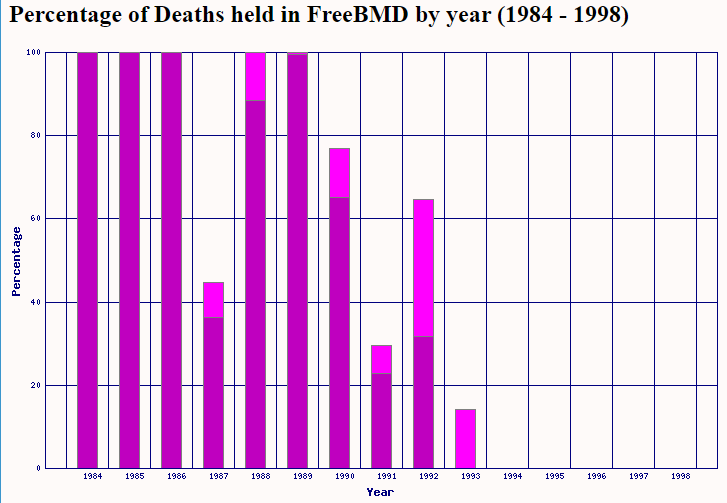
In the UK, freebmd is trying to input the BDM index data and make it freely available to everyone, but it’s a huge task, and they haven’t got anywhere near 1997 yet:

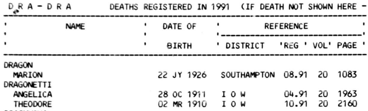
However, the raw GRO index data that freebmd’s heroic transcribers are inputting looks like this (I just entered DRAGONETTI as a random surname, and picked 1991 as a post-1988 example):

From the database field guide listed at the top of this page, each entry includes a reference to the associated District Registrar’s district (e.g. “Isle of Wight”), and the register / volume / page reference to look up there. Importantly, there’s no mention here of anything to do with Form 104, so presumably that’s an extra layer of information that would (I guess) be added to the register itself (or perhaps to a separate register entirely?) by that District Registrar.

Which points to the even more annoying insight that if we were looking for Form 104 submissions for June/July 1997, I’m guessing we would have to look through the London death registers directly (i.e. not by trawling through the GRO index). Well, unless the Registrar of Births Deaths & Marriages in that District just happened to maintain some kind of separate searchable index of Form 104 submissions. Which I guess is possible, but you’d again have to ask them directly if such a pixie-dust index exists.

Which is what I plan to do next (while crossing my fingers hard). Unless anyone here has a better idea?