
Here’s a fun modern-looking enciphered document for you, of the kind that Klaus Schmeh used to like so much. I found it via a post by Richard Brisson (www.ultrasecret.ca) on cryptocollectors: note that this “Manoscritto misterioso” sold for 250 Euros. Here’s how the eBay seller described it (translated from Italian):
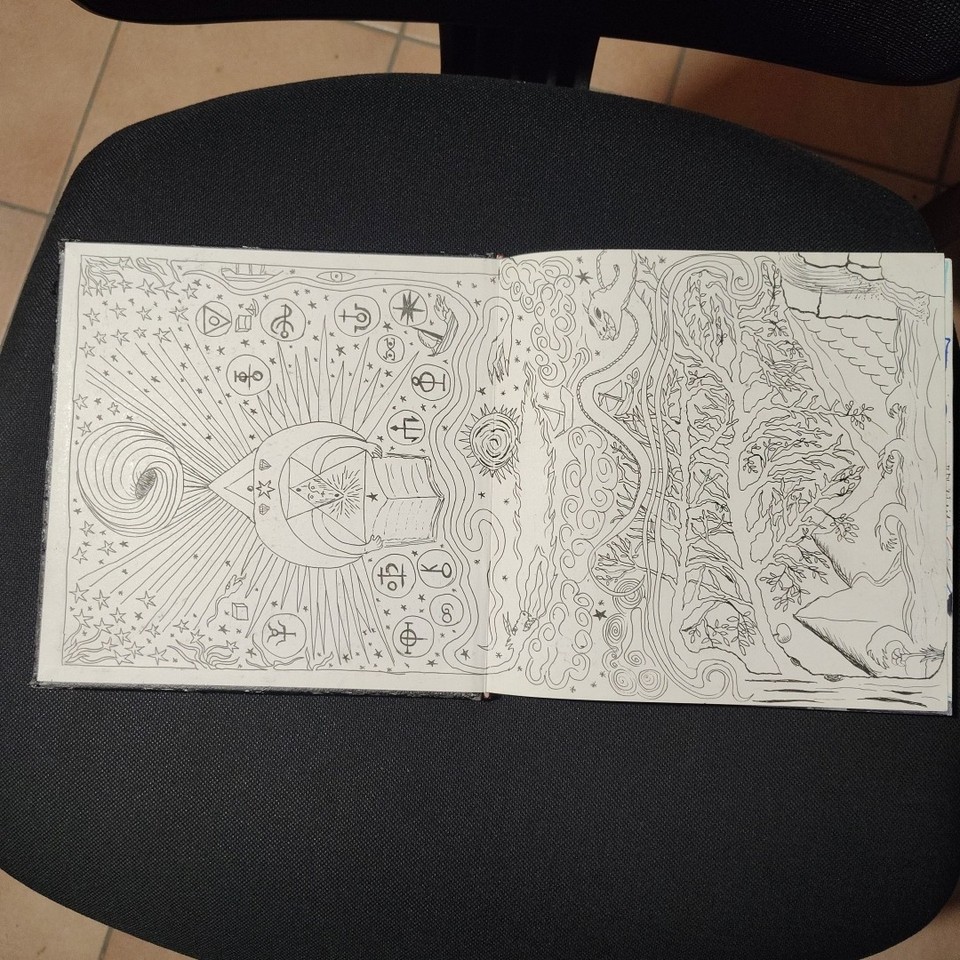
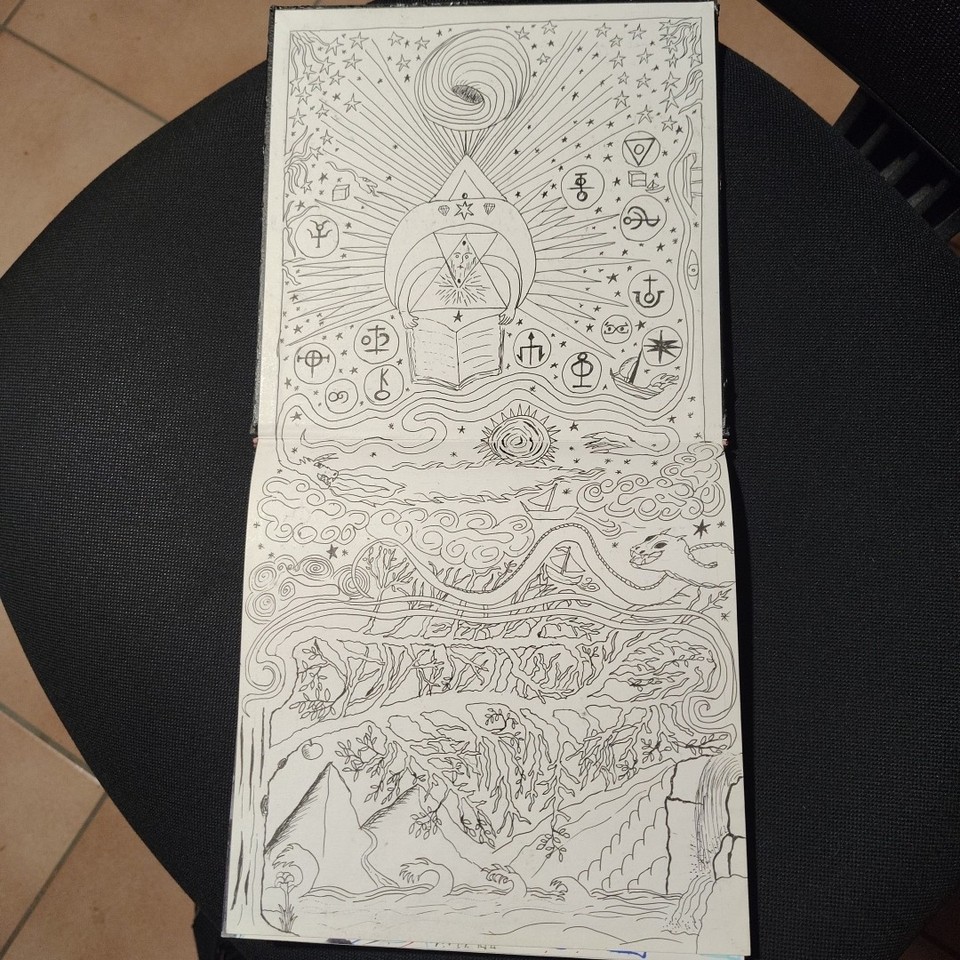
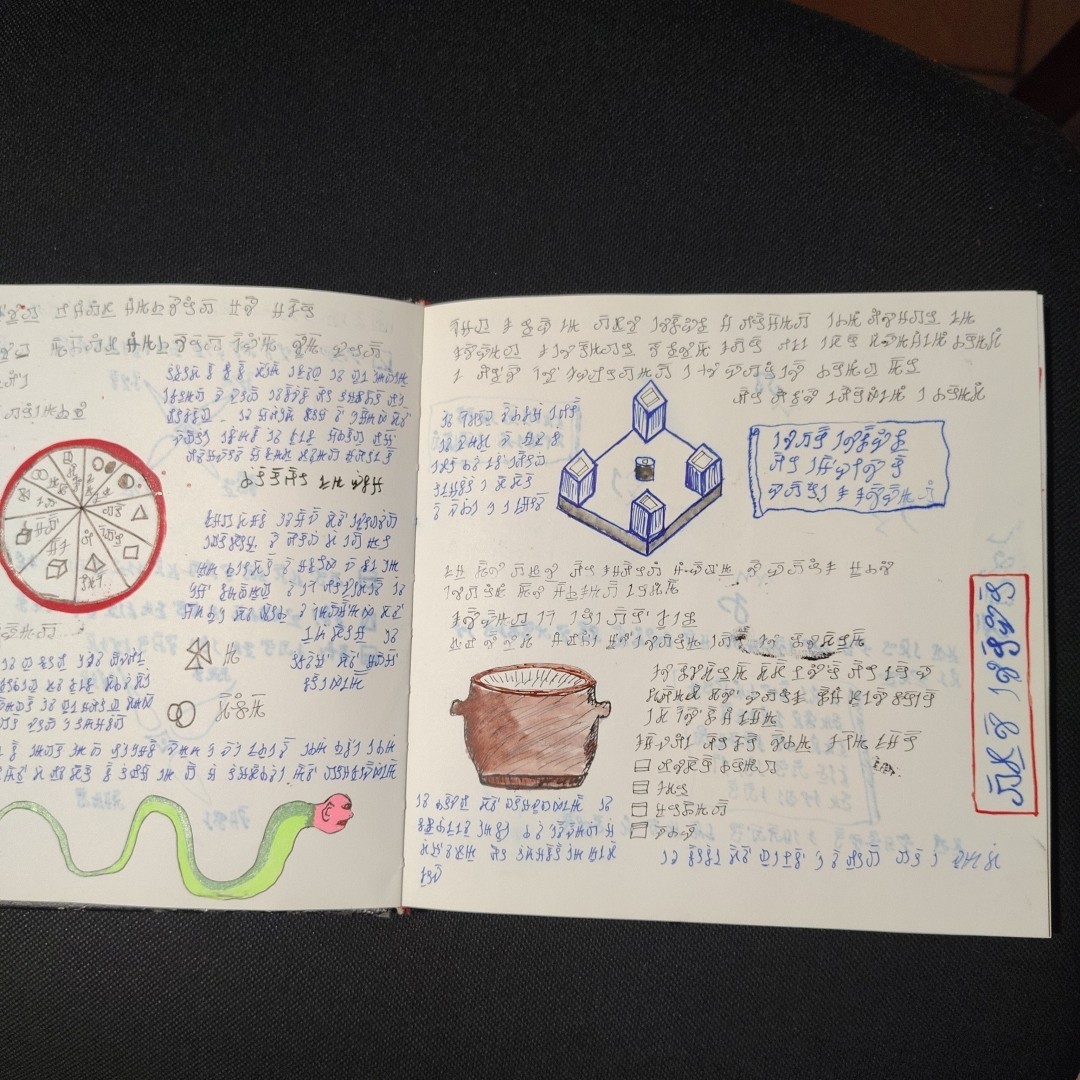
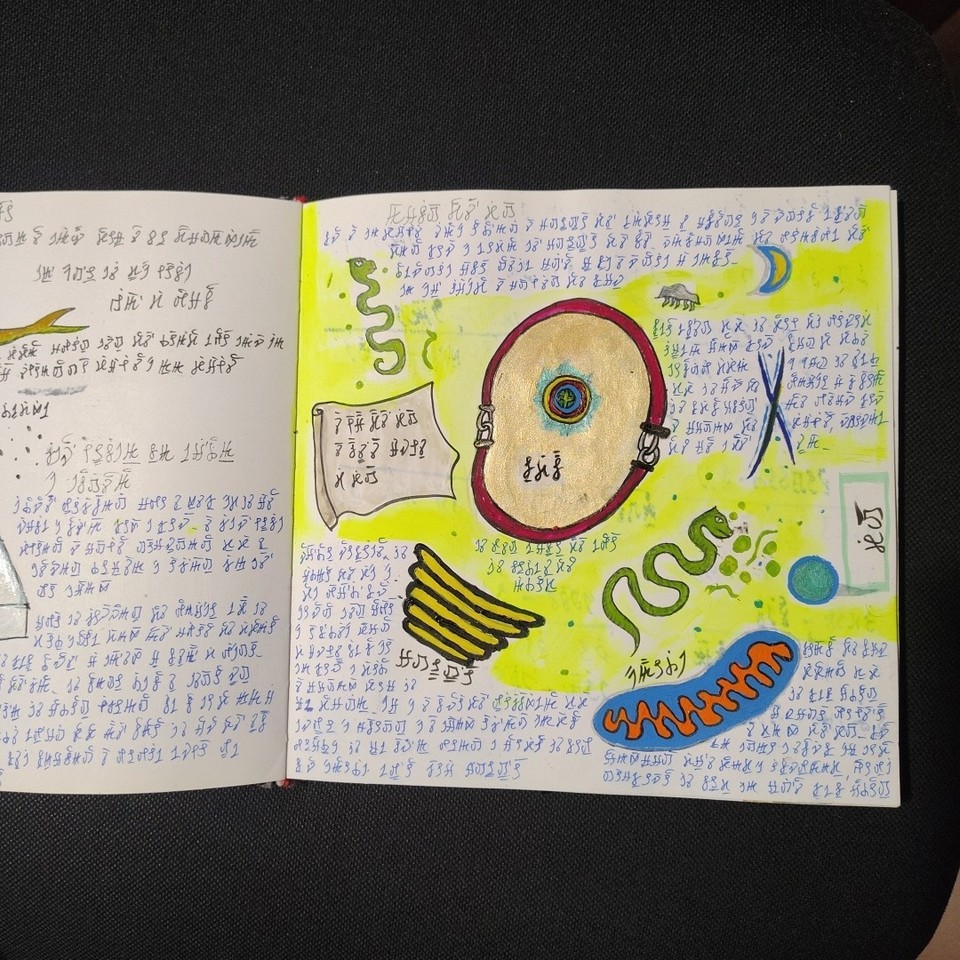
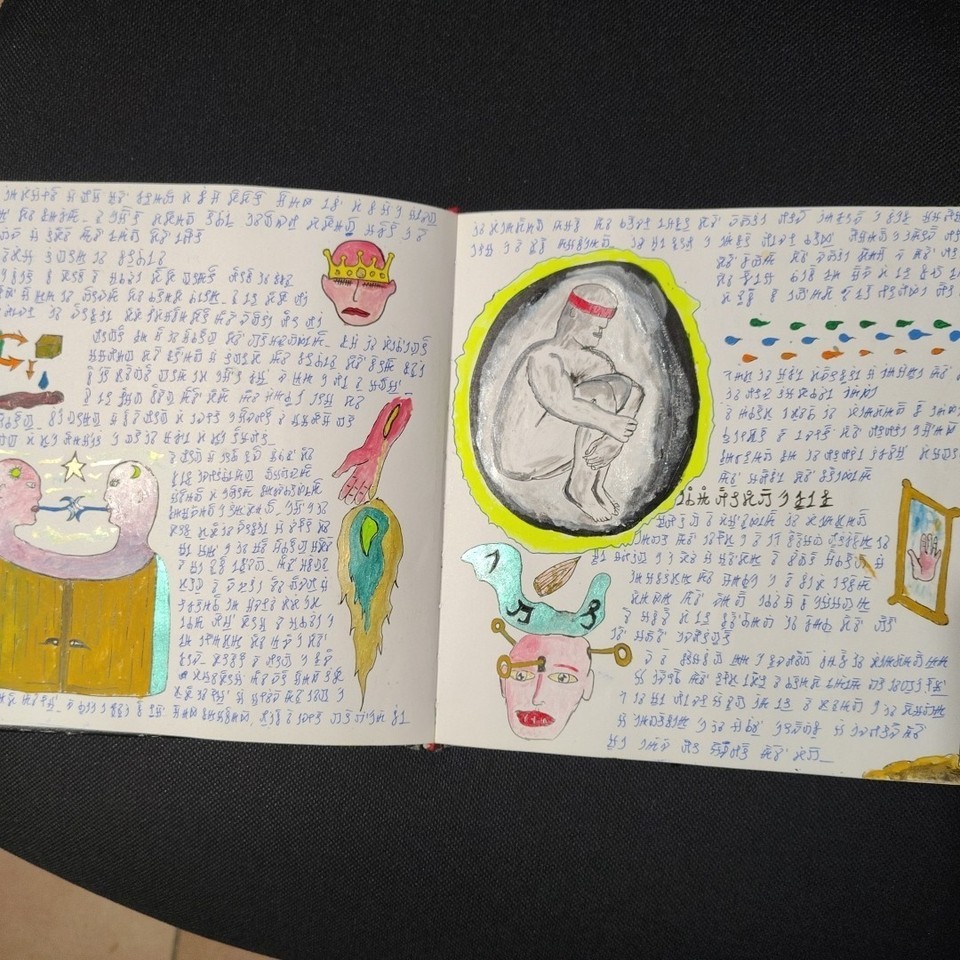
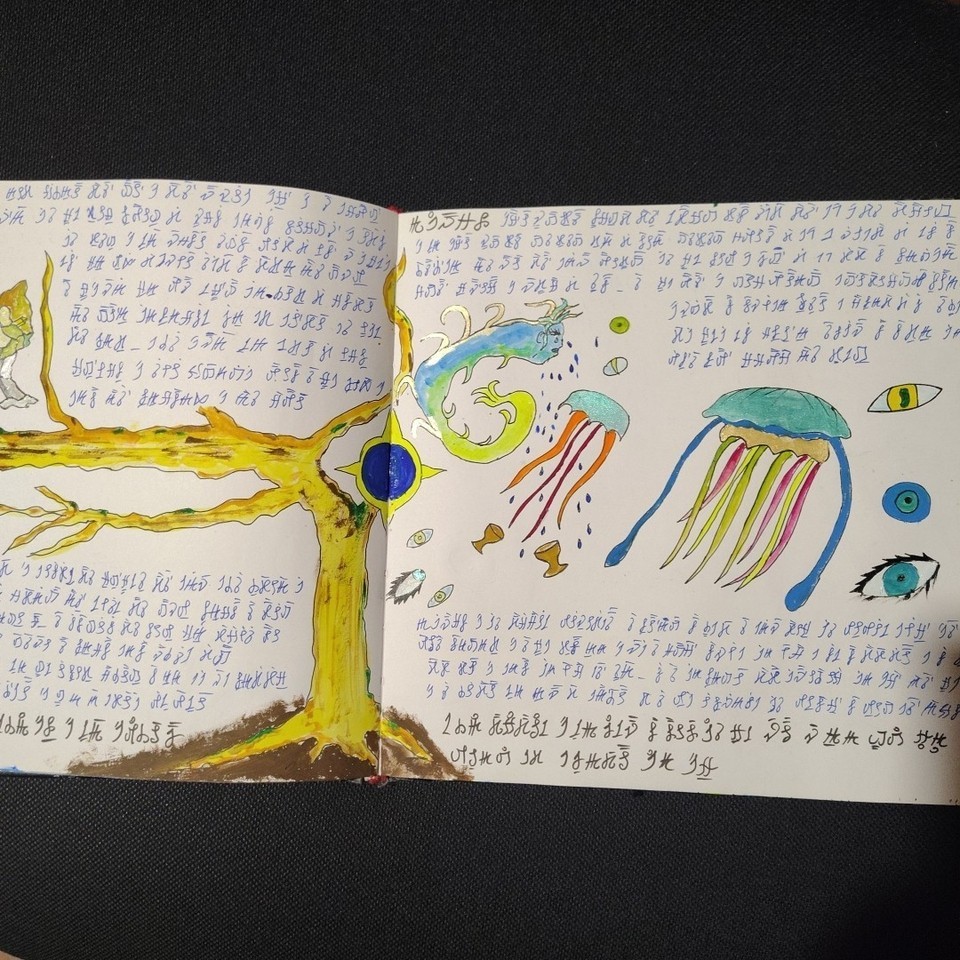
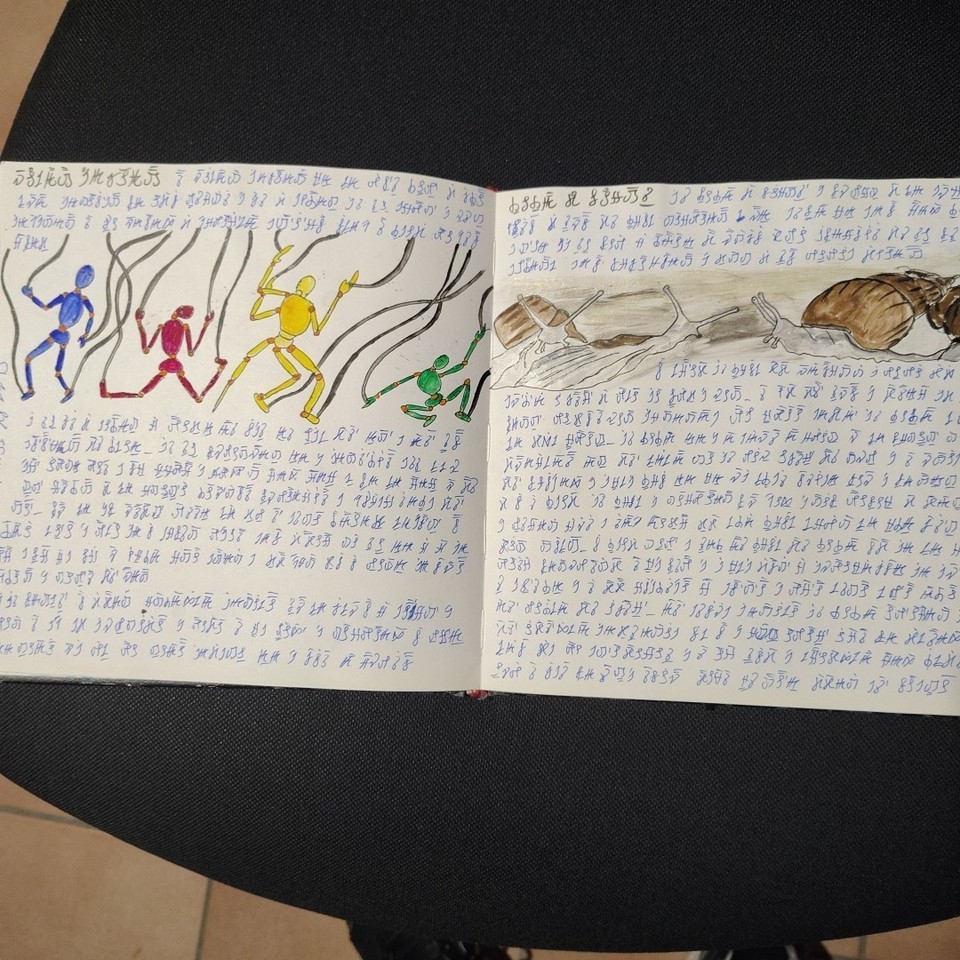
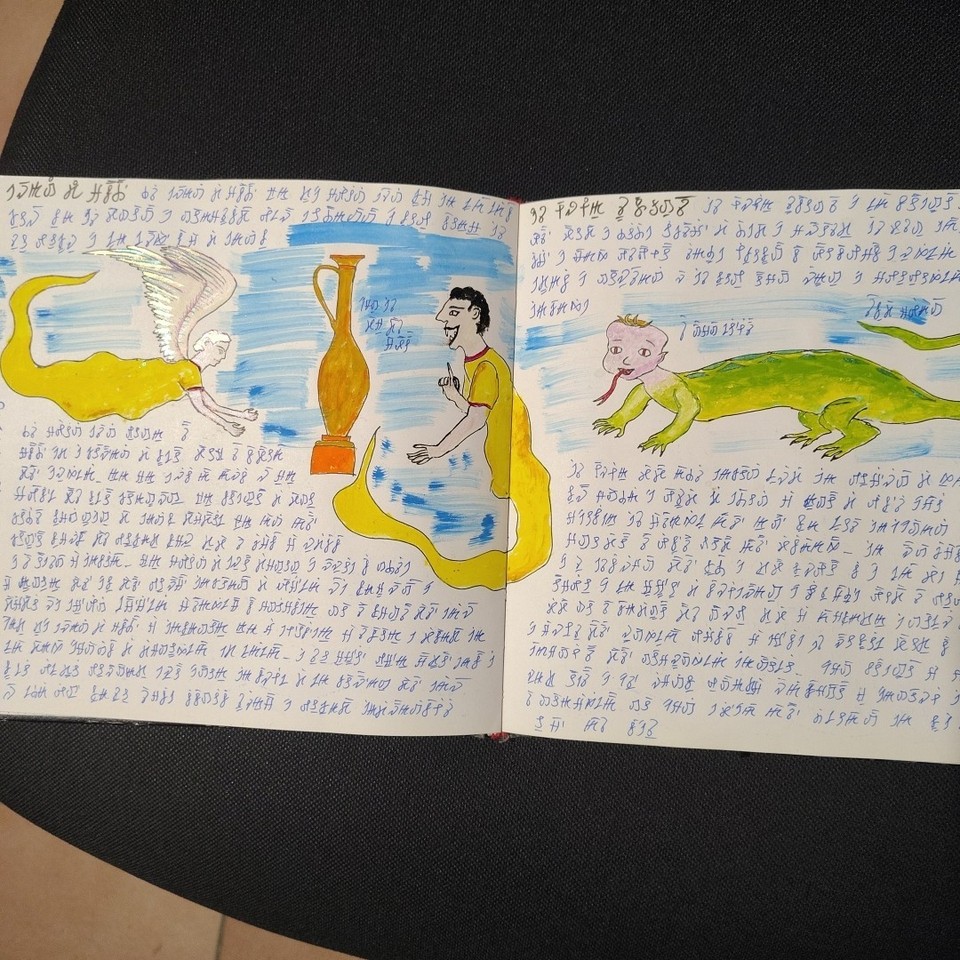
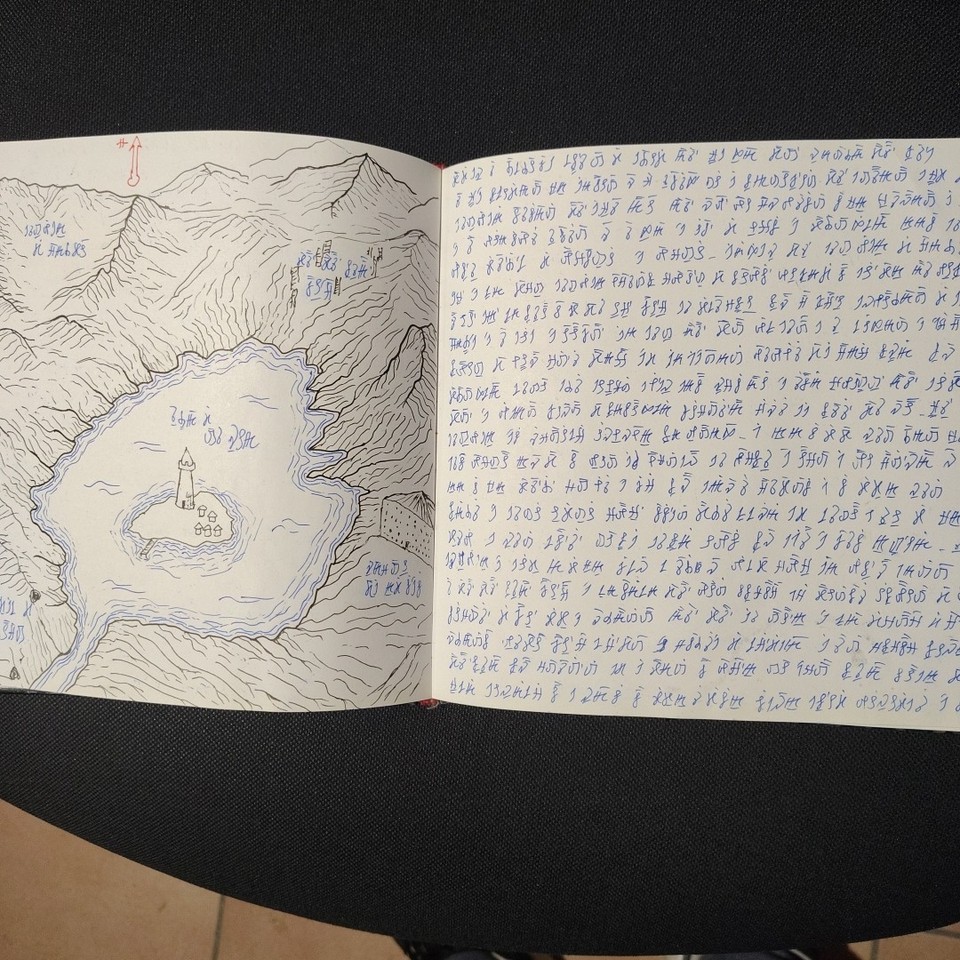
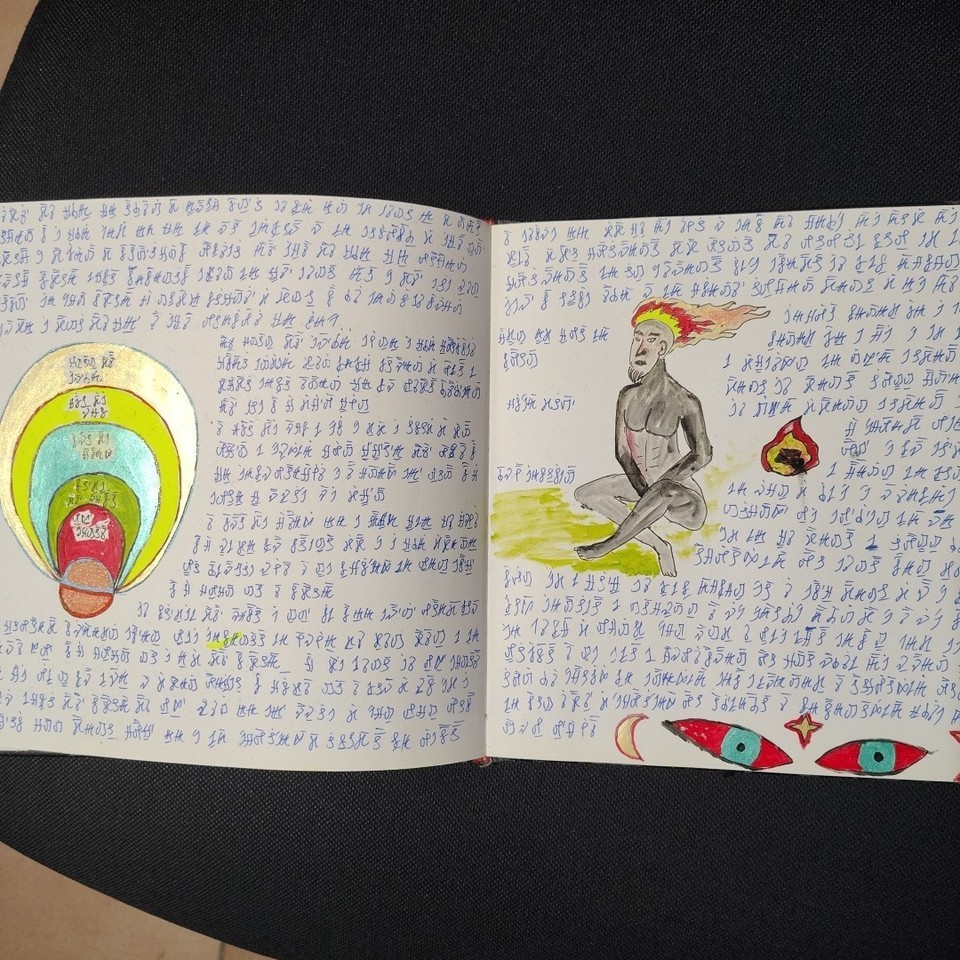
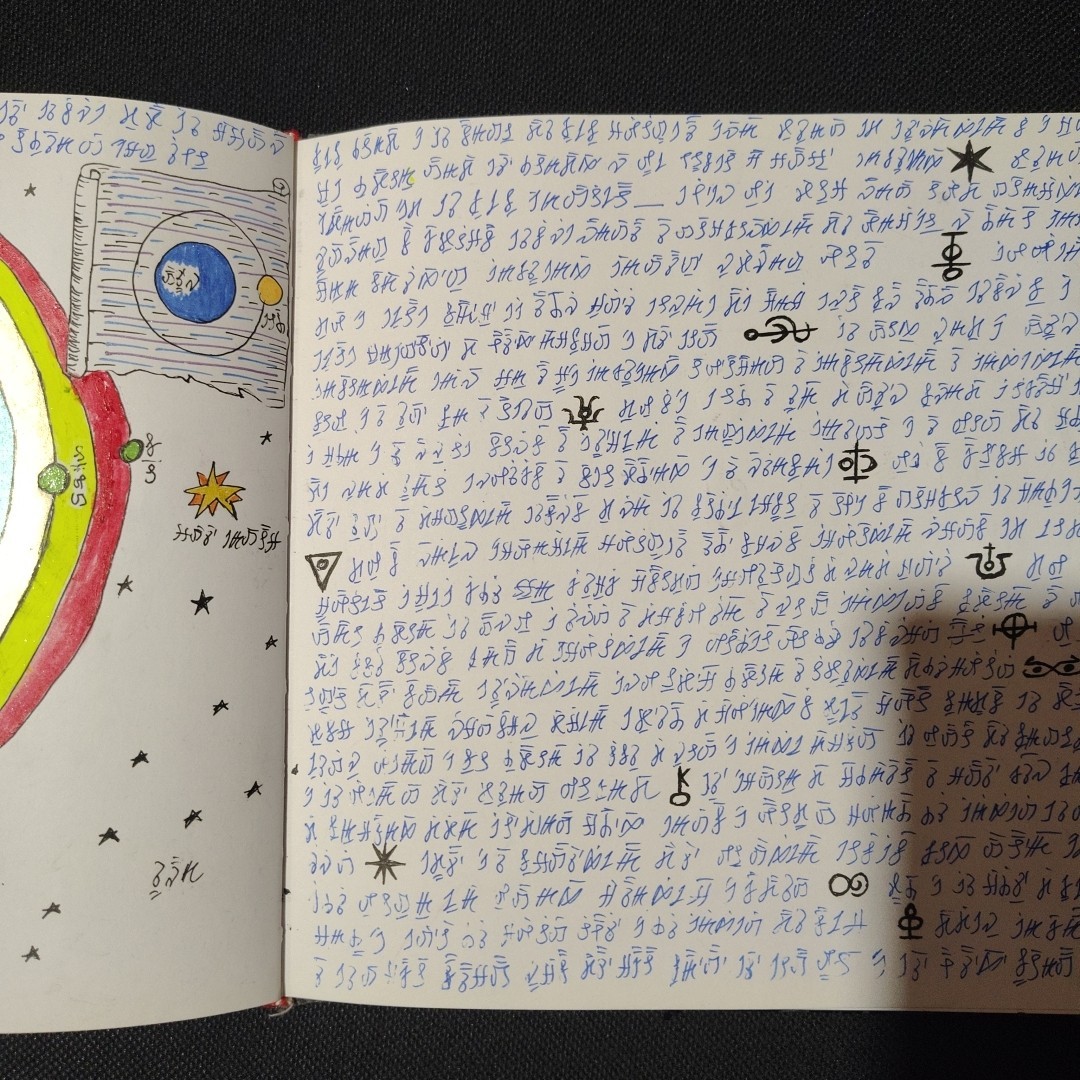
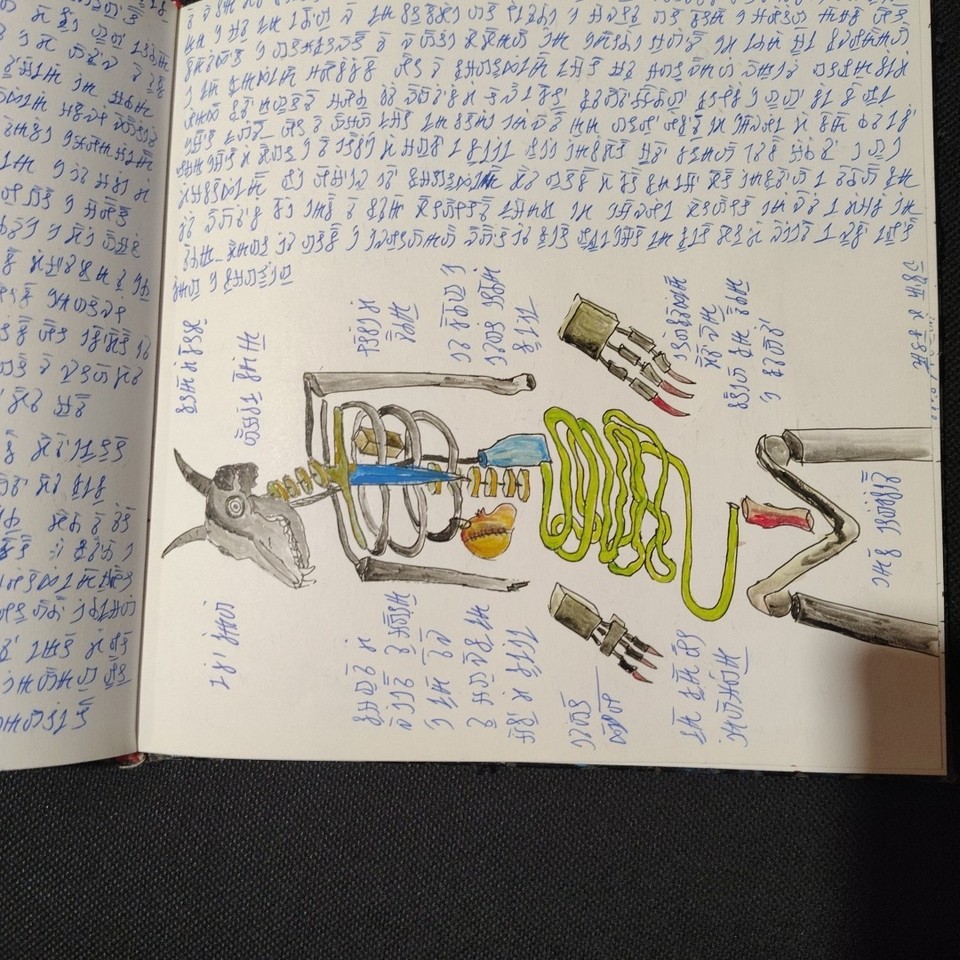
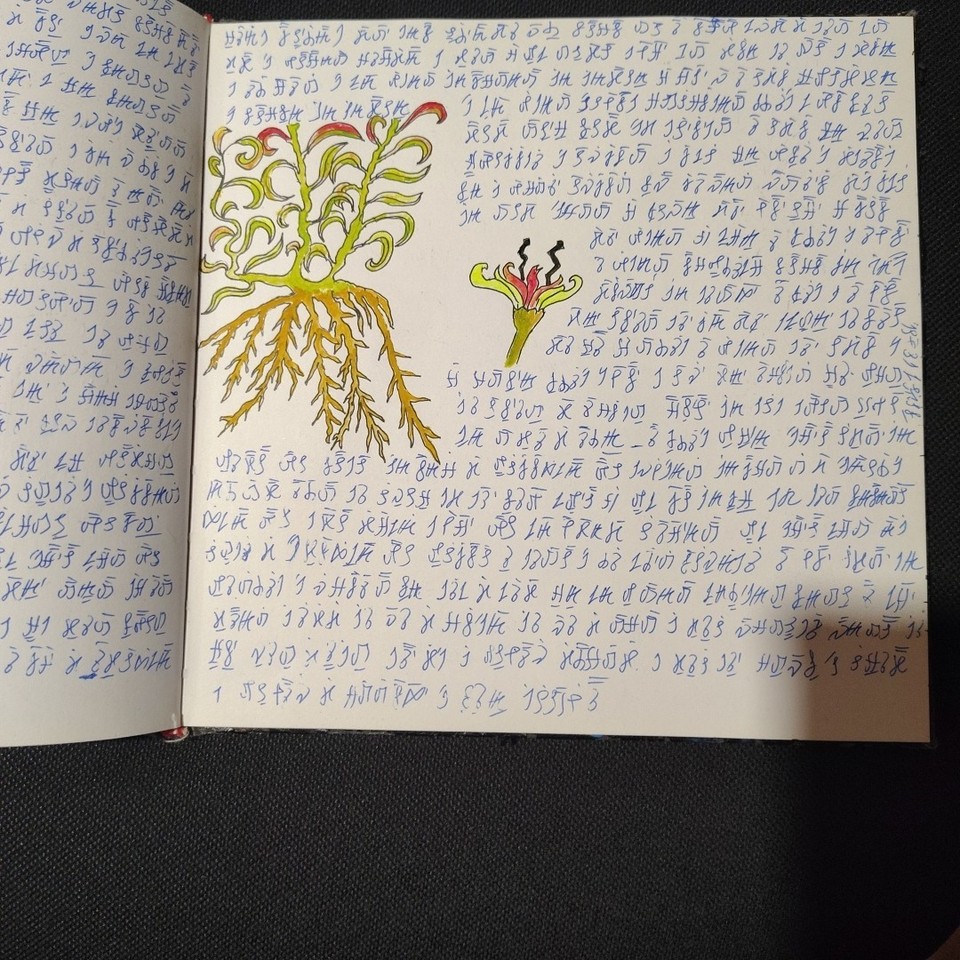
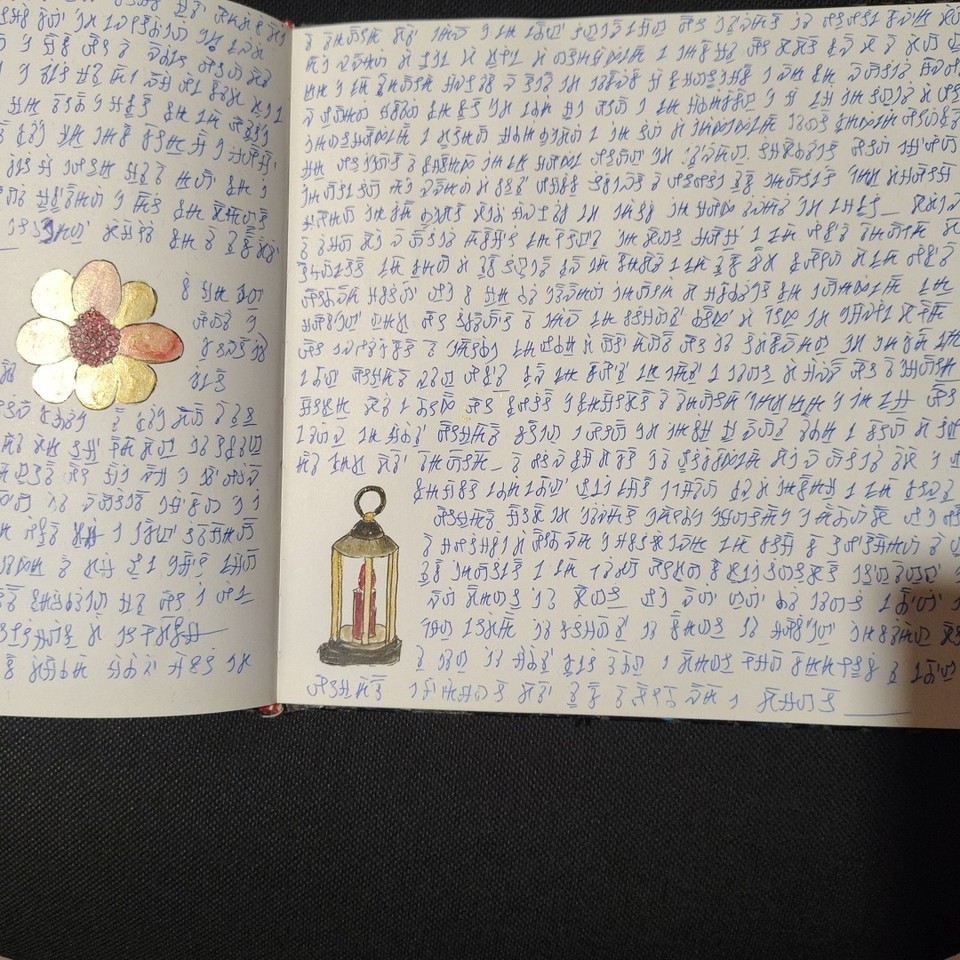
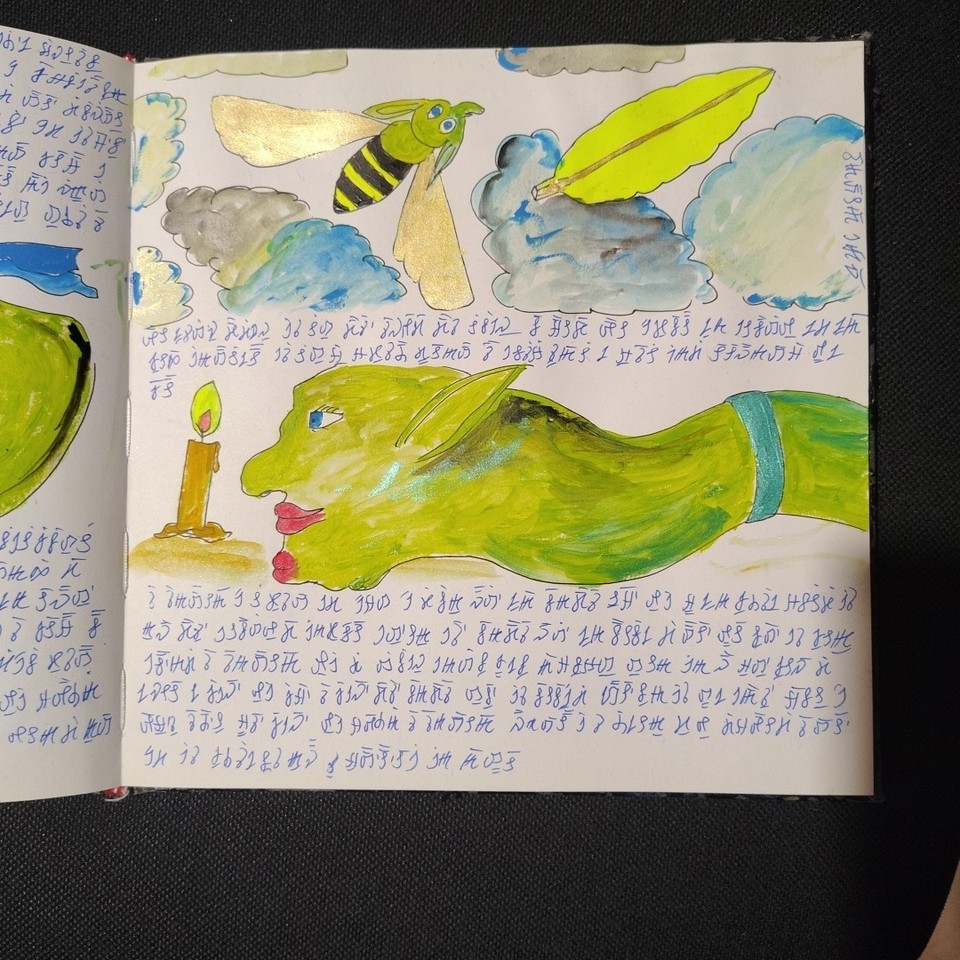
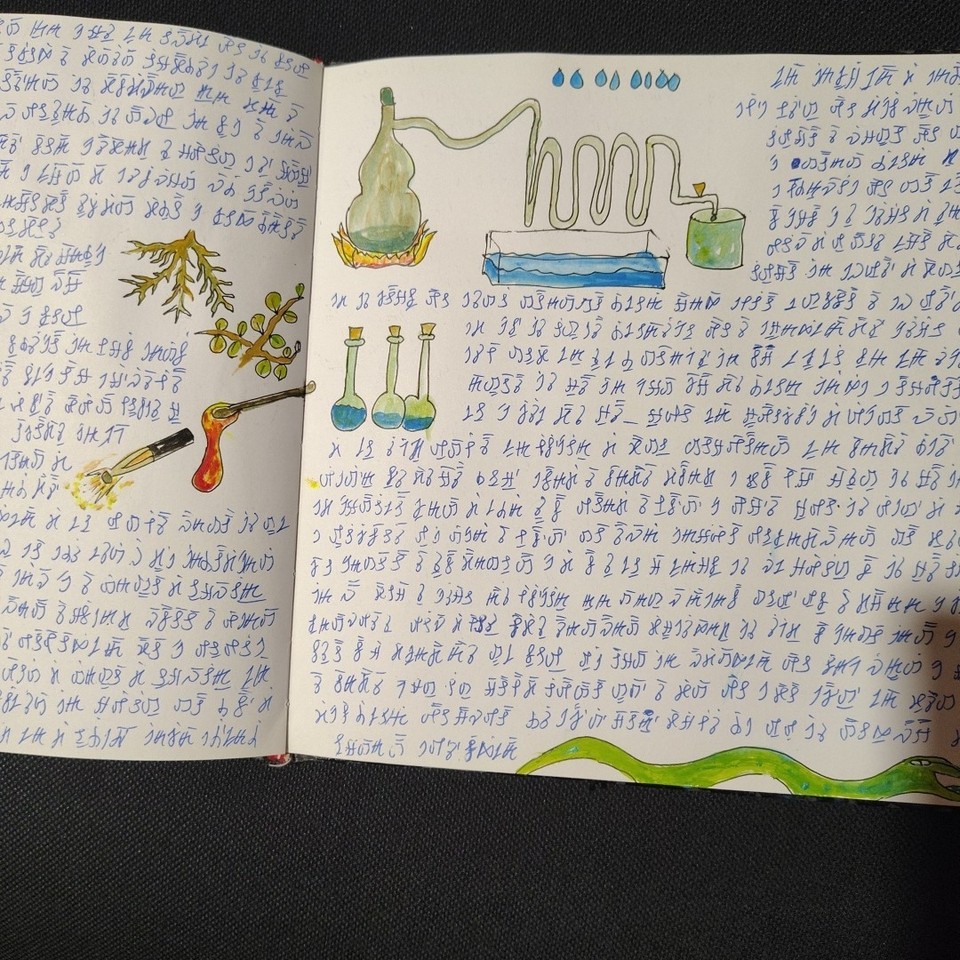
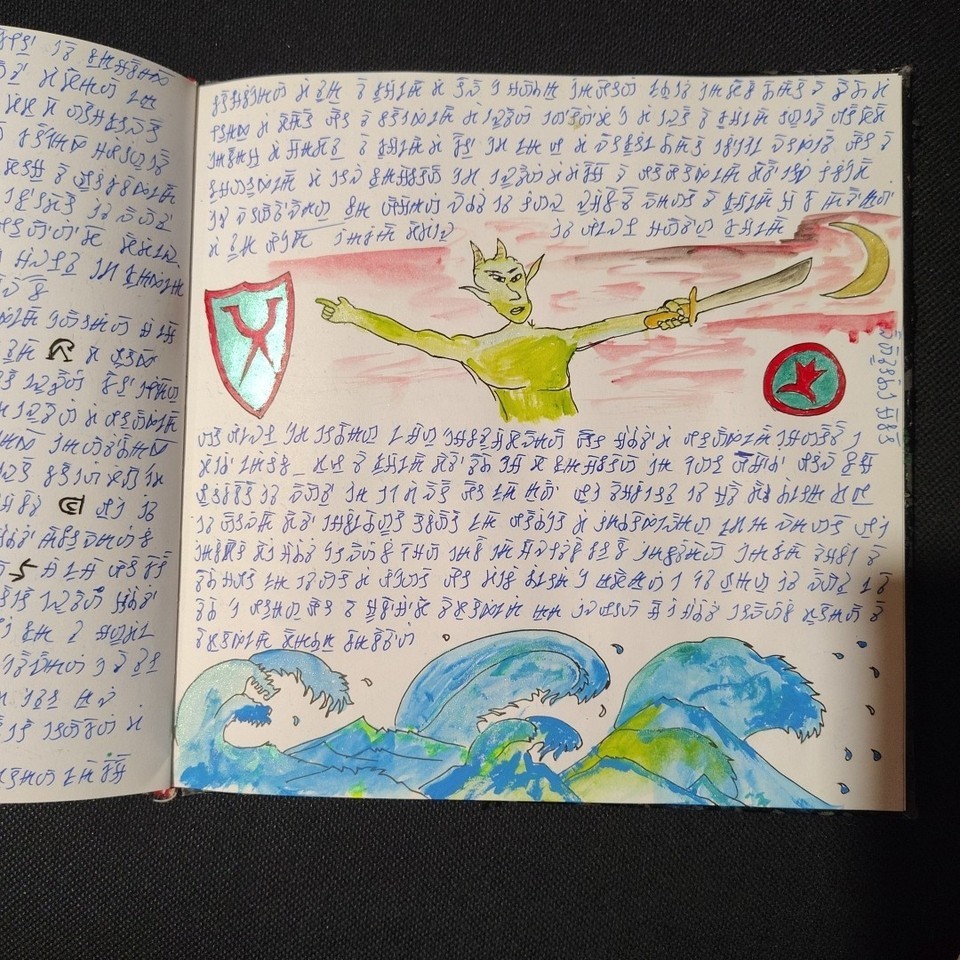
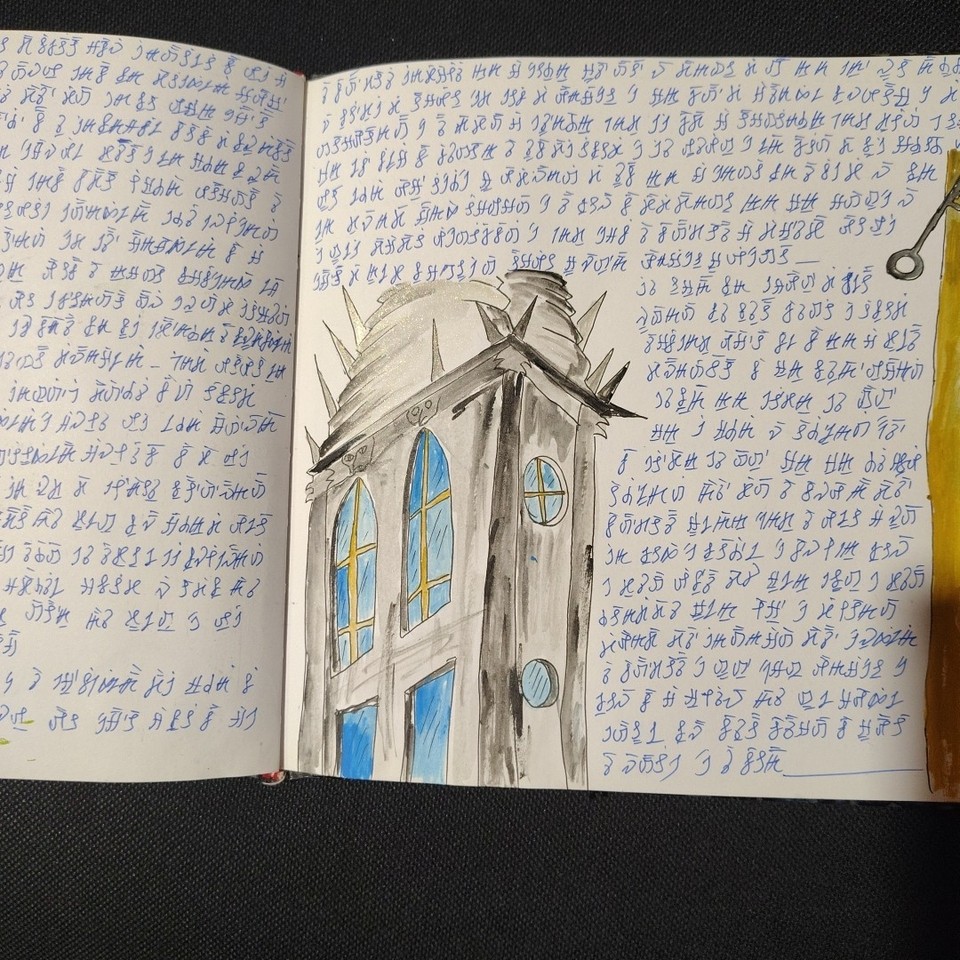
A manuscript book of unknown, non-ancient origin, written entirely in an indecipherable language composed of symbols, signs, and words. The pages feature colorful illustrations, diagrams, and visually striking figures.
The volume comprises 108 pages, 21×21 cm in size, traditionally bound. Each page is different, densely detailed, and rich with elements that seem to belong to an unknown language or culture. The work has an ancient and mysterious aura, difficult to place, and retains a special charm that invites exploration. Ideal for collectors, artists, scholars, or lovers of mystery, secret codes, and extraordinary manuscripts. A rare, fascinating, and one-of-a-kind object.
(Some photos show examples of the inside pages. Tracked shipping, careful packaging.)
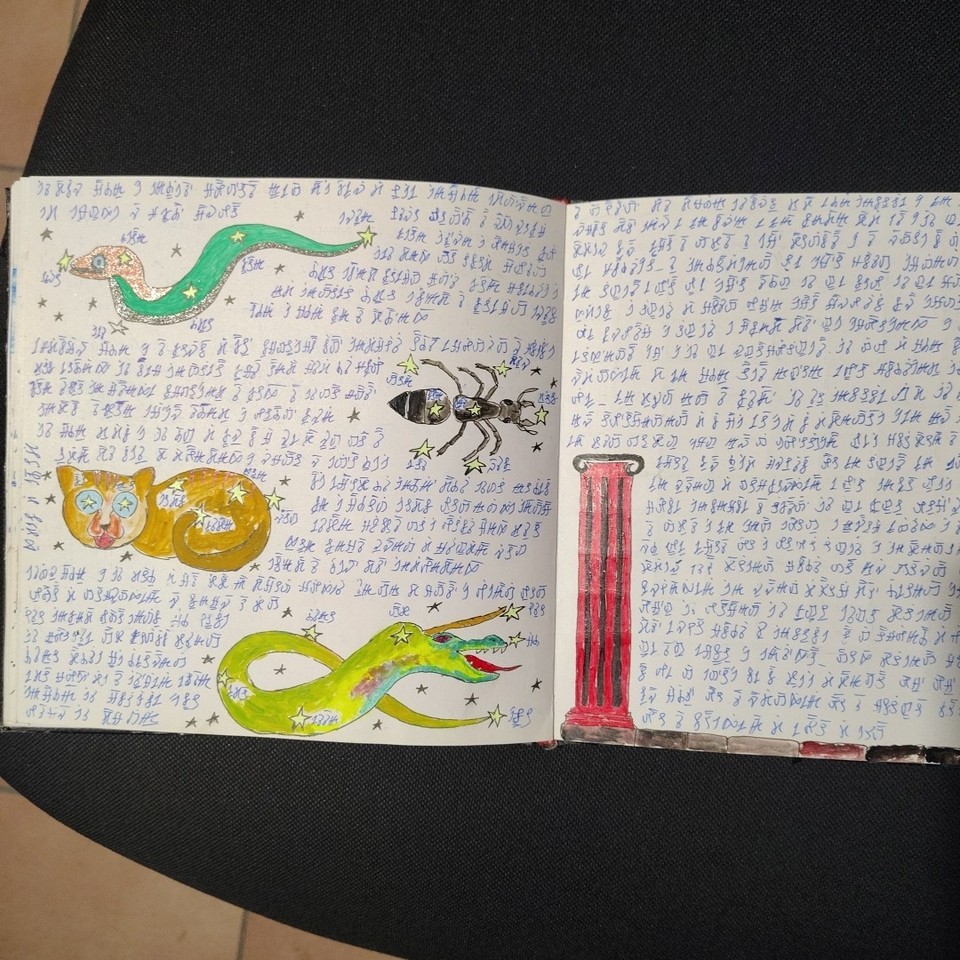
Well, obviously there’s a bit of a Voynich influence going on (the castle is a bit of a giveaway), but – unless you know better? – it looks more like a fun art project (kind of a poor man’s Codex Seraphinianus) than some kind of Rosicrucian secret. More simulacrum than simulation, let’s say. So I’m guessing its cipher can’t actually be broken, but I could easily be wrong.
Here are the pictures the seller (and I suspect the item’s creator) uploaded. Enjoy!
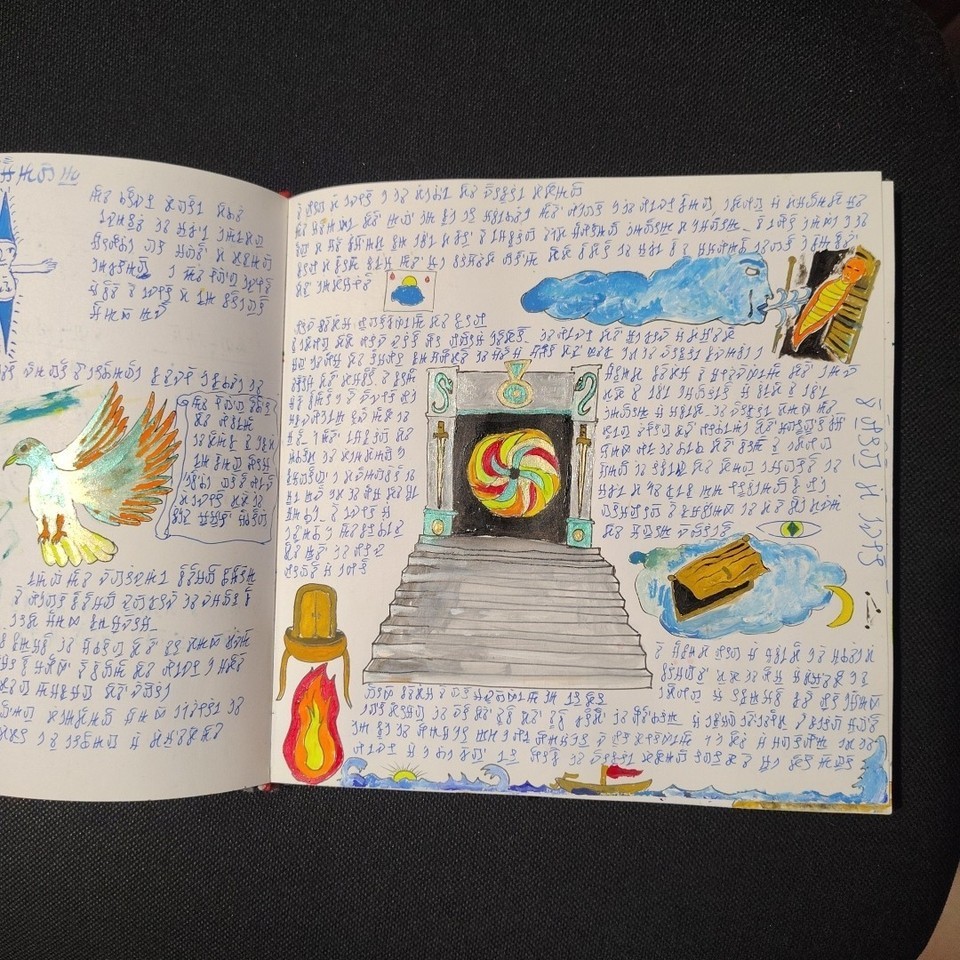
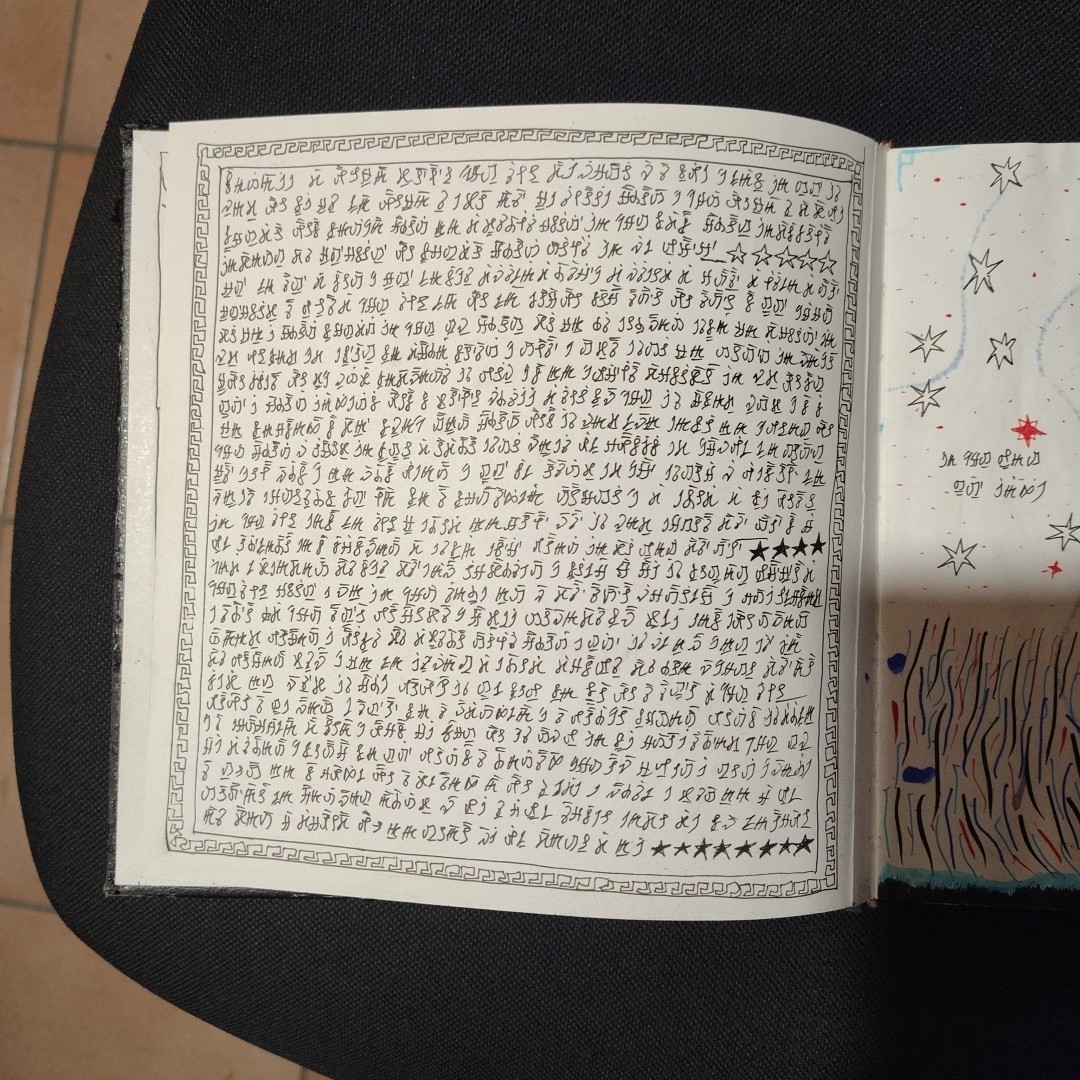
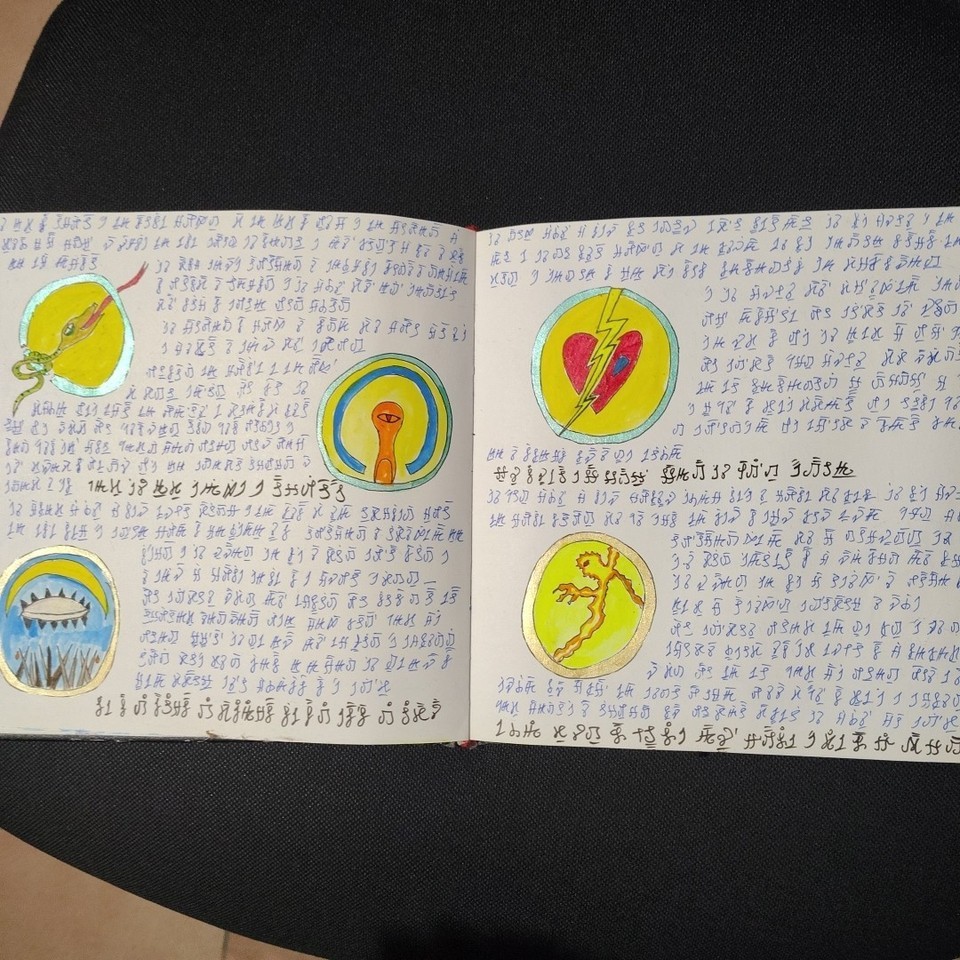
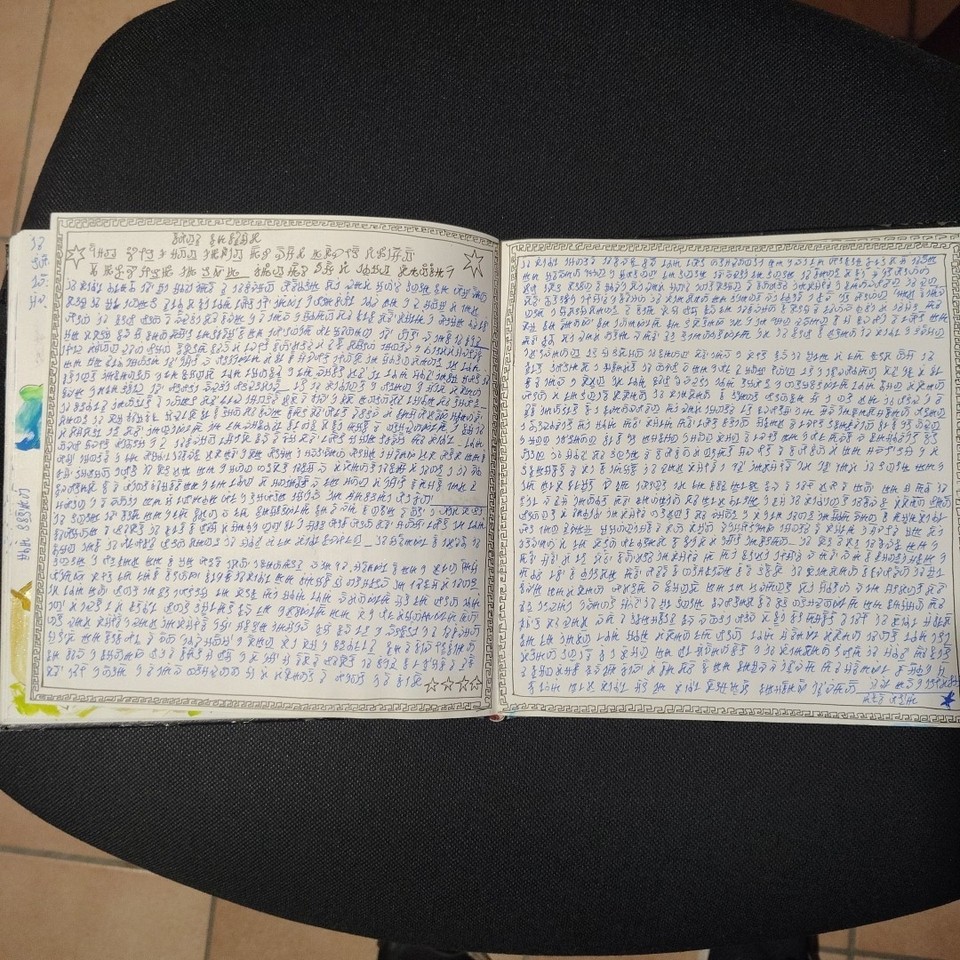
Actually the text is relatively easy to read. Here is my transcription of the first four lines of page p5 from the scans above (the page written in black letters with a frame):
centinaia di persone vorrebbero questo libro dei misteri ma la copia e unico in tutto il
mondo per cui solo una persona lo avra nella sua libreria segreta e questa persona lo deve poi
custodire perche contiene segreti non divulgabili scritti in questo codice segreto indecifrabile
inventato dal sottoscritto per custodire segreti terribili in mio possesso *****
Also the last line of page p24 contains the author’s name, the quality of the scan makes it a bit blurry, but I believe it reads “il mio nome e Arbadax / Nicola Pirroni”.
So you are right, the book must be the artist’s project, and it was sold by the author himself.
The iconography makes it possible to date some of the sources which the author used .
For example – among the astronomical images you see an “Ant” adjacent to a Cat.
The ‘cat’ constellation was introduced by Lalande in 1799.
The ‘Ant’ appears to me a conscious punor simple mistake by the modern author, but mistrepresents the ‘Ant.’ which was actually an abbreviation for Antila, which figure was invented by de Lacaille (1713-1762). Antila is actually an ‘air-pump’.
Lalande’s figure used two stars from Antila. You see these both illustrated, adjacent to one another, in Bode’s *Uranographia sive Astrorum Descriptio* published in 1901. I think his might be the only time both figures appeared together in print, but I could be mistaken.
Just now you can see pages from Bode’s work on the Gurani Collection site
https://www.gurari.com/maps-urbanism-celestials-inventory/uranographia-star-atlas
The Cat and Antila can be seen there – second register, sixth image.
Cheers